
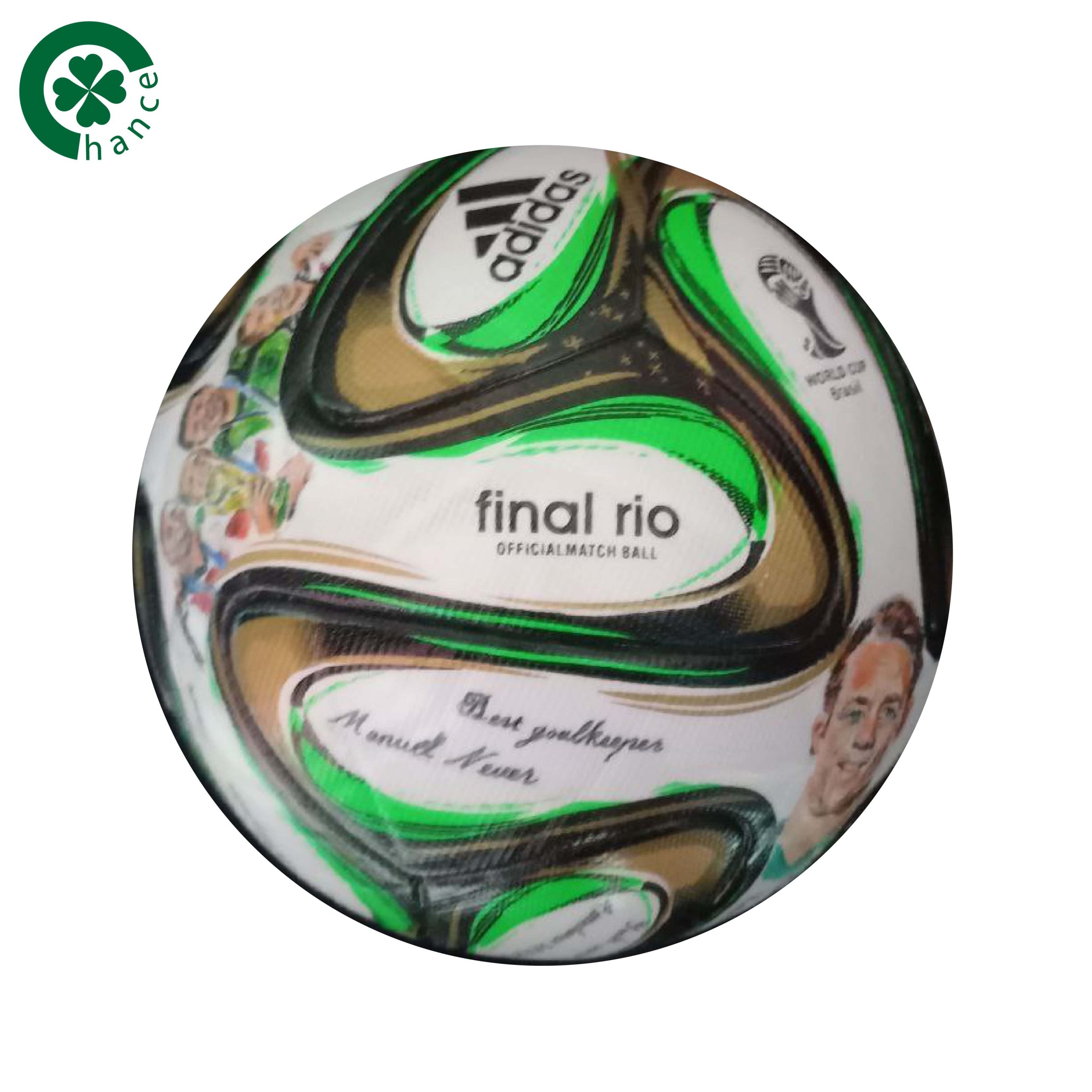
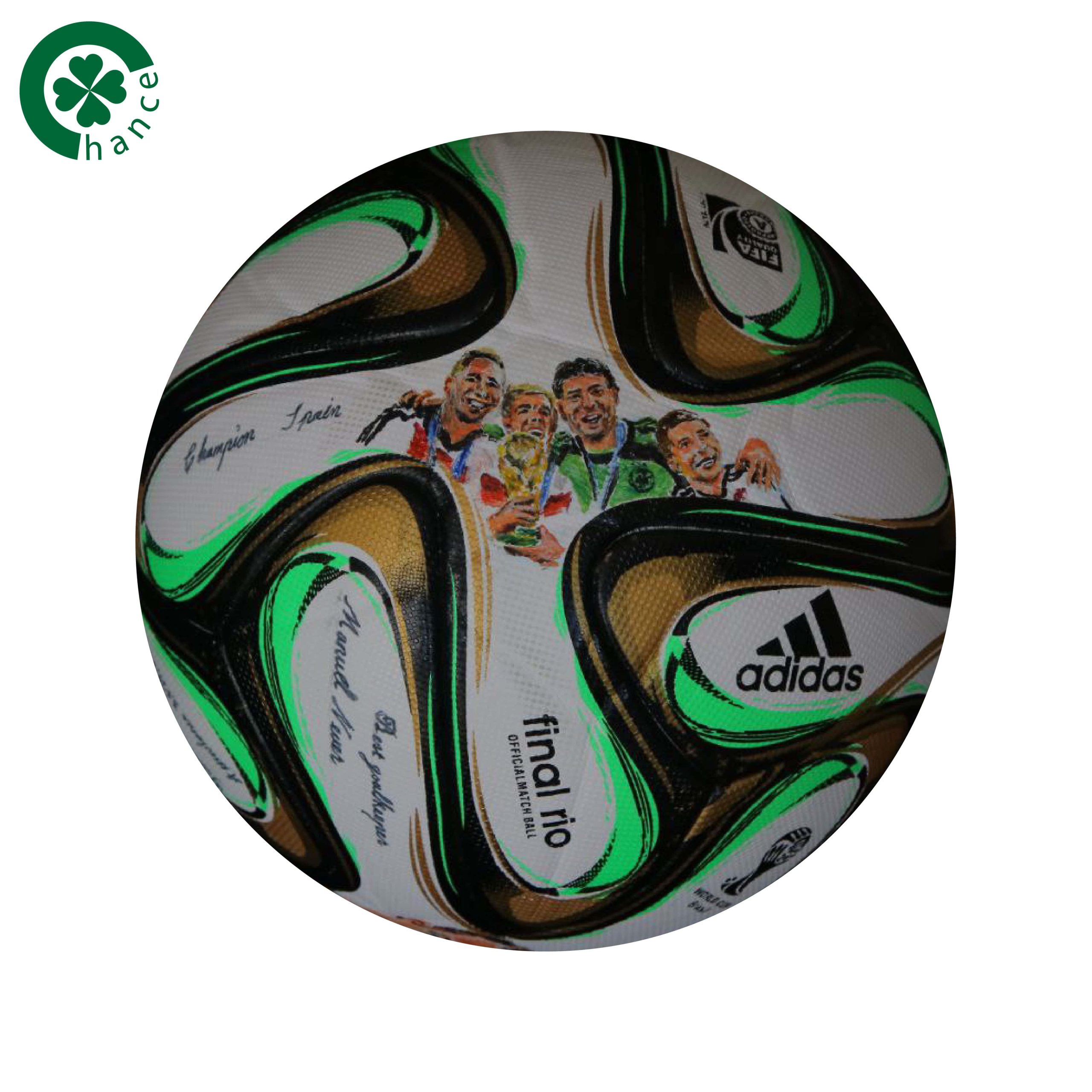
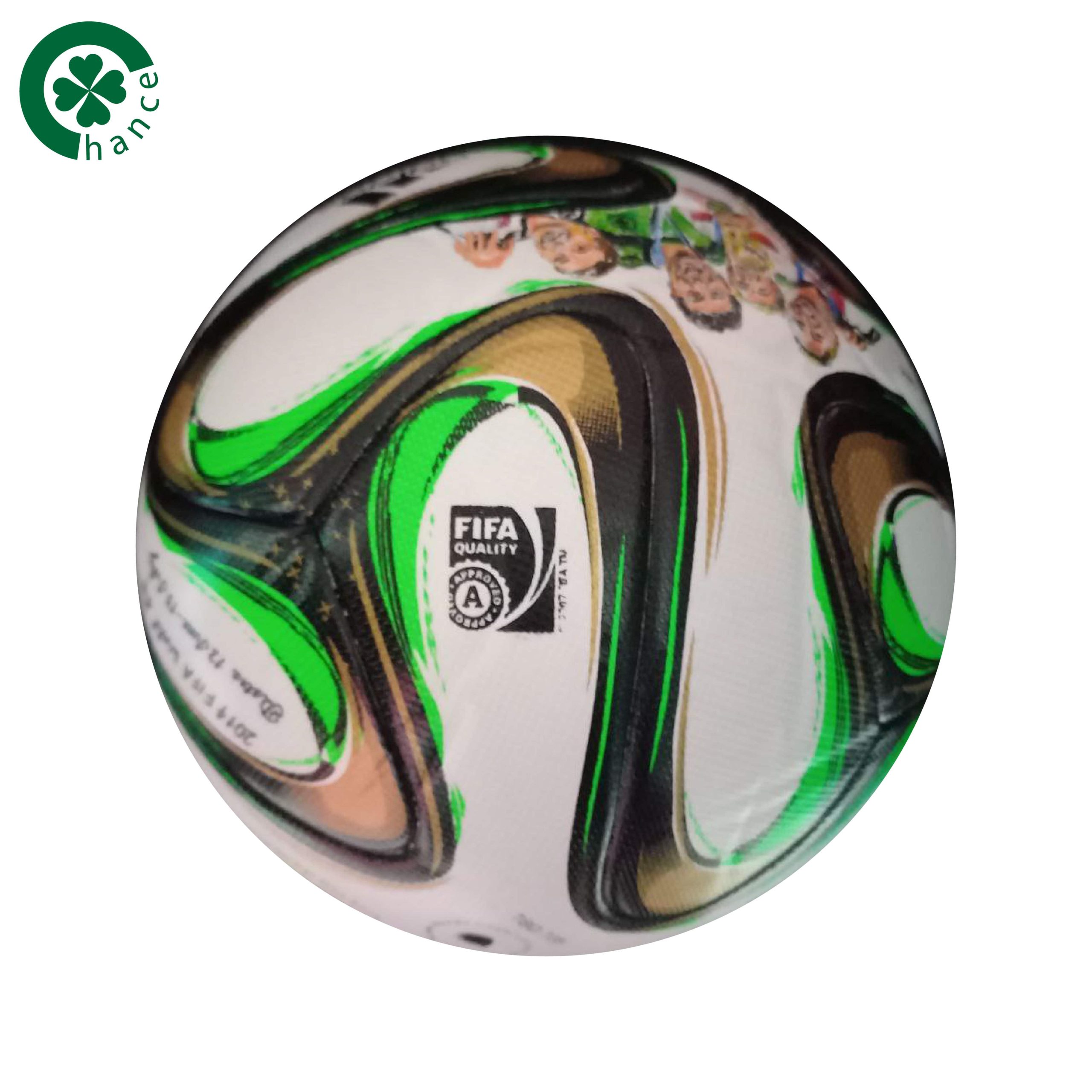
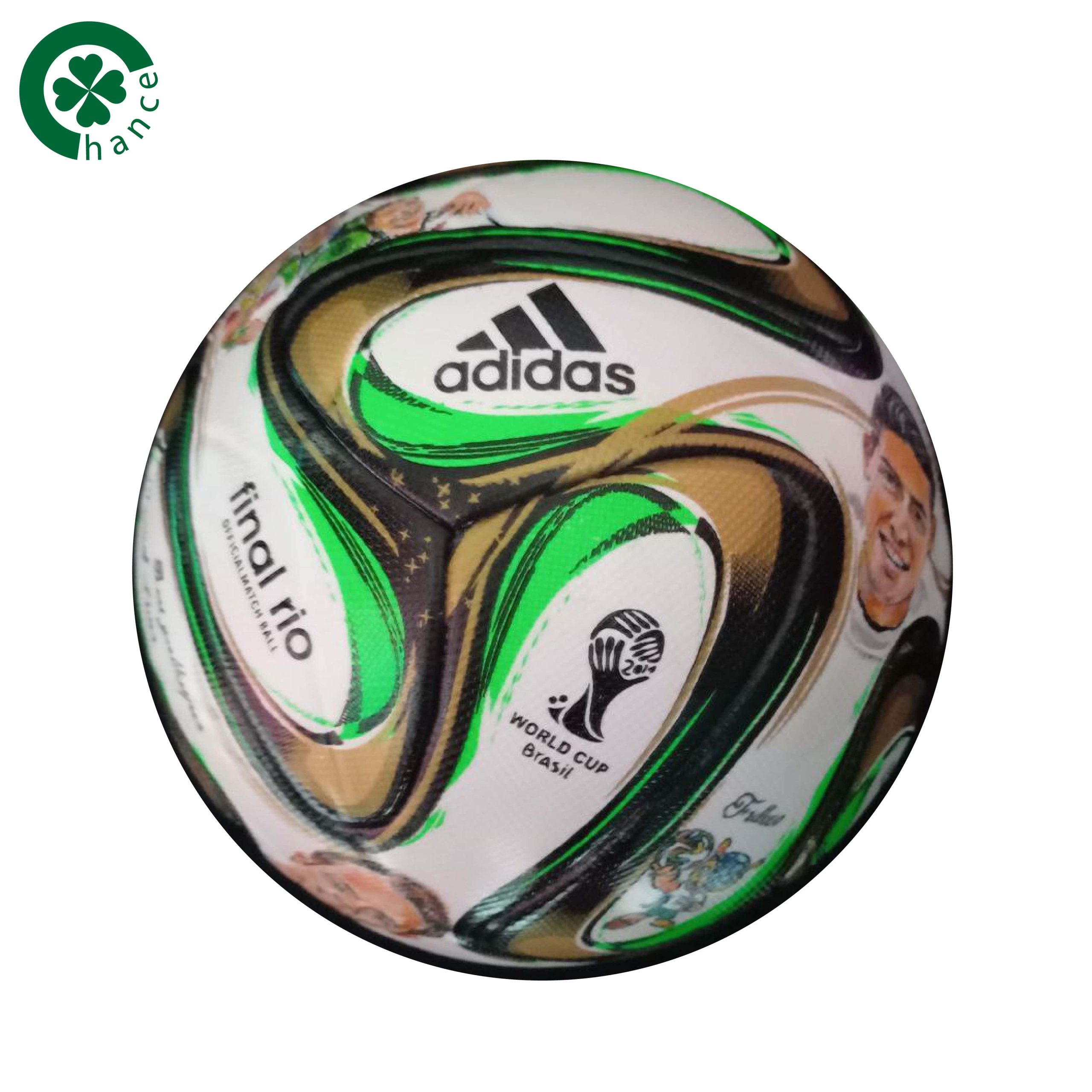
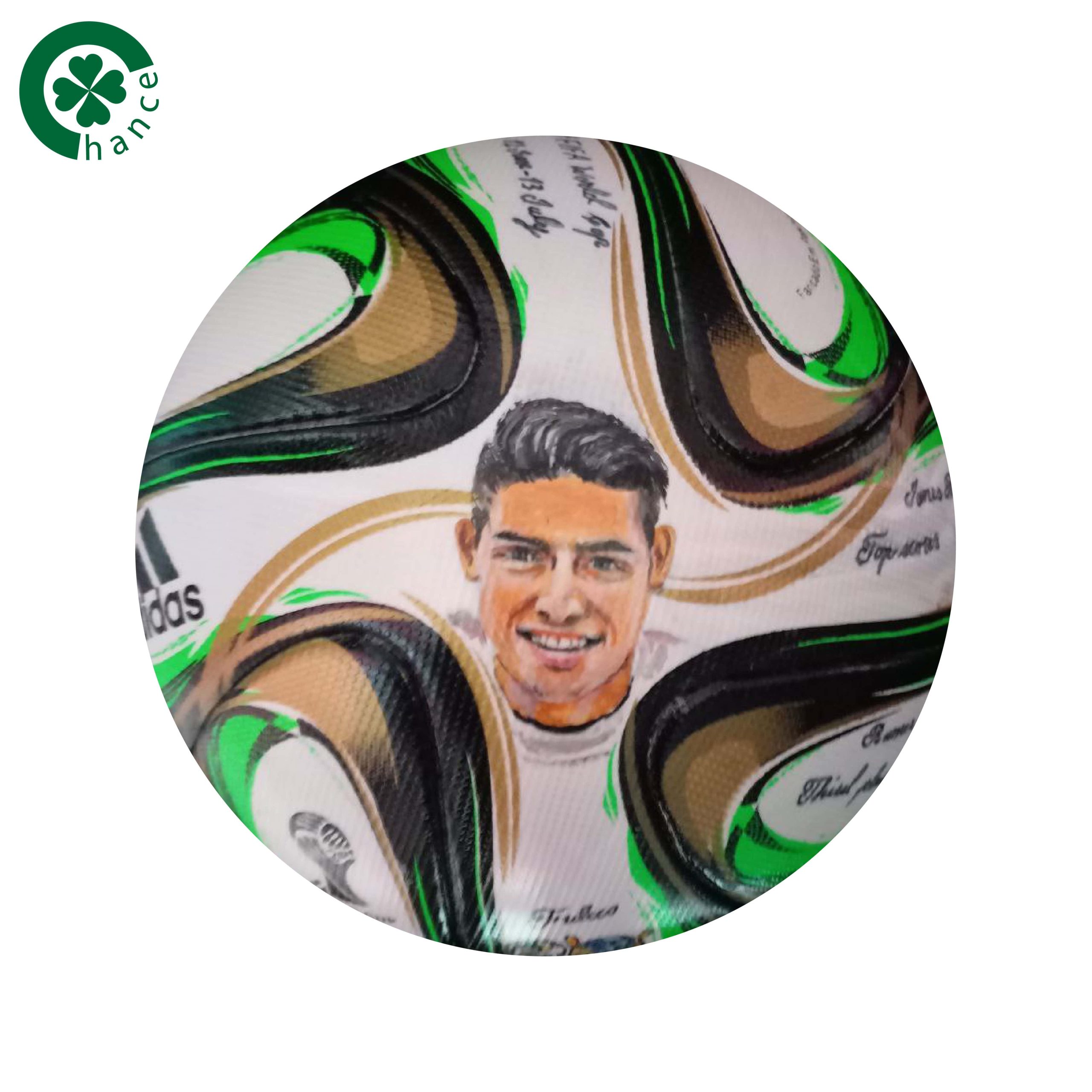
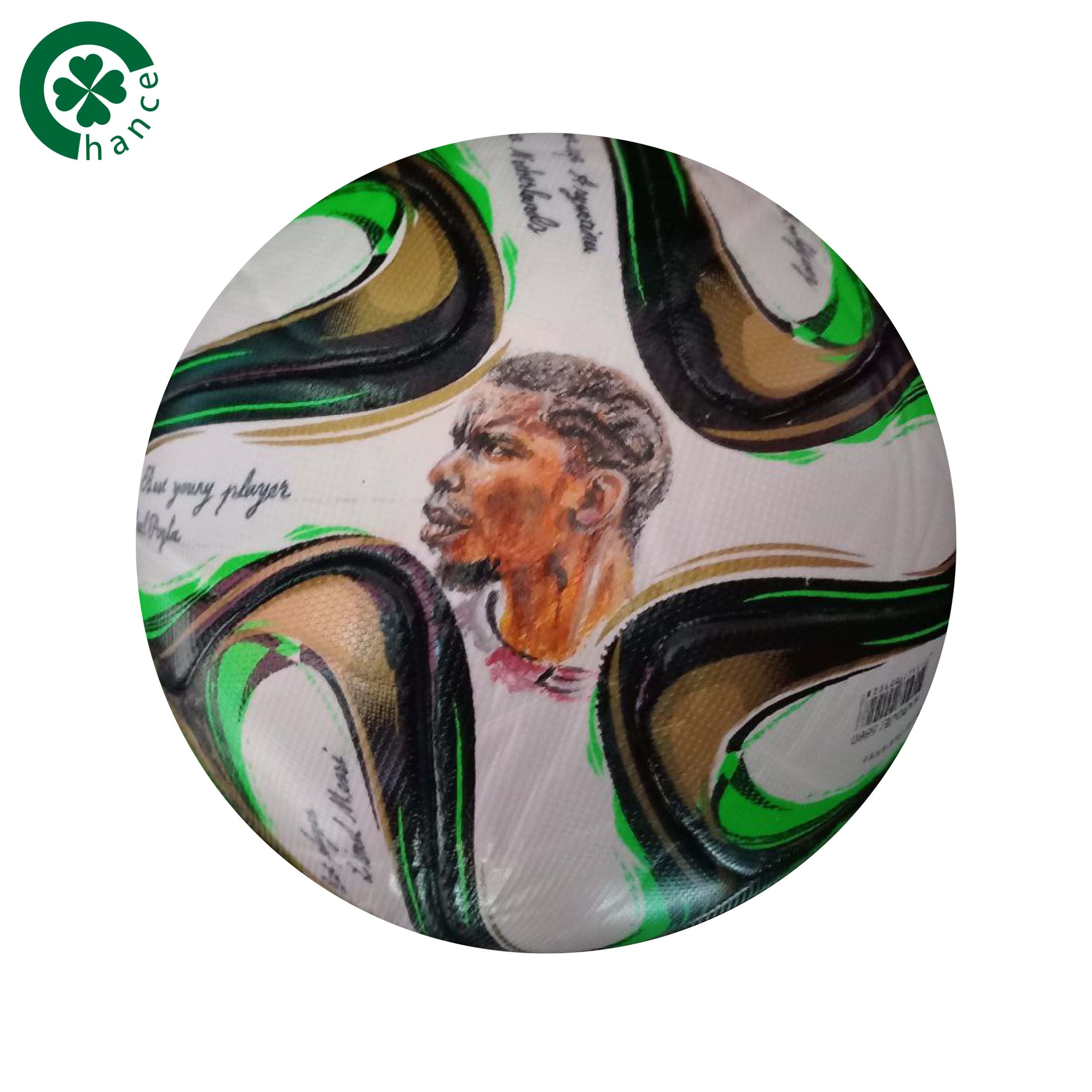
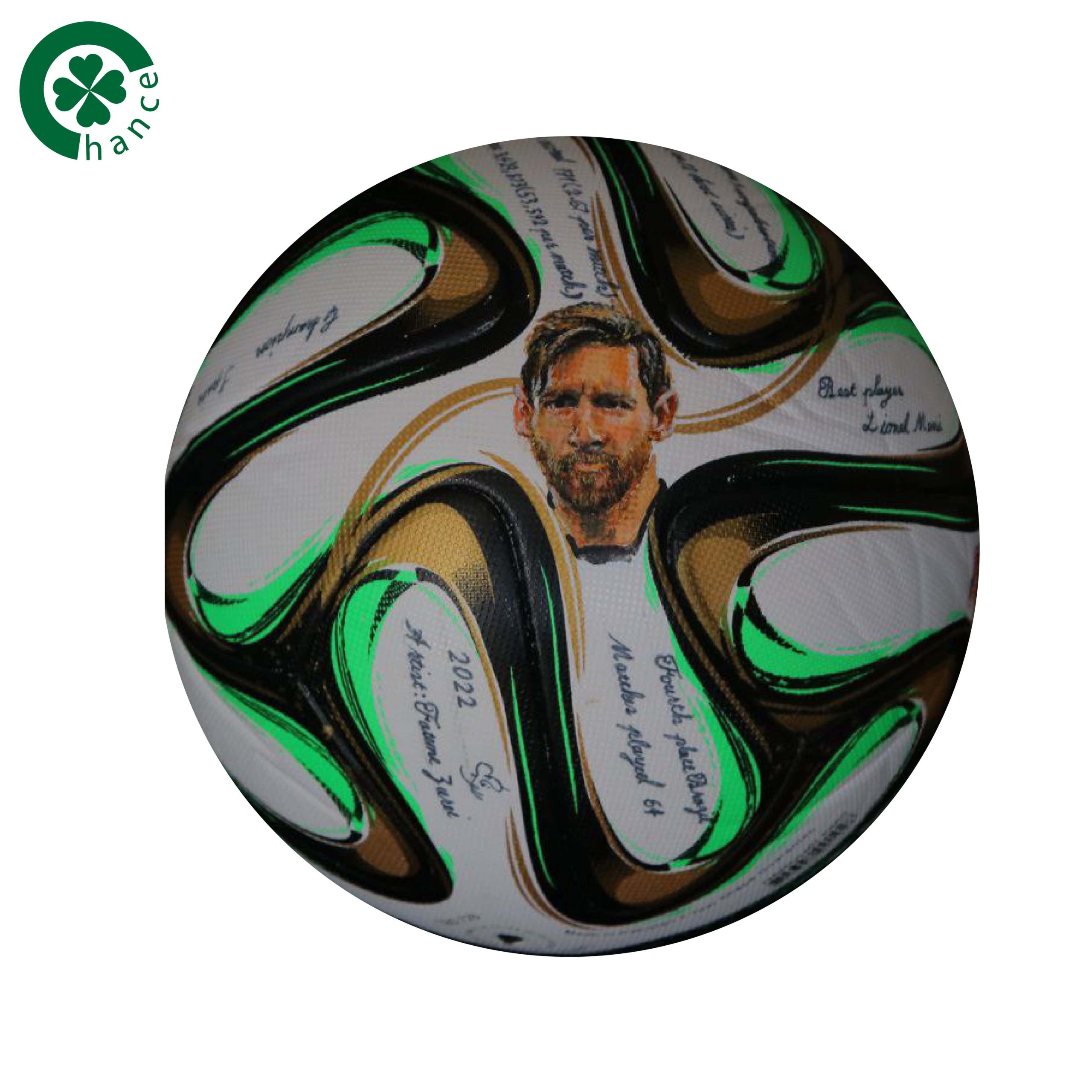
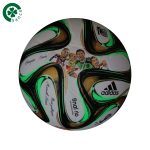
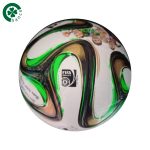
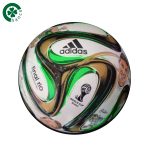
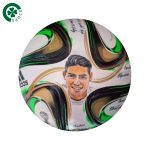
2014 World Cup Painted Ball
In Stock
Highlights:
CompareProduct Name : 2014 World Cup Painted Ball
Date of Registration : 02/01/2023
Category Art : Painting
Art Field : Visual Arts
Total Production : One Collection with Twenty Three Balls
Production Year : 2022
Art Style : Acrylic
Ball Name : Brazuca
Artist Name : Fatemeh Zarei
Size : 5
Weight (gr) : 425 – 432
Has a signature : Yes
Materials :
The Brazuca official match ball has only 6 flat parts, 12 seams and 8 joint points – but the seams do not go along the edges of the cube they go over a complex curve. This provide suitable aerodynamics and an unrivaled circular shape to the ball.
The Brazuca 2014 ball decorated with ribbons of three colors, which symbolizing the so-called bracelets desires in Brazil. According to legend, the bangle should be wrapped around the wrist and tie the knot three with making a wish on each of them. When the bracelet will tear himself fall from his hands, they believed that it’s made wishes should start to come true.
About Brazuca :
The name of the 2014 World Cup ball has been selected in an open vote, which was attended by more than 1 million of Brazilians. Has been proposed 3 names: Brazuca (77.5%), Carnavalesca (14.6%) and Bossa Nova (7.6%).
Categories: Balls Collections, Painting Collections
Related products

Maryam Mirzakhani
Rated 0 out of 5
(0)
Highlights:
Maryam Mirzakhani
(12 May 1977-14 July 2017) was an Iranian mathematician and a professor of mathematics at Stanford University. Her research topics included Teichmüller theory, hyperbolic geometry, ergodic theory, and symplectic geometry. In 2005, as a result of her research, she was honored in Popular Science’s fourth annual “Brilliant 10” in which she was acknowledged as one of the top 10 young minds who have pushed their fields in innovative directions.

Anna Wintour
Rated 0 out of 5
(0)
Highlights:
Queen of the fashion world
Dame Anna Wintour DBE (born 3 November 1949) is a British-American journalist, who has served as Editor-in-Chief of Vogue since 1988 and Global Chief Content Officer for Condé Nast since 2020;
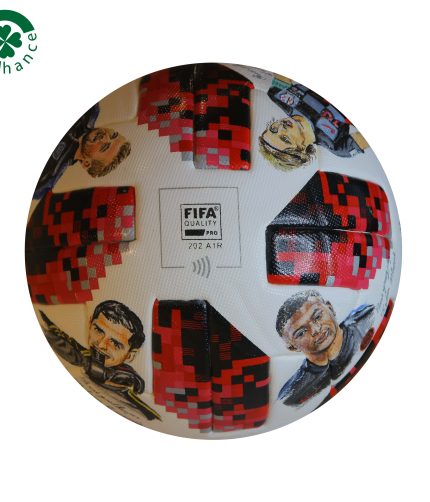
2018 World Cup Painted Ball
Rated 0 out of 5
(0)
Highlights:
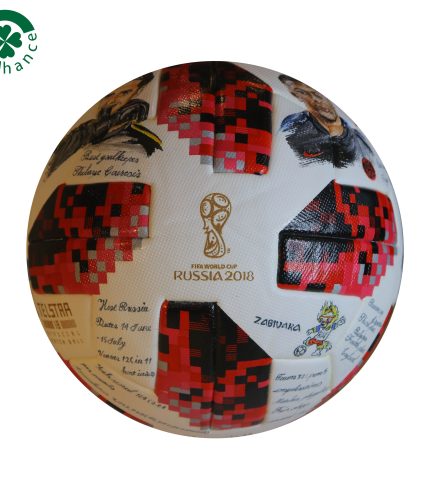
Product Name : 2018 World Cup Painted Ball
Date of Registration : 02/01/2023
Category Art : Painting
Art Field : Visual Arts
Total Production : One Collection with Twenty Three Balls
Production Year : 2022
Art Style : Acrylic
Ball Name : Adidas Telstar 18
Artist Name : Fatemeh Zarei
Size : 5
Weight (gr) : 430 – 440
Has a signature : Yes
Materials :
Telstar 18 consists of 6 panels of Impranil®, a 65% recyclable, waterborne polyurethane (without co-solvents), glued with Dispercoll®, a waterborne environment friendly adhesive; the innermost layer of the ball skin is an adhesion coating that connects the textile substrate to the layers above. On top of this is a polyurethane foam layer, roughly one millimeter thick. Two compact layers of polyurethane provide the ball with very high elasticity, resistance to abrasion, and return to its original shape immediately after the kick (tests ensure that the ball would retain its shape even if fired at a steel wall 2,000 times at 50 km per hour). The technology and the materials used were studied to make the flight paths of the ball more Predictable, even if the subtle deformity created when it is kicked Is of course an unpredictable factor.
Telstar 18 contains also a microchip, which connects to your Smartphone and allows you to get information about the World Cup and matches.
About Telstar 18 :
Telstar 2018 is the name of the ball designed by Adidas specifically For the FIFA World Cup Russia 2018, a redesign of the first ball Manufactured by Adidas for the 1970 FIFA World Cup, when it was Held in Mexico.
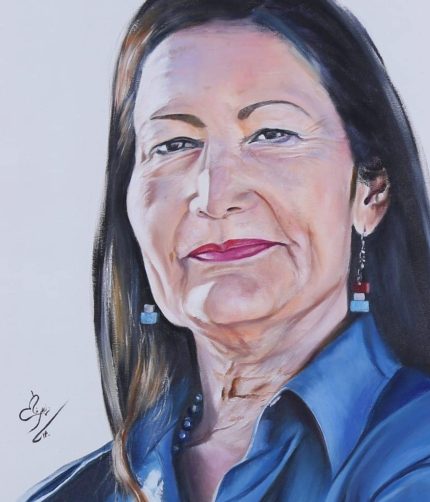
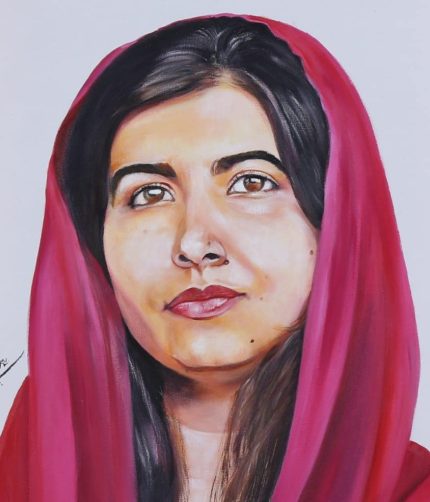
Malala Yousafzai
Rated 0 out of 5
(0)
Highlights:
(born 12 July 1997), she’s a Pakistani activist for female education and a Nobel Peace Prize laureate. At age 17, She is also the world’s youngest Nobel Prize laureate, and second Pakistani. She is known for human rights advocacy, especially the education of women and children.
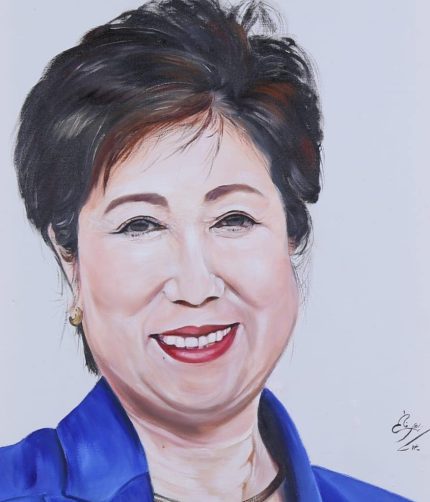
Yoriko Kuike
Rated 0 out of 5
(0)
Highlights:
She’s The first female governor of Tokyo, the capital of Japan and the most populous city in the world. When we know that Tokyo has a population of more than 38 million people, that is, as much as the population of several European countries, the importance of Ms. Koike’s role in governing Tokyo becomes even more apparent.
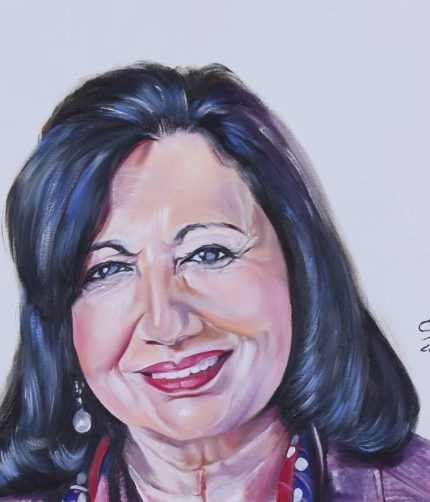
Mazumdar Shaw
Rated 0 out of 5
(0)
Highlights:
Mazumdar-Shaw dislikes the term ‘philanthropy”, believing that it often provides temporary fixes rather than addressing the root cause or the underlying situation. She prefers the term “compassionate capitalist”
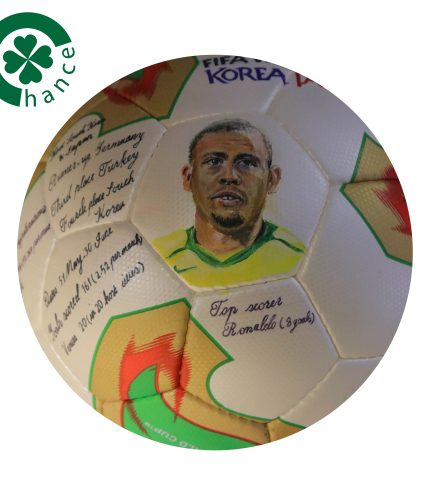
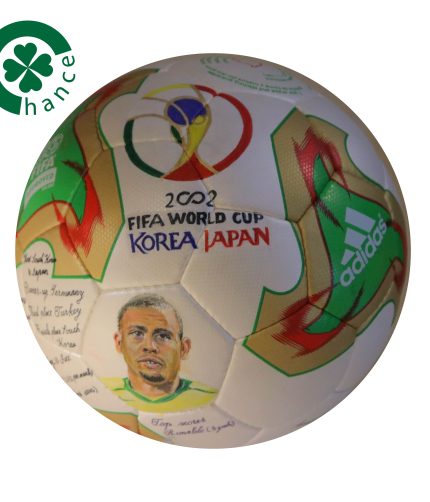
2002 World Cup Painted Ball
Rated 0 out of 5
(0)
Highlights:
Product Name : 2002 World Cup Painted Ball
Date of Registration : 02/01/2023
Category Art : Painting
Art Field : Visual Arts
Total Production : One Collection with Twenty Three Balls
Production Year : 2022
Art Style : Acrylic
Ball Name : Fevernova
Artist Name : Fatemeh Zarei
Size : 5
Weight (gr) : 389 – 398
Has a signature : Yes
Materials :
Adidas’s Fevernova soccer ball was the official ball of the Korea Japan, 2002 FIFA world cup. The adidas Fevernova was the first World Cup Match Ball since 1978 to break with the traditional Tango design introduced in 1978. It is three millimeters thick (11 layers). This includes a special foam layer with tiny gas filled balloons imbedded in a syntactic foam. The foam is based on an abrasion resistant polyurethane made by Bayer called Impranil® polyurethane. The outer cover of the ball consists of a combination of special synthetic polystyrenes (polyurethane) and natural rubber. Embedded within the layers are equal sized, highly elastic, exceptionally resistant gas-filled microcells. The inner lining consists of a tightly woven network of knitted, synthetic Raschel fabric. The spongy layer has high modulus of compression, with a good elastic memory. These layers give the Fevernova TM improved rebound characteristics, which convert foot strike into ball acceleration. The outer layer of the ball is made of a particularly so that the ball can withstand exceptionally tough treatment. All of this combines to give the ball greater durability. According to Adidas, the surface of the new ball converts applied energy evenly at every point. Theoretically, this gives a more calculable, flight path with advanced players. The Adidas Fevernova TM is made to meet the lower end of FIFA regulations governing circumference and the upper limit of weight , in which smaller and heavier sphere has a more accurate trajectory.
About Fevernova :
The ball Fevernova has been obtained as a result of three years of work to improve the previous Tricolore ball at the research center in south of Germany.
The new design is based on Asian culture and are not similar to its predecessors. This ball featured a refined syntactic foam layer, to give the ball superior performance characteristics, and a three-layer knitted chassis, allowing for a more precise and predictable flight path. For the World Cup matches has been presented more than 2,500 balls Fevernova, and later around the world has been sold about six million replicas.
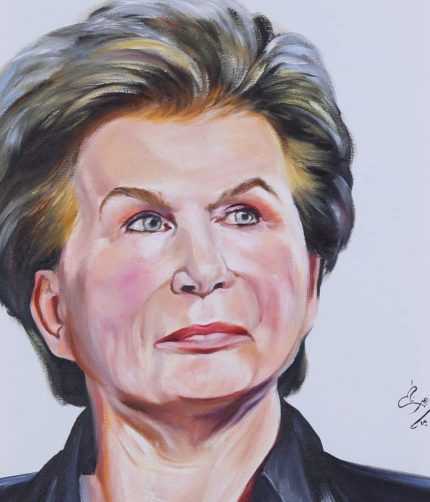
Valentina Tereshkova
Rated 0 out of 5
(0)
Highlights:
he first woman cosmonaut in the world
The history of humans in space dates back to 1961, and the first women stepped into space in 1963
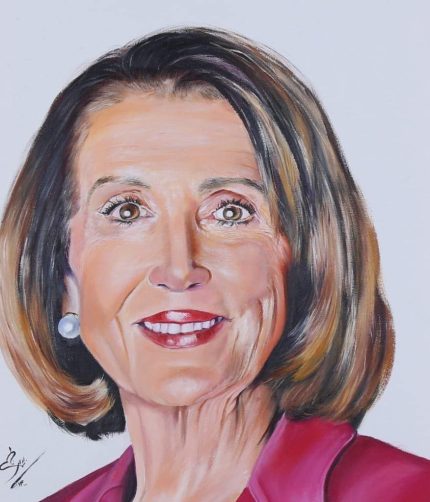
Nansy Pelosi
Rated 0 out of 5
(0)
Highlights:
the first Californian, the first Italian-American and the first woman to become Speaker of the US House of Representatives
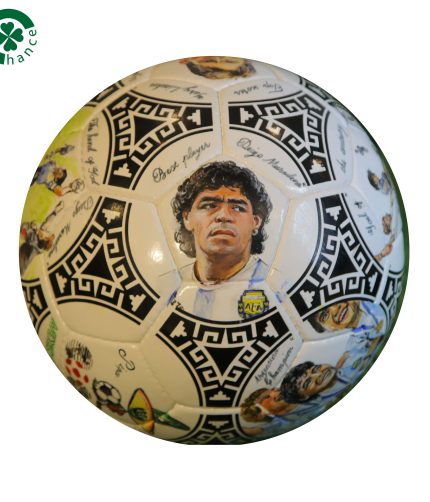
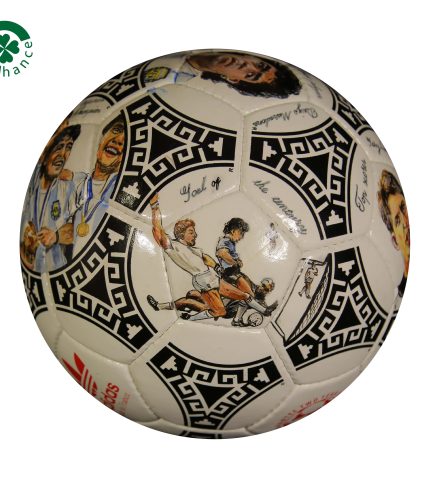
1986 World Cup Painted Ball
Rated 0 out of 5
(0)
Highlights:
Product Name : 1986 World Cup Painted Ball
Date of Registration : 02/01/2023
Category Art : Painting
Art Field : Visual Arts
Total Production : One Collection with Twenty Three Balls
Production Year : 2022
Art Style : Acrylic
Ball Name : Azteca
Artist Name : Fatemeh Zarei
Size : 5
Weight (gr) : 380 – 410
Has a signature : Yes
Materials :
A completely new model was developed for the World Cup in Mexico. The Azteca Mexico was a hand-sewn ball, and for the first time, synthetic material, rather than leather was used to produce it. The ball consisted of an outer polyurethane wearing coat and three lower layers, which mutually complemented one another with their different “Adicron” structures. These were intended to ensure the ball’s resistance, ability to retain its shape and its waterproof properties. With its never-before-achieved performance on hard ground, at high altitude, and in wet conditions, Azteca represented a massive leap forward for the game. Its elaborately decorated design was inspired by the hosting nation’s native Aztec architecture and murals.
About Questra :
Azteca ball – first ball which has been made of fully synthetic material. Triad used in the design of the ball, where were painted like Aztecs frescoes. The Adidas Azteca ball was quite an elegant ball with revolutionary design but even though it was still composed by 32 hand sewn panels.
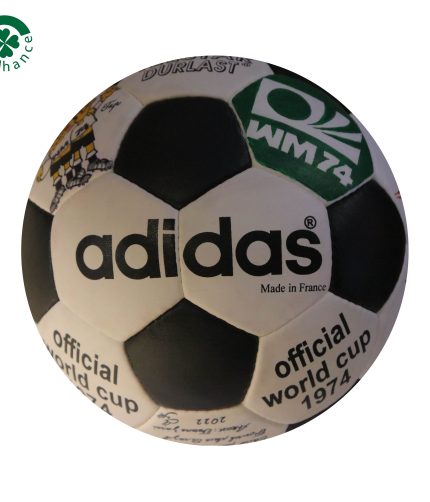
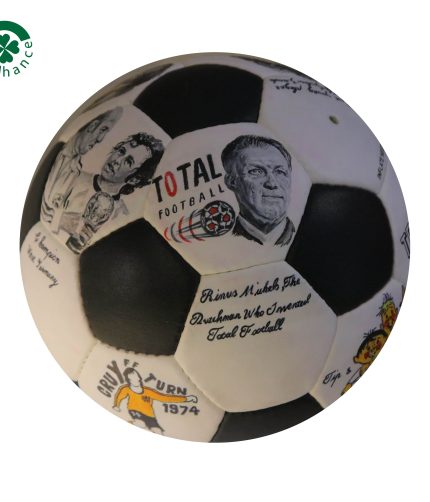
1974 World Cup Painted Ball
Rated 0 out of 5
(0)
Highlights:
Product Name : 1974 World Cup Painted Ball
Date of Registration : 02/01/2023
Category Art : Painting
Art Field : Visual Arts
Total Production : One Collection with Twenty Three Balls
Production Year : 2022
Art Style : Acrylic
Ball Name : Telstar Durlast
Artist Name : Fatemeh Zarei
Size : 5
Weight (gr) : 428 – 436
Has a signature : Yes
Materials :
It’s first Adidas ball which was using in a World Cup. It was made of leather and was shaped like a truncated icosahedron, composed of 12 black pentagons and 20 white hexagons. Name of the ball Telstar was formed from the respective titles of the American artificial satellite of Earth, put into orbit in 1962. Moreover, the ball has been nicknamed “Star of Television”, because design of the ball is compatible for black-and-white TV.
About Telstar Durlast :
The ball used for the 1970 and 1974 World Cup was the Telstar, design by Adidas. It was the first white football ever to be painted with black pentagons which became synonymous with football throughout the world. The distinct 32 white and black leather panels that comprised the Telstar made it the roundest ball of its time.
Recently Viewed
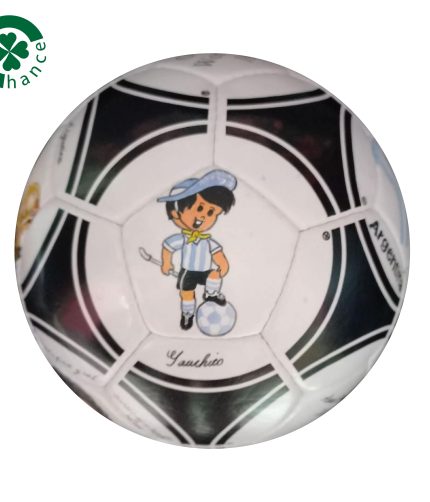
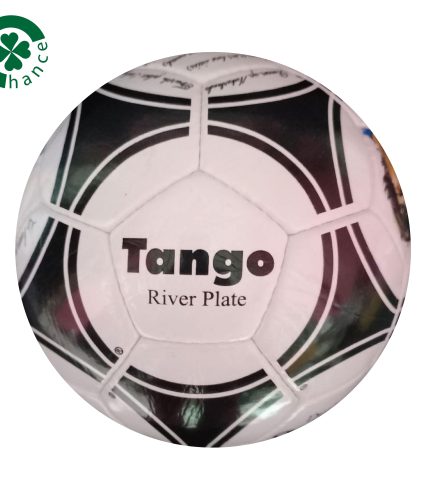
1978 World Cup Painted Ball
Rated 0 out of 5
(0)
Highlights:
Product Name : 1978 World Cup Painted Ball
Date of Registration : 02/01/2023
Category Art : Painting
Art Field : Visual Arts
Total Production : One Collection with Twenty Three Balls
Production Year : 2022
Art Style : Acrylic
Ball Name : Tango Durlast
Artist Name : Fatemeh Zarei
Size : 5
Weight (gr) : 394 – 404
Has a signature : Yes
Materials :
The 1978 World Cup came back to America, being hosted by Argentina. In respect of the official ball, this edition represented a great milestone, because Adidas launched a model with a revolutionary design: the Tango – inspired by the classic dance of Argentina. This ball was identically constructed to the previous World Cup ball, the Telstar from 1974. It was composed of 32 hand sewn leather panels (20 hexagonal and 12 pentagonal) and covered by the Durlast coating (applied with the same thickness of the 1974 Telstar) to
make the ball more resistant and waterproof. The design consisted of 20 black and promptly curved triangles, each one printed onto the white coloured surface of each hexagonal panel. Since the pentagonal panels were white coloured too, the triangles created a series of black and elegant circles on a white surface. When the ball was rotating, a nice effect was created by the black circles, which was visually very attractive.
About Tango Durlast:
For World Cup 1978 has been created ball Tango, which according to the authors should reflect the elegance, dynamism and passion. The design used 20 triads, create an optical impression of 12 identical circles. One advantage of Tango compared to other balls was considered as improved resistance to weathering.
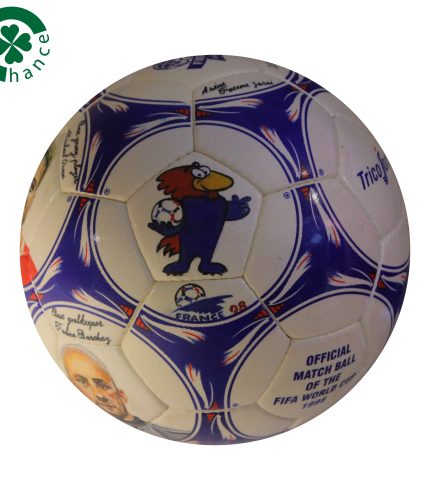
1998 World Cup Painted Ball
Rated 0 out of 5
(0)
Highlights:
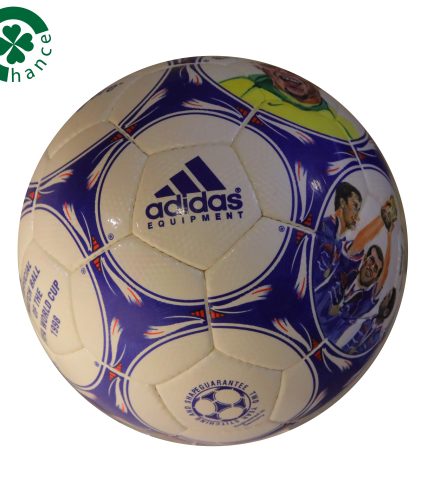
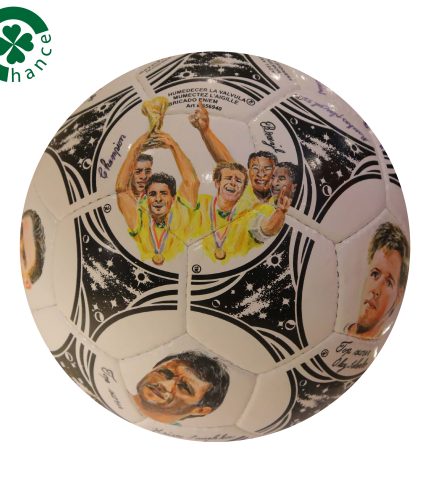
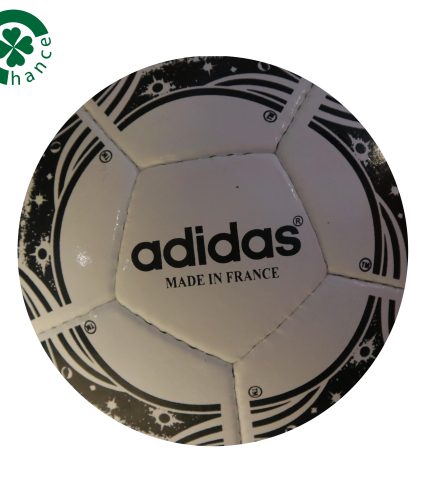
Product Name : 1998 World Cup Painted Ball
Date of Registration : 02/01/2023
Category Art : Painting
Art Field : Visual Arts
Total Production : One Collection with Twenty Three Balls
Production Year : 2022
Art Style : Acrylic
Ball Name : Tricolore
Artist Name : Fatemeh Zarei
Size : 5
Weight (gr) : 416 – 426
Has a signature : Yes
Materials :
Many people believe that the Tricolore was the first colored Adidas ball produced for major tournaments, but this is not true: in 1996, colored balls were already used at the European Championships (adidas Questra Europa) and the Olympics (Adidas Questra Olympia). So the statement is only correct like this: the Tricolore was the first colored Adidas World Cup ball. But this is not the only reason why the Tricolore has become an eternally defining ball. After all, this was the last World Cup ball since 1978 with the Tango design. (The Tango design was used for two more years, on the official ball of the 1999 Women’s World Cup as Adidas Icon, on the ball of the 2000 European Championship as Terrestra Silverstream and at the 2000 Olympic Games as Gamarada). The name and colors of the Tricolore ball refer to the French flag. Michel Platini specifically instructed Adidas to include French industry among the motifs on the ball, which is how the turbine came to be. But the Tango model also features the Gallic rooster, whose red crest evokes the manufacturers logo, which is a brilliant design element, and many consider the Tricolore to be the most beautiful Adidas ball to date.
About Tricolore :
Tricolore ball was the first colored ball of world championship. The Adidas Tricolore was used synthetic foam layer with a regular array of durable micro-cells filled with gas. This structure provides durability and good tactile contact with the ball. It’s first time, since 1970, when the World Cup ball was made not in Europe: Adidas Tricolore has been created in Morocco.
1994 World Cup Painted Ball
Rated 0 out of 5
(0)
Highlights:
Product Name : 1994 World Cup Painted Ball
Date of Registration : 02/01/2023
Category Art : Painting
Art Field : Visual Arts
Total Production : One Collection with Twenty Three Balls
Production Year : 2022
Art Style : Acrylic
Ball Name : Questra
Artist Name : Fatemeh Zarei
Size : 5
Weight (gr) : 388 – 398
Has a signature : Yes
Materials :
At the 1990 World Cup in Italy, a negative World Cup record was set in terms of goals (2.21 goals/match), so many blamed the ball Before the next World Cup, FIFA asked adidas to develop a ball that could score more goals. The 1994 World Cup was brought to the USA in part to promote soccer, but if viewers don’t see enough goals, they tune out of the games on TV and think soccer is a boring
sport. The changes to the ball were successful, as the American World Cup had a higher goal average (2.7 goals/match), which they have not been able to surpass in any World Cup since then.
And what were the changes on the ball? Well, the Questra was lighter and more controllable than its predecessor, which favored more skilled players. Five different materials were used during development, and its most significant innovation was the flexible but resistant outer polyurethane layer, which softened the force of impacts thanks to foaming, and it was also beneficial for the headers.
This is due to the fact that the ball was developed at adidas’ ball production center in France and tested by French, German and American professional, amateur and youth teams.
About Questra :
Name of the Questra ball comes from ancient world for the pursuit to the stars (the quest for the stars). Authors aimed to create a more responsive and light ball, what they got fully. By manufacturing the new ball from five different materials and enveloping it in polystyrene foam, Adidas made the Questra more waterproof and allowed for greater acceleration when kicked. Triads which used in the design of Adidas Questra, display the outlines of stars.
1990 World Cup Painted Ball
Rated 0 out of 5
(0)
Highlights:
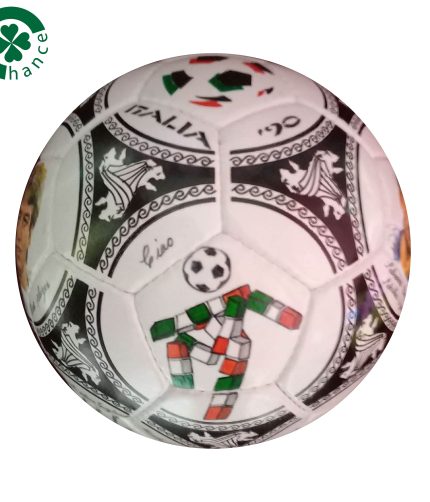
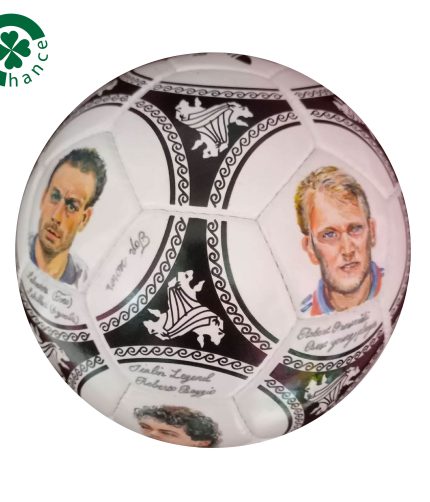
Product Name : 1990 World Cup Painted Ball
Date of Registration : 02/01/2023
Category Art : Painting
Art Field : Visual Arts
Total Production : One Collection with Twenty Three Balls
Production Year : 2022
Art Style : Acrylic
Ball Name : Etrusco Unico
Artist Name : Fatemeh Zarei
Size : 5
Weight (gr) : 410 – 420
Has a signature : Yes
Materials :
In 1990, adidas continued the tradition of naming the World Cup ball in honor of the host country. Etrusco Unico commemorates the ancient Etruscan civilization and art, dating back to the 9th century BC. and flourished in the Apennine Peninsula, in today’s Italy. The inscription “Etrusco” is written on the ball in ancient Greek style, while “Unico” is written in the usual Latin letters. Of course, the Tango motif was left on this ball as well, and here three Etruscan-style lion heads were placed on it. The number three referred to the three layers that protected the inside of the ball. The bottom layer was made of a mixture of textile and latex for stability and tear resistance, the next neoprene was responsible for water repellency, while the outer polyurethane foam layer ensured abrasion resistance and good puncture characteristics.
About Etrusco Unico:
The name and design of the ball were invented in honor of the history of ancient Italy and fine art of the Etruscans. Three Etruscan lion heads decorate each of the 20 triads, used in design of ball. Compared with its predecessors Etrusco had improved the quality of water resistance, durability and rebound. It’s the first ball with an internal layer of black polyurethane foam.
1934 World Cup Painted Ball
Rated 0 out of 5
(0)
Highlights:
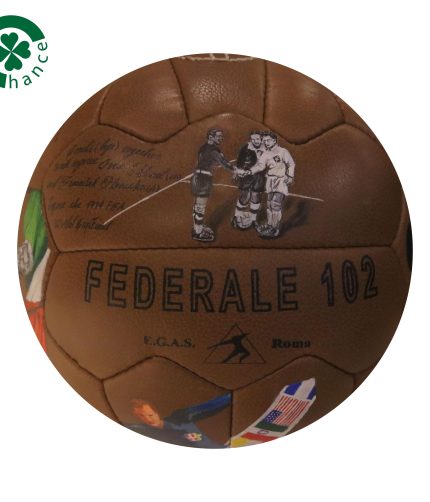
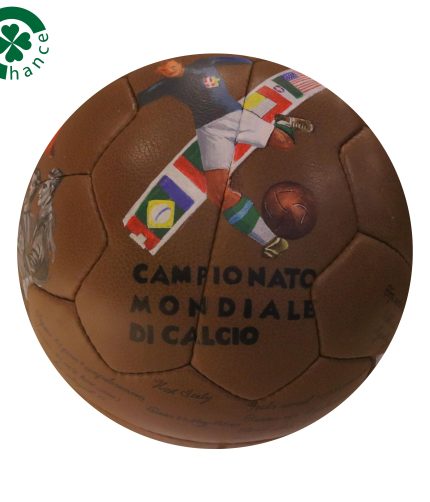
Product Name : 1934 World Cup Painted Ball
Date of Registration : 02/01/2023
Category Art : Painting
Art Field : Visual Arts
Total Production : One Collection with Twenty Three Balls
Production Year : 2022
Art Style : Acrylic
Ball Name : The Federale 102
Artist Name : Fatemeh Zarei
Size : 5
Weight (gr) : 380 – 420
Has a signature : Yes
Materials :
The Federale 102 ball was composed by 13 polygonal panels which were cut and perfectly fitted together by hand sewing. Most of the classic balls at that time were 12 panel models (like the ones used 4 years ago in the first World Cup) but the Federale 102 brought an invention of having the laces on a separate panel to inflate the balls. The bladder was enclosed by lace with 6 rows. For the very first time the leather laces of a World Cup ball were replaced by brown cotton,very similar to the ones used on shoes. This represents a small detail but an important improvement, as well. As cotton is much softer than any leather,this encouraged players to head the ball more.
About The Federale 102 :
As the second World Cup was approaching,the fascist regime of Mussolini became so powerful that Italy was chosen to be the host of the 1934 FIFA World Cup.The strong nationalism requested that the balls used in the tournament had to be produced in Italy. In the beginning of the 20th century the majority of footballs were made in Britain and were exported to different countr ies where footba ll became more and more popular and equipment was badly needed. But as previously mentioned, the Italian political power insisted on using Italian made balls for the first World Cup to be hosted in Europe.
Reviews
There are no reviews yet.