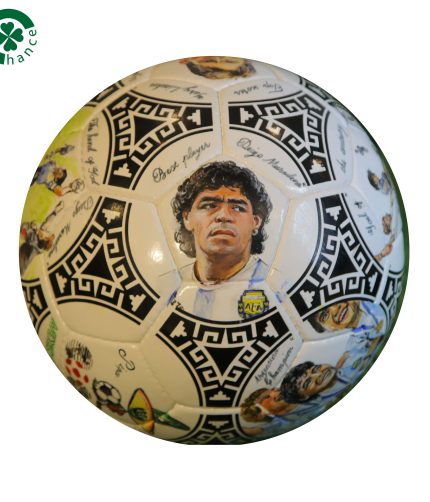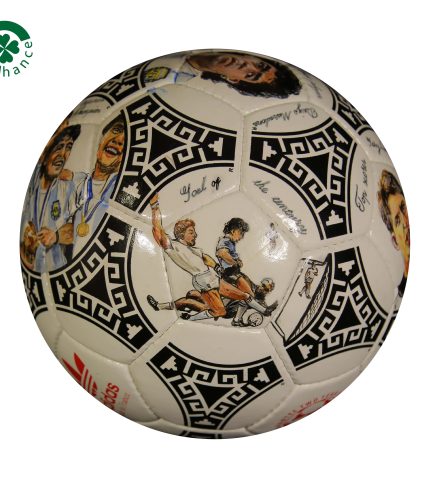
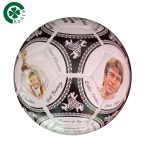
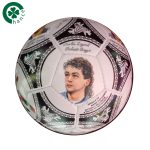
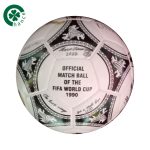
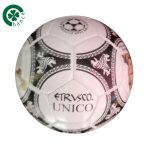
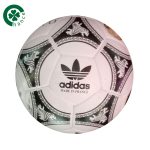
1990 World Cup Painted Ball
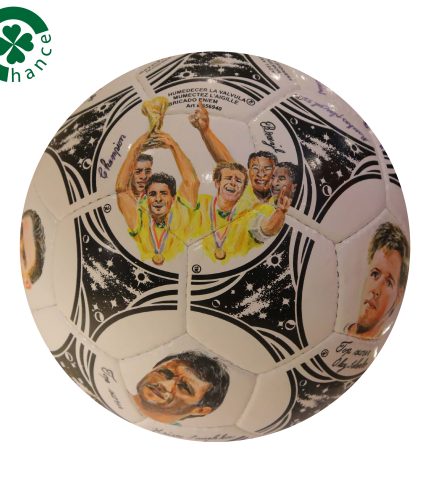
Product Name : 1990 World Cup Painted Ball
Date of Registration : 02/01/2023
Category Art : Painting
Art Field : Visual Arts
Total Production : One Collection with Twenty Three Balls
Production Year : 2022
Art Style : Acrylic
Ball Name : Etrusco Unico
Artist Name : Fatemeh Zarei
Size : 5
Weight (gr) : 410 – 420
Has a signature : Yes
Materials :
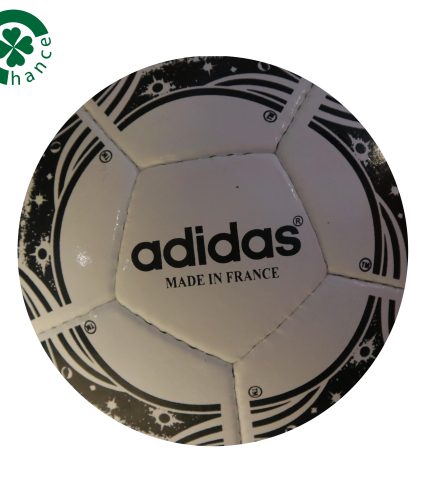
In 1990, adidas continued the tradition of naming the World Cup ball in honor of the host country. Etrusco Unico commemorates the ancient Etruscan civilization and art, dating back to the 9th century BC. and flourished in the Apennine Peninsula, in today’s Italy. The inscription “Etrusco” is written on the ball in ancient Greek style, while “Unico” is written in the usual Latin letters. Of course, the Tango motif was left on this ball as well, and here three Etruscan-style lion heads were placed on it. The number three referred to the three layers that protected the inside of the ball. The bottom layer was made of a mixture of textile and latex for stability and tear resistance, the next neoprene was responsible for water repellency, while the outer polyurethane foam layer ensured abrasion resistance and good puncture characteristics.
About Etrusco Unico:
The name and design of the ball were invented in honor of the history of ancient Italy and fine art of the Etruscans. Three Etruscan lion heads decorate each of the 20 triads, used in design of ball. Compared with its predecessors Etrusco had improved the quality of water resistance, durability and rebound. It’s the first ball with an internal layer of black polyurethane foam.
Related products
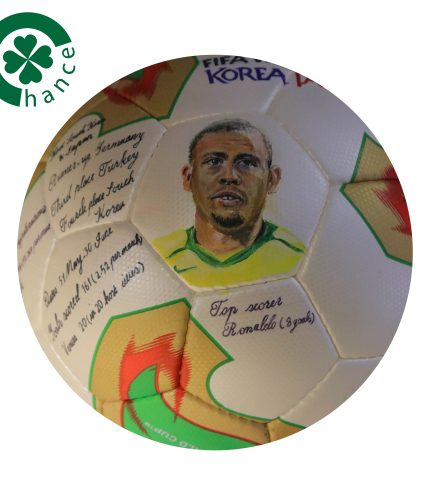
2002 World Cup Painted Ball
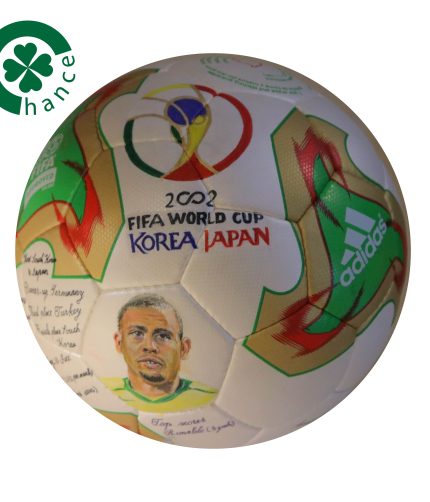
Product Name : 2002 World Cup Painted Ball
Date of Registration : 02/01/2023
Category Art : Painting
Art Field : Visual Arts
Total Production : One Collection with Twenty Three Balls
Production Year : 2022
Art Style : Acrylic
Ball Name : Fevernova
Artist Name : Fatemeh Zarei
Size : 5
Weight (gr) : 389 – 398
Has a signature : Yes
Materials :
Adidas’s Fevernova soccer ball was the official ball of the Korea Japan, 2002 FIFA world cup. The adidas Fevernova was the first World Cup Match Ball since 1978 to break with the traditional Tango design introduced in 1978. It is three millimeters thick (11 layers). This includes a special foam layer with tiny gas filled balloons imbedded in a syntactic foam. The foam is based on an abrasion resistant polyurethane made by Bayer called Impranil® polyurethane. The outer cover of the ball consists of a combination of special synthetic polystyrenes (polyurethane) and natural rubber. Embedded within the layers are equal sized, highly elastic, exceptionally resistant gas-filled microcells. The inner lining consists of a tightly woven network of knitted, synthetic Raschel fabric. The spongy layer has high modulus of compression, with a good elastic memory. These layers give the Fevernova TM improved rebound characteristics, which convert foot strike into ball acceleration. The outer layer of the ball is made of a particularly so that the ball can withstand exceptionally tough treatment. All of this combines to give the ball greater durability. According to Adidas, the surface of the new ball converts applied energy evenly at every point. Theoretically, this gives a more calculable, flight path with advanced players. The Adidas Fevernova TM is made to meet the lower end of FIFA regulations governing circumference and the upper limit of weight , in which smaller and heavier sphere has a more accurate trajectory.
About Fevernova :
The ball Fevernova has been obtained as a result of three years of work to improve the previous Tricolore ball at the research center in south of Germany.
The new design is based on Asian culture and are not similar to its predecessors. This ball featured a refined syntactic foam layer, to give the ball superior performance characteristics, and a three-layer knitted chassis, allowing for a more precise and predictable flight path. For the World Cup matches has been presented more than 2,500 balls Fevernova, and later around the world has been sold about six million replicas.
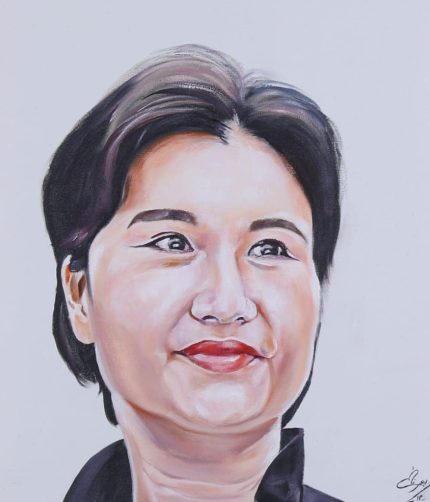
Zhou Qunfei
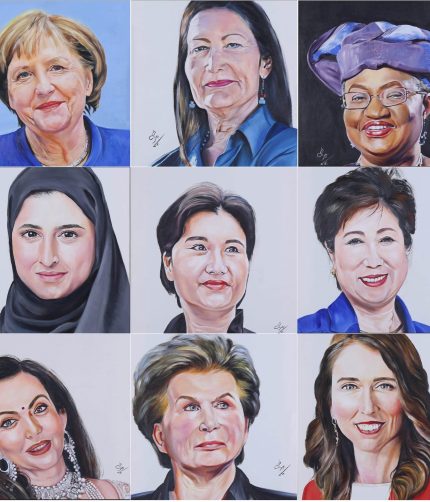
She’s a Chinese entrepreneur (born 1970) who founded the major touchscreen maker Lens Technology. In 2018, she was named the world’s richest self-made woman, with a net worth of $9.8 billion. She has a net worth of $ 12.5 billion and is the China’s fifth richest woman.
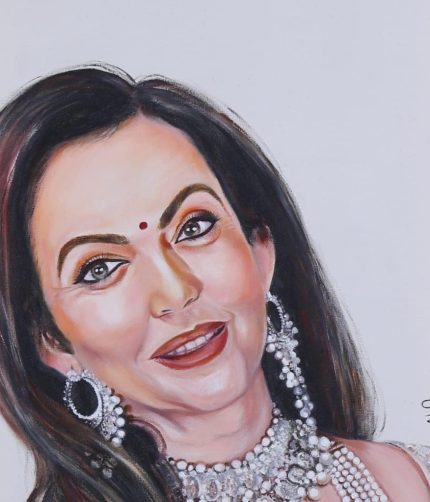
Nita Ambani
Nita Ambani(born 1 November1963) is an Indian
philanthropist. She is the chairperson and founder of
the Reliance Foundation, Dhirubhai Ambani International
School and a director of Reliance Industries. She is
married to Reliance Industries chairman and managing
director Mukesh Ambani, the Ambanis are among the
richest in the world. She is also an art collector and owner
of the Indian Premier League cricket team Mumbai
Indians.
Maryam Mirzakhani
Maryam Mirzakhani
(12 May 1977-14 July 2017) was an Iranian mathematician and a professor of mathematics at Stanford University. Her research topics included Teichmüller theory, hyperbolic geometry, ergodic theory, and symplectic geometry. In 2005, as a result of her research, she was honored in Popular Science’s fourth annual “Brilliant 10” in which she was acknowledged as one of the top 10 young minds who have pushed their fields in innovative directions.
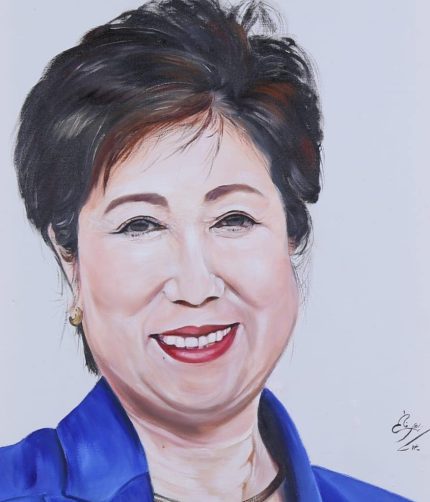
Yoriko Kuike
She’s The first female governor of Tokyo, the capital of Japan and the most populous city in the world. When we know that Tokyo has a population of more than 38 million people, that is, as much as the population of several European countries, the importance of Ms. Koike’s role in governing Tokyo becomes even more apparent.
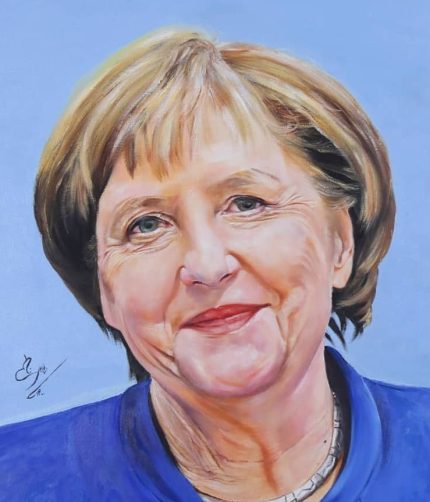
Angela Merkel
Angela Merkel Chancellor of Germany
The Most Influential Political woman in art
Mazumdar Shaw
Mazumdar-Shaw dislikes the term ‘philanthropy”, believing that it often provides temporary fixes rather than addressing the root cause or the underlying situation. She prefers the term “compassionate capitalist”
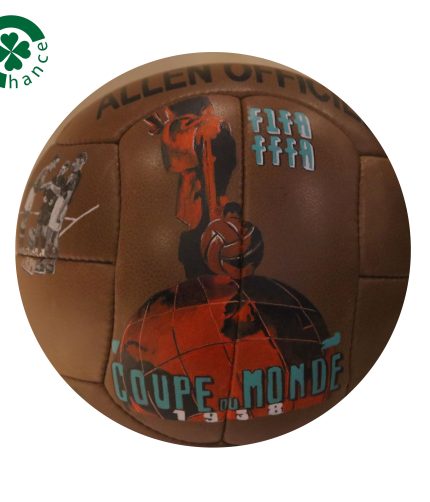
1958 World Cup Painted Ball
Product Name : 1958 World Cup Painted Ball
Date of Registration : 02/01/2023
Category Art : Painting
Art Field : Visual Arts
Total Production : One Collection with Twenty Three Balls
Production Year : 2022
Art Style : Acrylic
Ball Name : Top-Star
Artist Name : Fatemeh Zarei
Size : 5
Weight (gr) : 374- 334 gr
Has a signature : Yes
Materials :
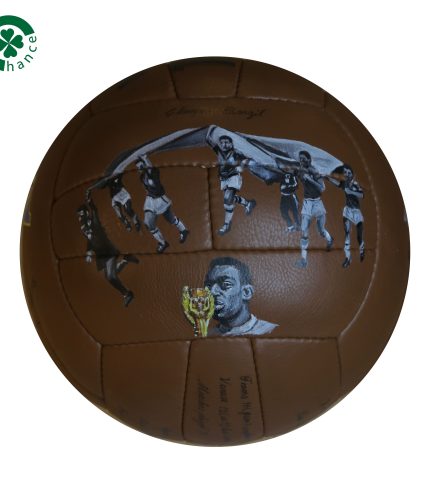
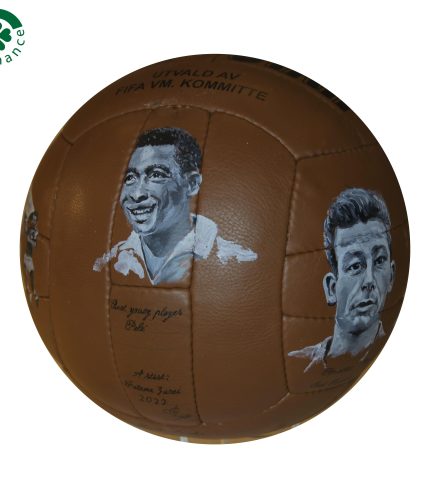
The Top Star ball had a popular design, it was similar to the balls of the time, however, on this ball there were long and short panels, elegantly alternated between them : two short panels in the midst of two long panels and the inflation valve was in the center of one short panel. This ball brought technological developements as well, these leather balls were treated with a waterproofing wax, making the balls more water resistant. The balls used in the 1958 World Cup were yellow, light brown or white. In matcheswhen it was rainy or a little wet (just like in the final between Brazil and Sweden) the white ones were used.
About Top-Star:
Official ball of the 1958 World Cup in Sweden was chosen as representatives of FIFA. Ball Top Star, made by Swedish firm “Sydsvenska Läder- och Remfabriken”, consisted of 24 panels and was presented in three colors – brown, orange and white, no branding. Each of the national teams participating in the World Cup, had at its disposal 30 balls.
1994 World Cup Painted Ball
Product Name : 1994 World Cup Painted Ball
Date of Registration : 02/01/2023
Category Art : Painting
Art Field : Visual Arts
Total Production : One Collection with Twenty Three Balls
Production Year : 2022
Art Style : Acrylic
Ball Name : Questra
Artist Name : Fatemeh Zarei
Size : 5
Weight (gr) : 388 – 398
Has a signature : Yes
Materials :
At the 1990 World Cup in Italy, a negative World Cup record was set in terms of goals (2.21 goals/match), so many blamed the ball Before the next World Cup, FIFA asked adidas to develop a ball that could score more goals. The 1994 World Cup was brought to the USA in part to promote soccer, but if viewers don’t see enough goals, they tune out of the games on TV and think soccer is a boring
sport. The changes to the ball were successful, as the American World Cup had a higher goal average (2.7 goals/match), which they have not been able to surpass in any World Cup since then.
And what were the changes on the ball? Well, the Questra was lighter and more controllable than its predecessor, which favored more skilled players. Five different materials were used during development, and its most significant innovation was the flexible but resistant outer polyurethane layer, which softened the force of impacts thanks to foaming, and it was also beneficial for the headers.
This is due to the fact that the ball was developed at adidas’ ball production center in France and tested by French, German and American professional, amateur and youth teams.
About Questra :
Name of the Questra ball comes from ancient world for the pursuit to the stars (the quest for the stars). Authors aimed to create a more responsive and light ball, what they got fully. By manufacturing the new ball from five different materials and enveloping it in polystyrene foam, Adidas made the Questra more waterproof and allowed for greater acceleration when kicked. Triads which used in the design of Adidas Questra, display the outlines of stars.
Oprah Winfrey
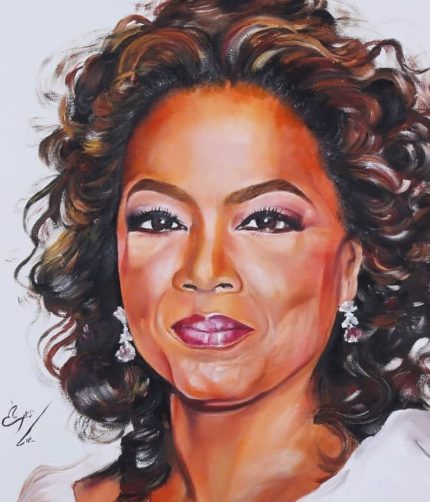
Producer, actor, presenter, philanthropist, Oscar winner, Golden Globe and BAFTA nominee, and one of the most famous television presenters in the United States and the world.
1986 World Cup Painted Ball
Product Name : 1986 World Cup Painted Ball
Date of Registration : 02/01/2023
Category Art : Painting
Art Field : Visual Arts
Total Production : One Collection with Twenty Three Balls
Production Year : 2022
Art Style : Acrylic
Ball Name : Azteca
Artist Name : Fatemeh Zarei
Size : 5
Weight (gr) : 380 – 410
Has a signature : Yes
Materials :
A completely new model was developed for the World Cup in Mexico. The Azteca Mexico was a hand-sewn ball, and for the first time, synthetic material, rather than leather was used to produce it. The ball consisted of an outer polyurethane wearing coat and three lower layers, which mutually complemented one another with their different “Adicron” structures. These were intended to ensure the ball’s resistance, ability to retain its shape and its waterproof properties. With its never-before-achieved performance on hard ground, at high altitude, and in wet conditions, Azteca represented a massive leap forward for the game. Its elaborately decorated design was inspired by the hosting nation’s native Aztec architecture and murals.
About Questra :
Azteca ball – first ball which has been made of fully synthetic material. Triad used in the design of the ball, where were painted like Aztecs frescoes. The Adidas Azteca ball was quite an elegant ball with revolutionary design but even though it was still composed by 32 hand sewn panels.


Reviews
There are no reviews yet.