
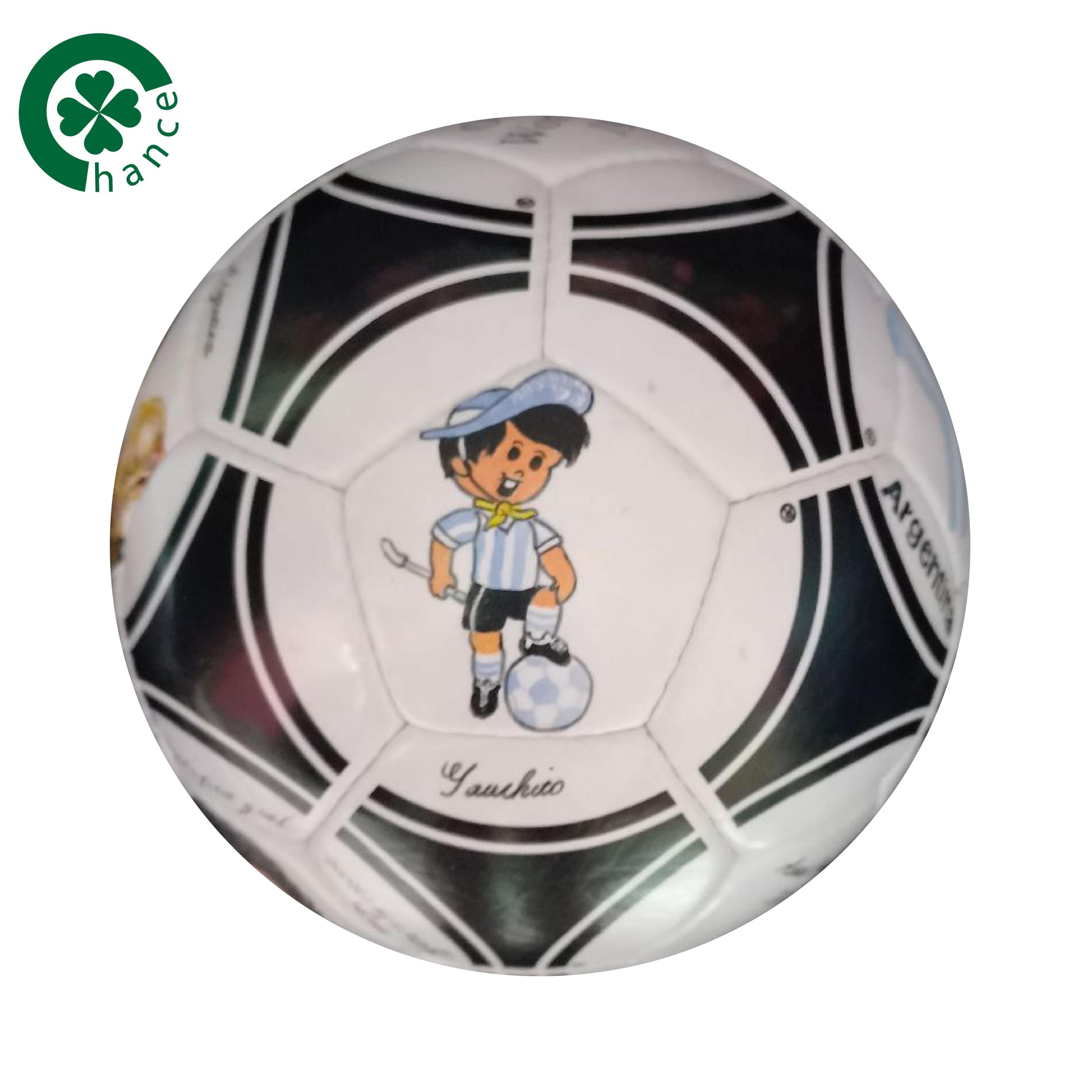
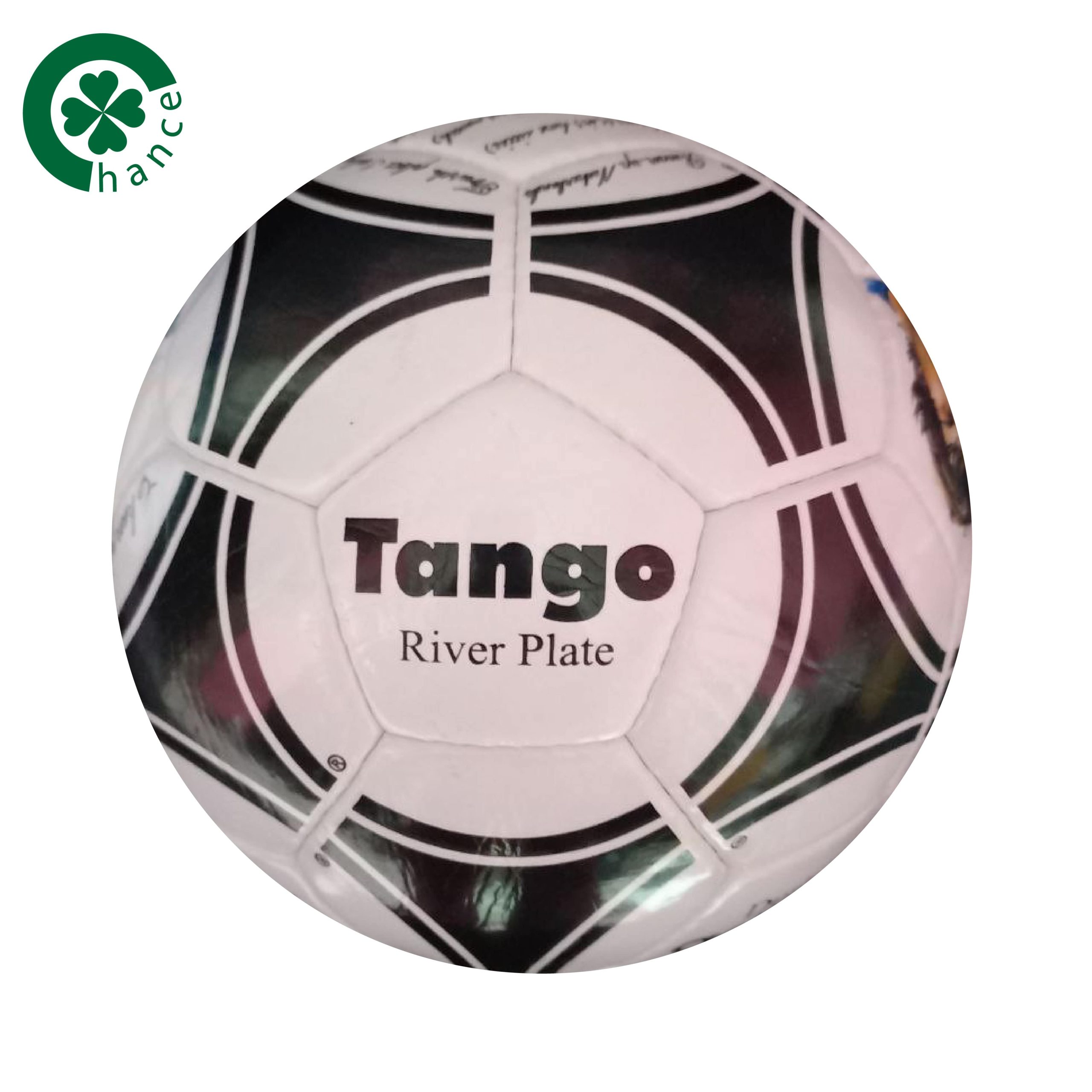
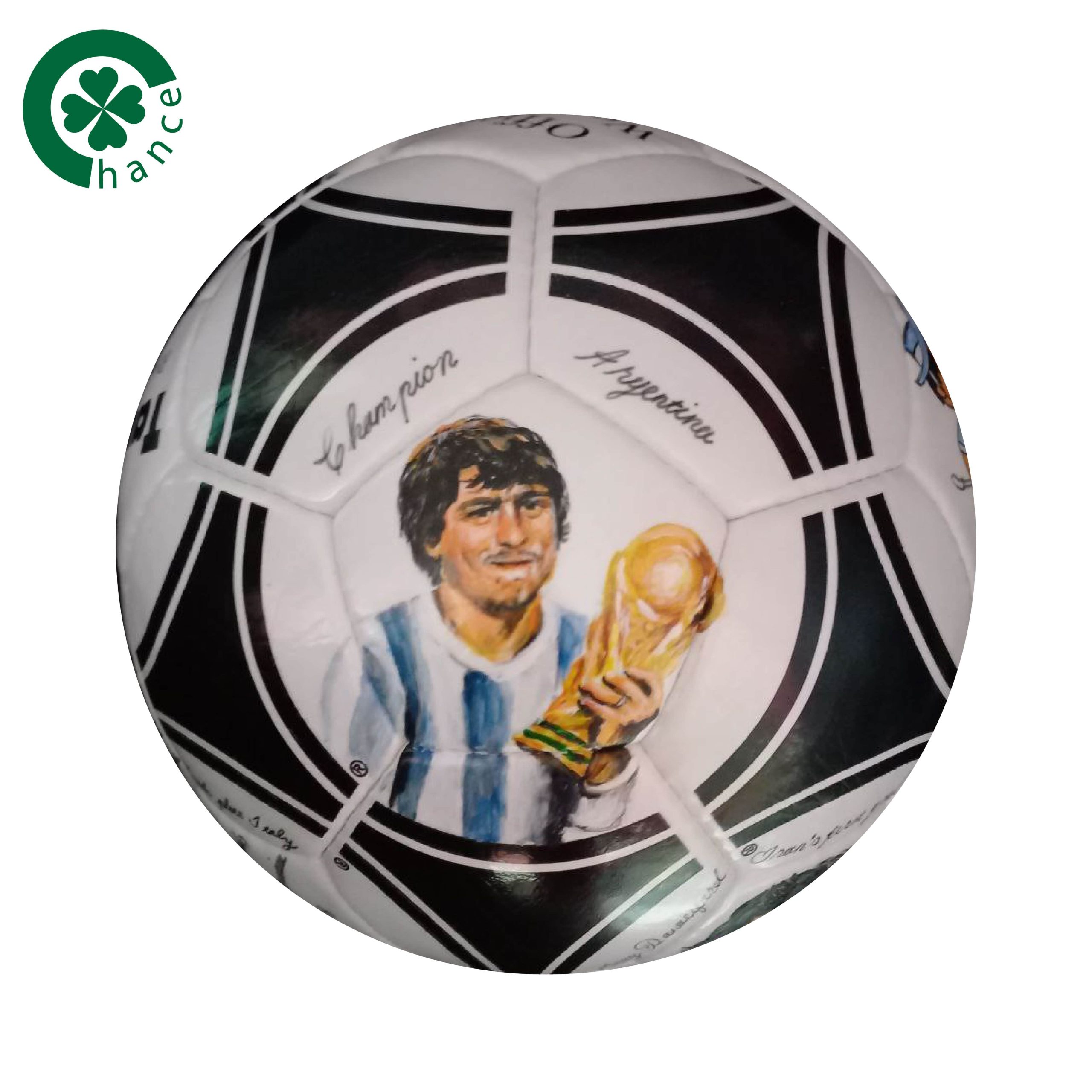
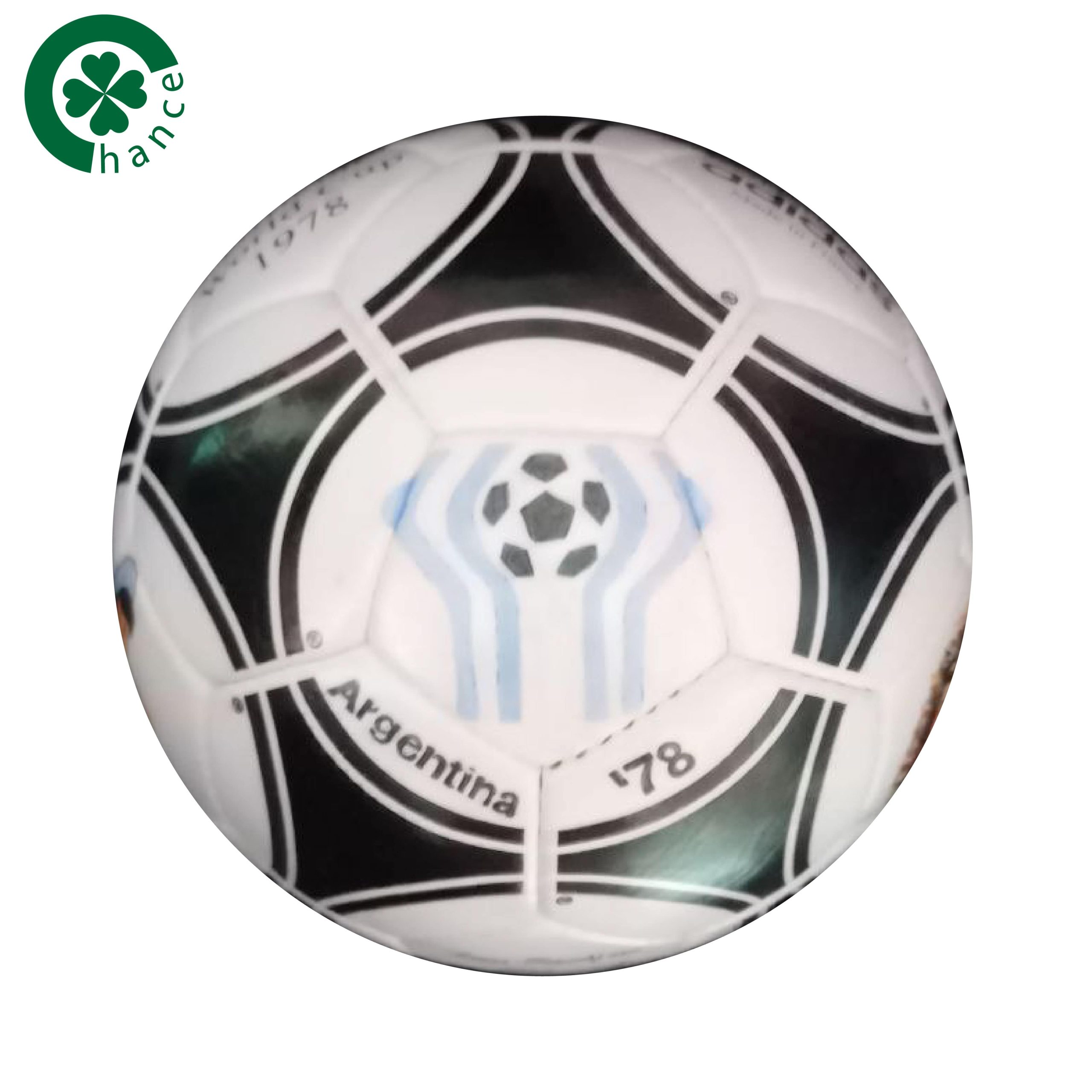
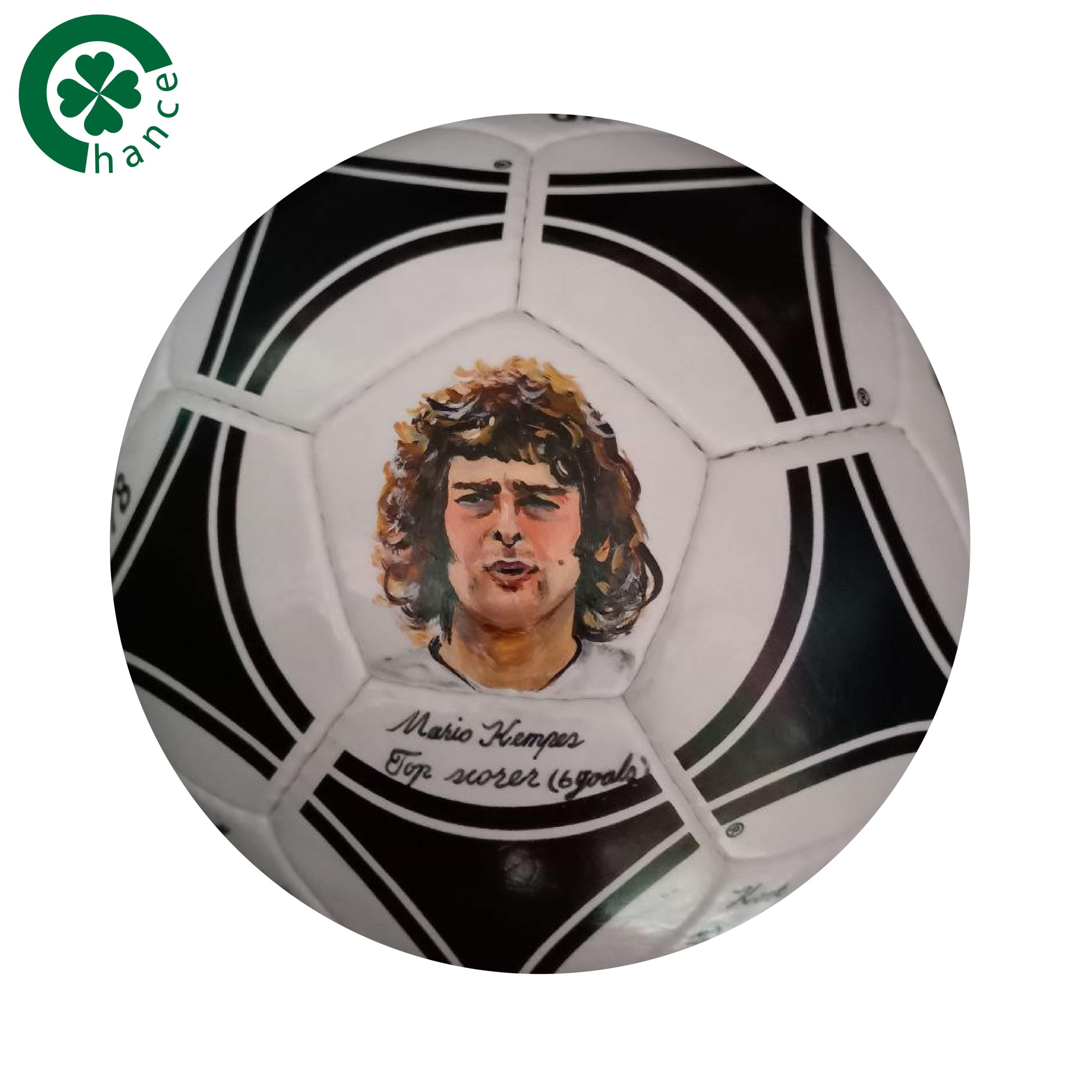
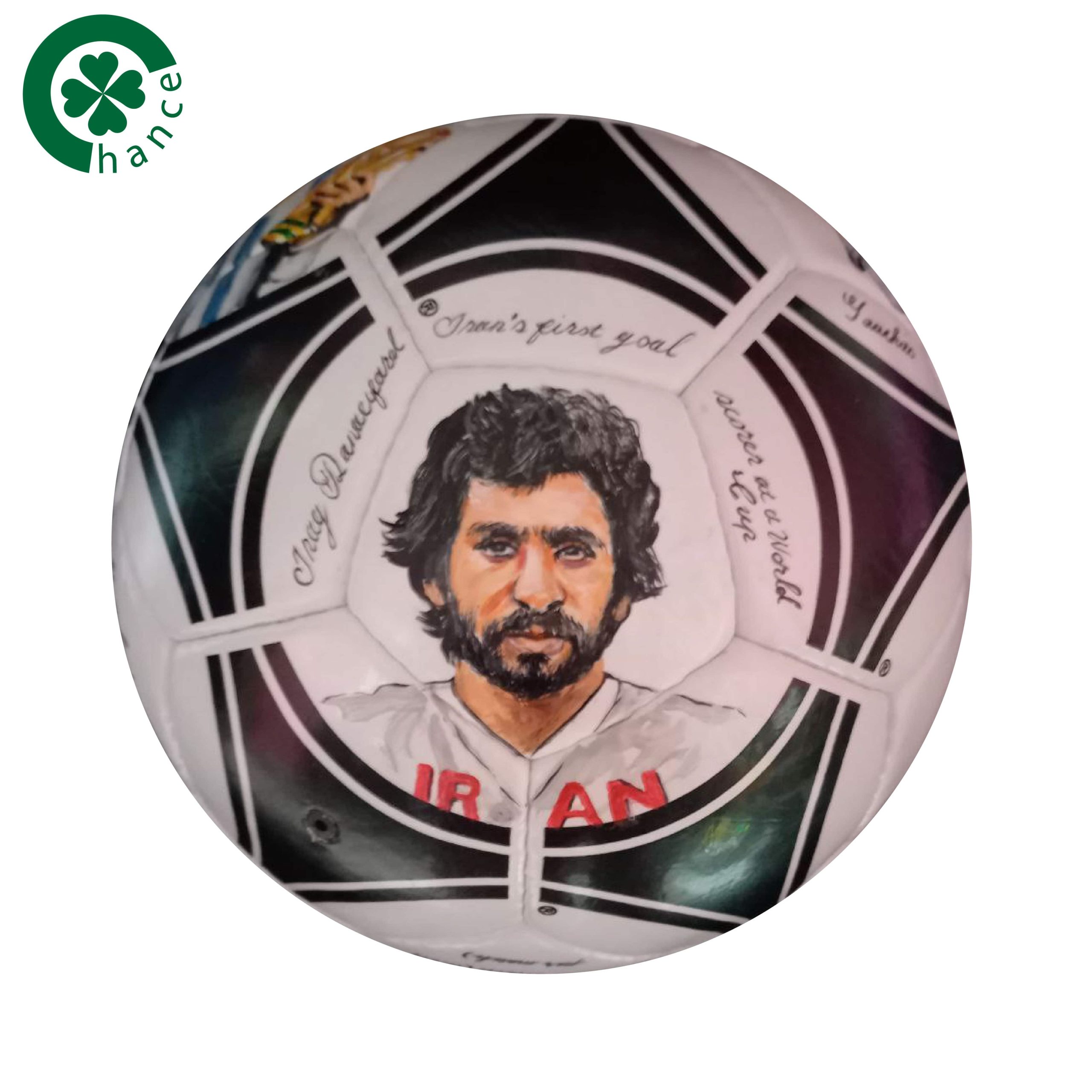
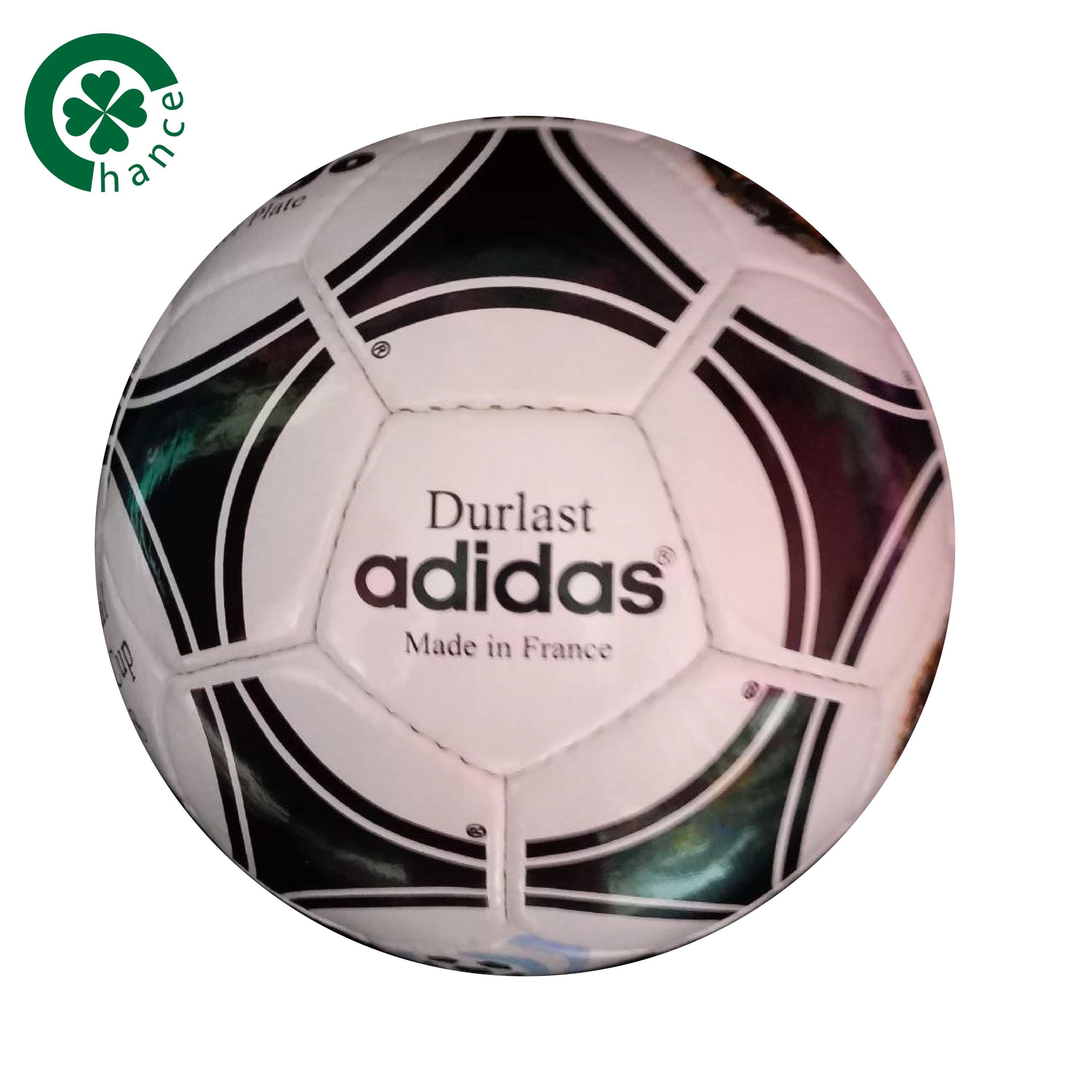
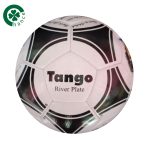
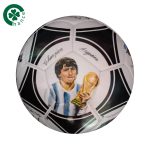
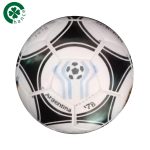
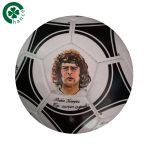
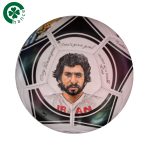
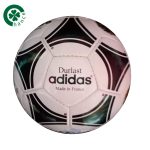
1978 World Cup Painted Ball
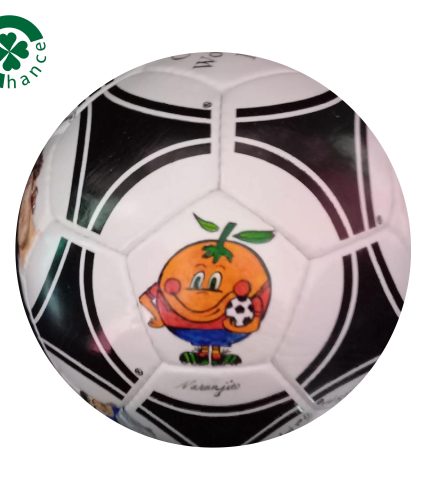
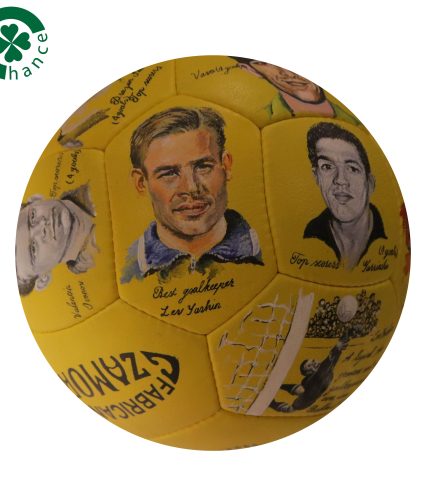
In Stock
Highlights:
CompareProduct Name : 1978 World Cup Painted Ball
Date of Registration : 02/01/2023
Category Art : Painting
Art Field : Visual Arts
Total Production : One Collection with Twenty Three Balls
Production Year : 2022
Art Style : Acrylic
Ball Name : Tango Durlast
Artist Name : Fatemeh Zarei
Size : 5
Weight (gr) : 394 – 404
Has a signature : Yes
Materials :
The 1978 World Cup came back to America, being hosted by Argentina. In respect of the official ball, this edition represented a great milestone, because Adidas launched a model with a revolutionary design: the Tango – inspired by the classic dance of Argentina. This ball was identically constructed to the previous World Cup ball, the Telstar from 1974. It was composed of 32 hand sewn leather panels (20 hexagonal and 12 pentagonal) and covered by the Durlast coating (applied with the same thickness of the 1974 Telstar) to
make the ball more resistant and waterproof. The design consisted of 20 black and promptly curved triangles, each one printed onto the white coloured surface of each hexagonal panel. Since the pentagonal panels were white coloured too, the triangles created a series of black and elegant circles on a white surface. When the ball was rotating, a nice effect was created by the black circles, which was visually very attractive.
About Tango Durlast:
For World Cup 1978 has been created ball Tango, which according to the authors should reflect the elegance, dynamism and passion. The design used 20 triads, create an optical impression of 12 identical circles. One advantage of Tango compared to other balls was considered as improved resistance to weathering.
Categories: Balls Collections, Painting Collections
Related products
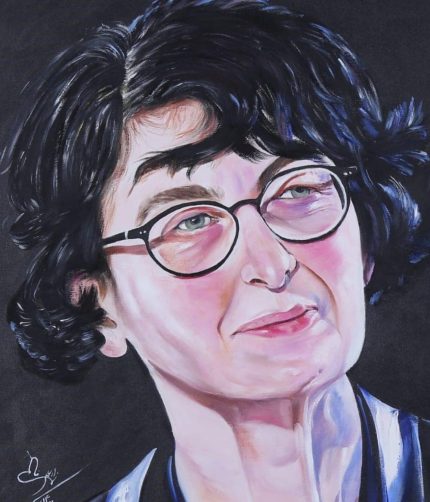
Ozlem Tourechi
Rated 0 out of 5
(0)
Highlights:
German_Turkish scientist, Immunologist entrepreneur, co-founder of German biotechnology company BioNTech, Chief Medical Officer of BioNTech. Pfizer_BioNTech COVID-19 vaccine creator
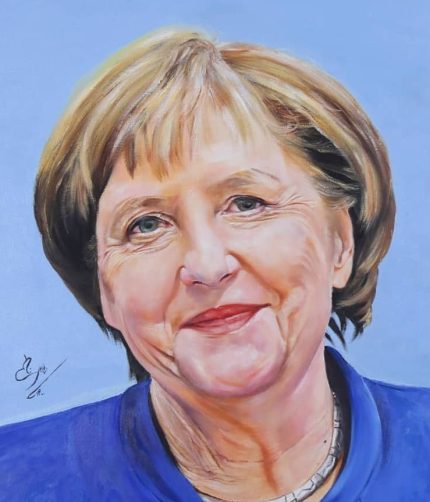
Angela Merkel
Rated 0 out of 5
(0)
Highlights:
Angela Merkel Chancellor of Germany
The Most Influential Political woman in art
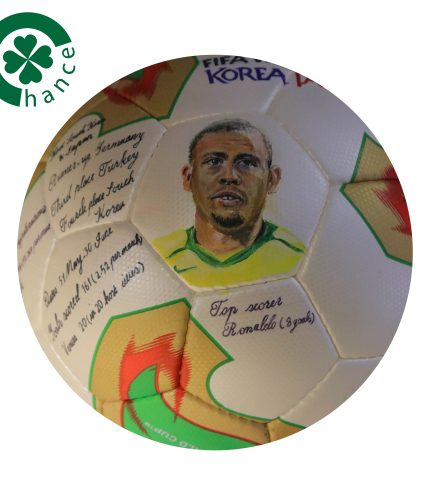
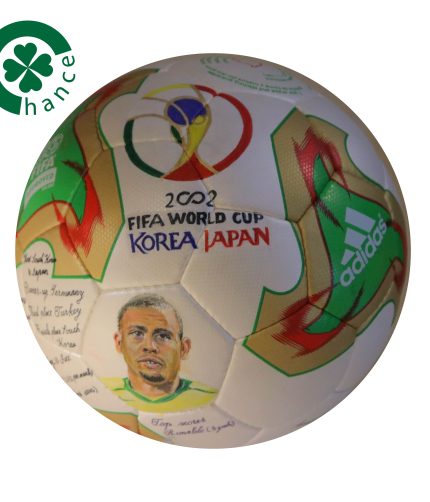
2002 World Cup Painted Ball
Rated 0 out of 5
(0)
Highlights:
Product Name : 2002 World Cup Painted Ball
Date of Registration : 02/01/2023
Category Art : Painting
Art Field : Visual Arts
Total Production : One Collection with Twenty Three Balls
Production Year : 2022
Art Style : Acrylic
Ball Name : Fevernova
Artist Name : Fatemeh Zarei
Size : 5
Weight (gr) : 389 – 398
Has a signature : Yes
Materials :
Adidas’s Fevernova soccer ball was the official ball of the Korea Japan, 2002 FIFA world cup. The adidas Fevernova was the first World Cup Match Ball since 1978 to break with the traditional Tango design introduced in 1978. It is three millimeters thick (11 layers). This includes a special foam layer with tiny gas filled balloons imbedded in a syntactic foam. The foam is based on an abrasion resistant polyurethane made by Bayer called Impranil® polyurethane. The outer cover of the ball consists of a combination of special synthetic polystyrenes (polyurethane) and natural rubber. Embedded within the layers are equal sized, highly elastic, exceptionally resistant gas-filled microcells. The inner lining consists of a tightly woven network of knitted, synthetic Raschel fabric. The spongy layer has high modulus of compression, with a good elastic memory. These layers give the Fevernova TM improved rebound characteristics, which convert foot strike into ball acceleration. The outer layer of the ball is made of a particularly so that the ball can withstand exceptionally tough treatment. All of this combines to give the ball greater durability. According to Adidas, the surface of the new ball converts applied energy evenly at every point. Theoretically, this gives a more calculable, flight path with advanced players. The Adidas Fevernova TM is made to meet the lower end of FIFA regulations governing circumference and the upper limit of weight , in which smaller and heavier sphere has a more accurate trajectory.
About Fevernova :
The ball Fevernova has been obtained as a result of three years of work to improve the previous Tricolore ball at the research center in south of Germany.
The new design is based on Asian culture and are not similar to its predecessors. This ball featured a refined syntactic foam layer, to give the ball superior performance characteristics, and a three-layer knitted chassis, allowing for a more precise and predictable flight path. For the World Cup matches has been presented more than 2,500 balls Fevernova, and later around the world has been sold about six million replicas.
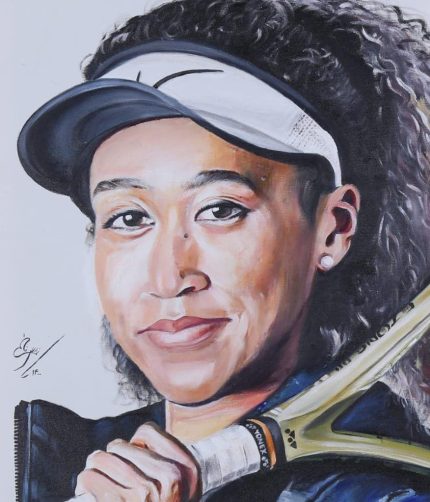
Naomi Osaka
Rated 0 out of 5
(0)
Highlights:
The highest paid female athlete in the world
Naomi Osaka (born October 16, 1997) is a Japanese professional tennis player. She has been ranked No. 1 by the Women’s Tennis Association (WTA) and is the first Asian player to hold the top ranking in singles as well the first player from Japan – man or woman – to reach No.1. She is a four-time Grand Slam singles champion.
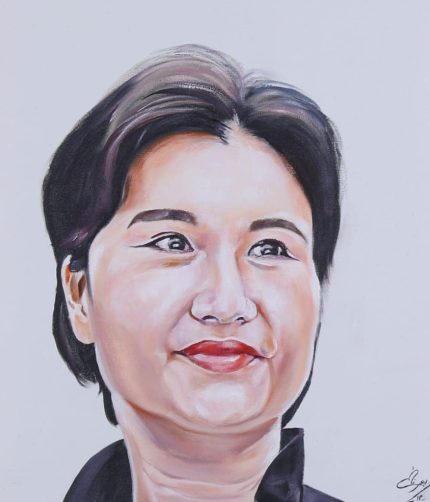
Zhou Qunfei
Rated 0 out of 5
(0)
Highlights:
She’s a Chinese entrepreneur (born 1970) who founded the major touchscreen maker Lens Technology. In 2018, she was named the world’s richest self-made woman, with a net worth of $9.8 billion. She has a net worth of $ 12.5 billion and is the China’s fifth richest woman.
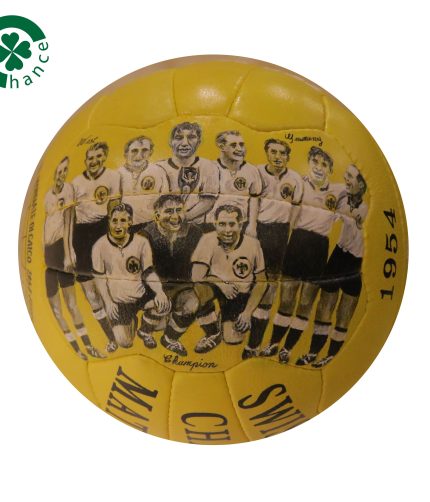
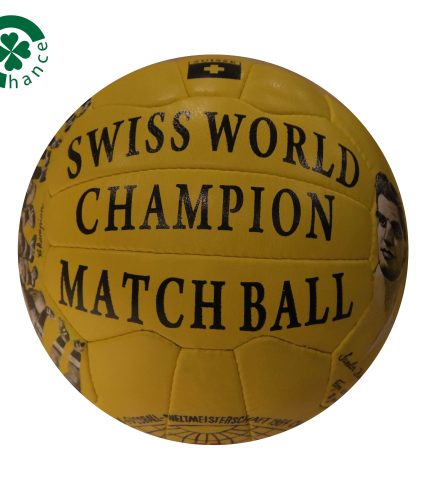
1954 World Cup Painted Ball
Rated 0 out of 5
(0)
Highlights:
Product Name : 1954 World Cup Painted Ball
Date of Registration : 02/01/2023
Category Art : Painting
Art Field : Visual Arts
Total Production : One Collection with Twenty Three Balls
Production Year : 2022
Art Style : Acrylic
Ball Name : Swiss World Champion Match Ball
Artist Name : Fatemeh Zarei
Size : 5
Weight (gr) : 380 – 392
Has a signature : Yes
Materials :
The official match ball of the 1954 FIFA World Cup was composed of 18 panels with zigzag edges, perfectly interlocked to each other. (The same panel structure can be seen on many Mitre balls even today.) The ball was completely hand sewn and no longer had laces -just like its predecessor, the Superball from the 1950 World Cup. The colour of the ball was not dark brown any more, rather an attractive yellowish or hell orange. This made the ball more visible during rainy matches where the pitch contained mud. We can see lots of photographs in different newspapers and magazines from 1954 where the players are portrayed with the Swiss World Champion balls as this ball became by far the best selling World Cup ball compared to its predecessors.
About Swiss World Champion Match Ball :
this ball comes from the pre-adidas historical match ball set, it is the exact reproduction of the original Swiss World Champion balls as used at the 1954 World Cup in Switzerland.
2006 World Cup Painted Ball
Rated 0 out of 5
(0)
Highlights:
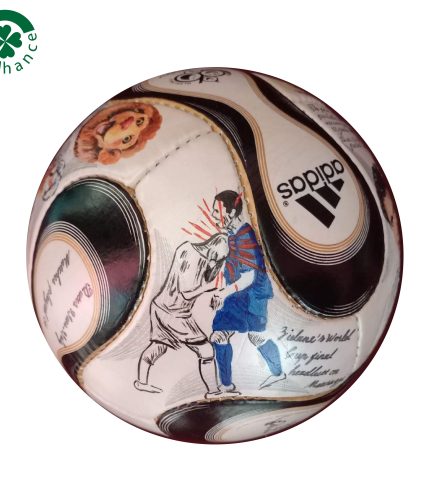
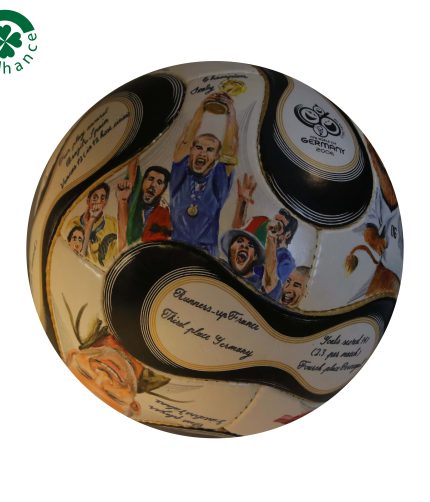
Product Name : 2006 World Cup Painted Ball
Date of Registration : 02/01/2023
Category Art : Painting
Art Field : Visual Arts
Total Production : One Collection with Twenty Three Balls
Production Year : 2022
Art Style : Acrylic
Ball Name : Teamgeist
Artist Name : Fatemeh Zarei
Size : 5
Weight (gr) : 420 – 430
Has a signature : Yes
Materials :
The ball was designed by the Adidas Innovation Team and the Molten Corporation and is made by Adidas, which has provided the balls used in all World Cup matches since the 1970 World Cup when the Telstar was introduced. The +Teamgeist ball differs from previous balls in having just 14 curved panels (making the ball topologically equivalent to a truncated octahedron), rather than the 32 that have been standard since 1970. Like the 32 panel Roteiro which preceded it, the +TeamGeist panels are bonded together, rather than stitched. It is claimed to be rounder and to perform more uniformly regardless of where it is hit, and being almost waterproof, it does not get heavier in wet weather.
About Teamgeist :
With the name of “Teamgeist” the creators of the ball wanted to remind that one of the most important components of success in World Cup it’s “team spirit”. Translated from the German word team means “command” and geist – “spirit”.
Mazumdar Shaw
Rated 0 out of 5
(0)
Highlights:
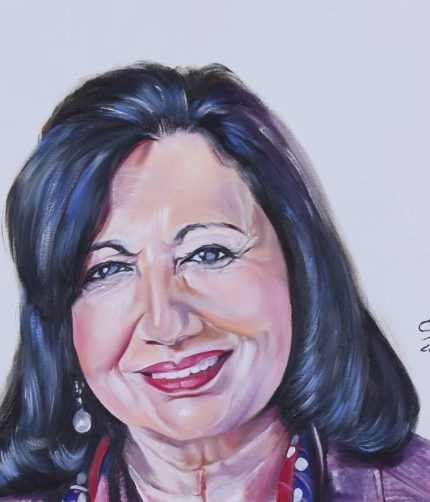
Mazumdar-Shaw dislikes the term ‘philanthropy”, believing that it often provides temporary fixes rather than addressing the root cause or the underlying situation. She prefers the term “compassionate capitalist”
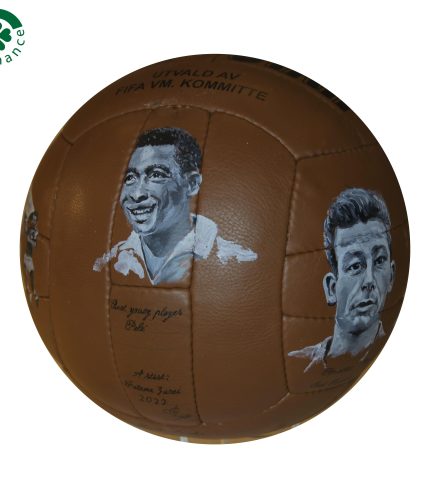
1958 World Cup Painted Ball
Rated 0 out of 5
(0)
Highlights:
Product Name : 1958 World Cup Painted Ball
Date of Registration : 02/01/2023
Category Art : Painting
Art Field : Visual Arts
Total Production : One Collection with Twenty Three Balls
Production Year : 2022
Art Style : Acrylic
Ball Name : Top-Star
Artist Name : Fatemeh Zarei
Size : 5
Weight (gr) : 374- 334 gr
Has a signature : Yes
Materials :
The Top Star ball had a popular design, it was similar to the balls of the time, however, on this ball there were long and short panels, elegantly alternated between them : two short panels in the midst of two long panels and the inflation valve was in the center of one short panel. This ball brought technological developements as well, these leather balls were treated with a waterproofing wax, making the balls more water resistant. The balls used in the 1958 World Cup were yellow, light brown or white. In matcheswhen it was rainy or a little wet (just like in the final between Brazil and Sweden) the white ones were used.
About Top-Star:
Official ball of the 1958 World Cup in Sweden was chosen as representatives of FIFA. Ball Top Star, made by Swedish firm “Sydsvenska Läder- och Remfabriken”, consisted of 24 panels and was presented in three colors – brown, orange and white, no branding. Each of the national teams participating in the World Cup, had at its disposal 30 balls.
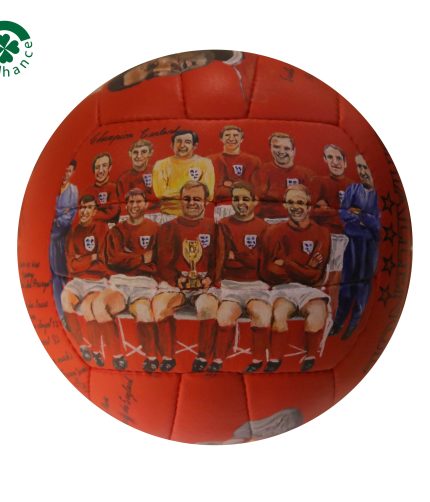
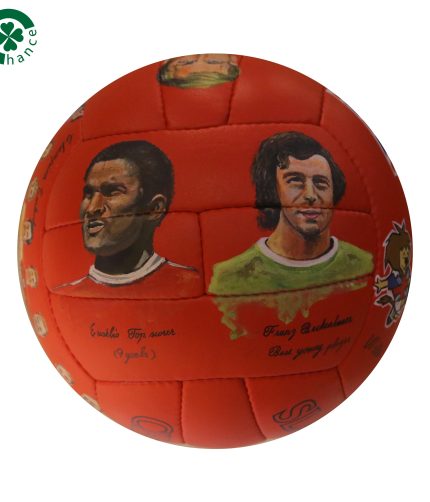
1966 World Cup Painted Ball
Rated 0 out of 5
(0)
Highlights:
Product Name : 1966 World Cup Painted Ball
Date of Registration : 02/01/2023
Category Art : Painting
Art Field : Visual Arts
Total Production : One Collection with Twenty Three Balls
Production Year : 2022
Art Style : Acrylic
Ball Name : Slazenger 25 Challenge
Artist Name : Fatemeh Zarei
Size : 5
Weight (gr) : 370 – 382
Has a signature : Yes
Materials :
The Slazenger Challenge was made of high quality leather and entirely hand sewn. It was composed of 25 rectangular panels, joined together in a way that was very similar to the 1958 ball and which differed only in the panel which contained the valve. In the Slazenger
ball the valve was in the centre of a small panel between two other, even shorter panels.
The remaining panels were the same as the 1958 ball and the inflating system was the latest type valve – latex rubber. This ball provided excellent sphericity, and its composition was adopted over the years by other brands. The balls of the 1966 World Cup were
provided in three different colours: white, yellow, and orange. Although the most widely used model was the white one, in the memory of football fans the orange ball of the historic final of Wembley remains the strongest.
About Slazenger 25 Challenge :
The match ball used during the 1966 World Cup final, as England beat West Germany 4-2. Geoff Hurst famously scored a hat trick for England, but the ball was claimed by Helmut Haller and only returned to England in 1996. This object is displayed courtesy of Eurostar, Mirror Group and Virgin
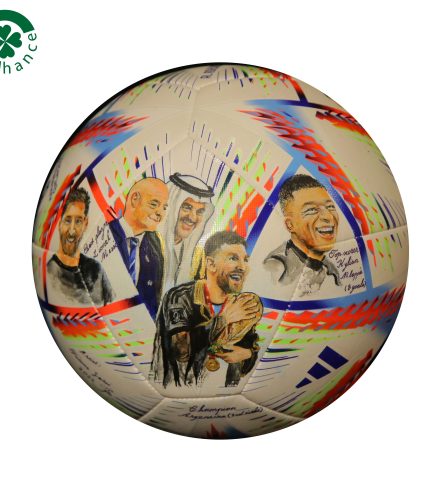
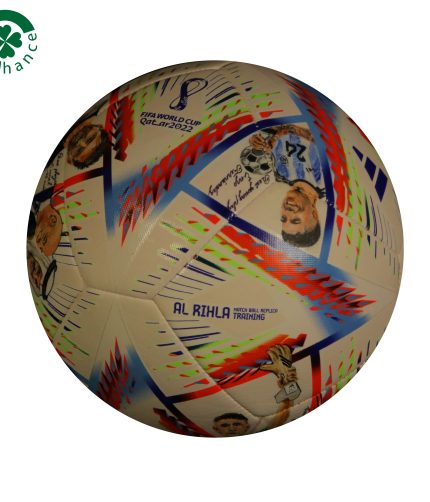
2022 World Cup Painted Ball
Rated 0 out of 5
(0)
Highlights:
Product Name : 2022 World Cup Painted Ball
Date of Registration : 02/01/2023
Category Art : Painting
Art Field : Visual Arts
Total Production : One Collection with Twenty Three Balls
Production Year : 2022
Art Style : Acrylic
Ball Name : Al Rihla
Artist Name : Fatemeh Zarei
Size : 5
Weight (gr) : 430 – 440
Has a signature : Yes
Materials :
Al Rihla is made with water-based inks and glues and contains 20 panels. Eight of these are small triangles with roughly equal sides, and 12 are larger and shaped sort of like an ice cream cone, thermally-bonded polyurethane panels. Its “Speedshell” surface is textured with debossed macro and micro patterns, meant to improve the ball’s flight stability and swerve.
About Al Rihla :
Al Rihla means “the journey” in Arabic, and its bold, vibrant colour is inspired by Qatar’s culture, architecture, iconic boats and flag. adidas is bringing its sporting expertise to the game’s premier event yet again by providing a match ball with sleek aesthetics that also delivers accuracy and flight stability. It is designed to support peak game speeds and, furthermore, is manufactured with strictly water-based inks and glues for additional sustainability.
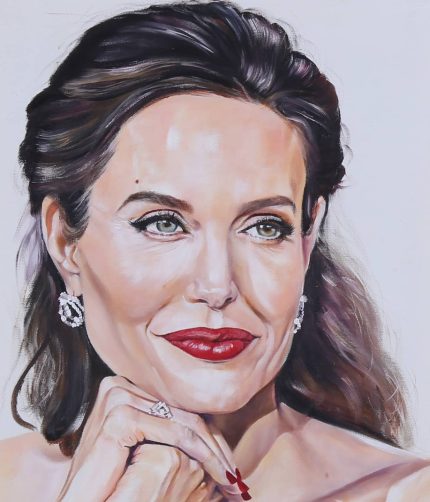
Angelina Jolie
Rated 0 out of 5
(0)
Highlights:
American actress, Oscar winner, filmmaker, Humanitarian, Special Envoy for Un refugees
Recently Viewed
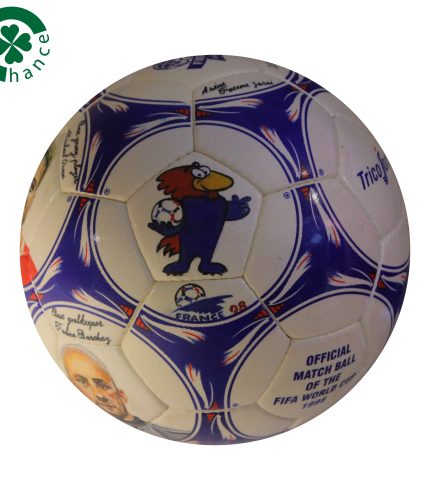
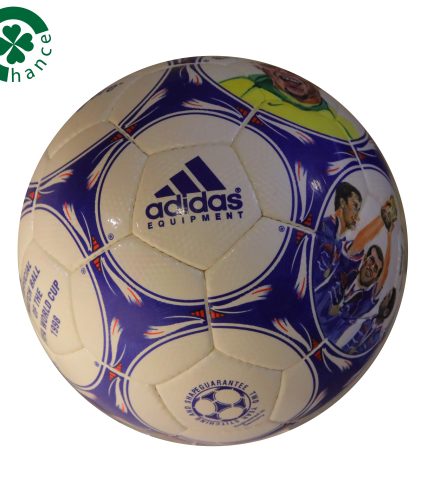
1998 World Cup Painted Ball
Rated 0 out of 5
(0)
Highlights:
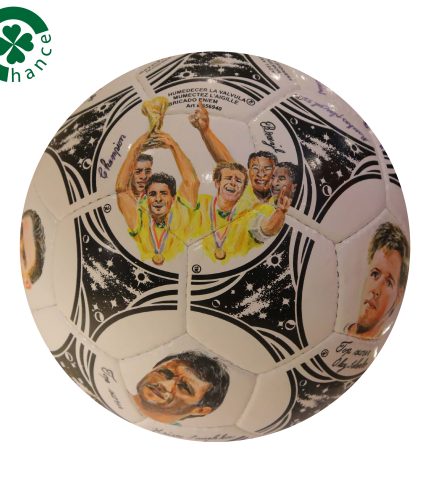
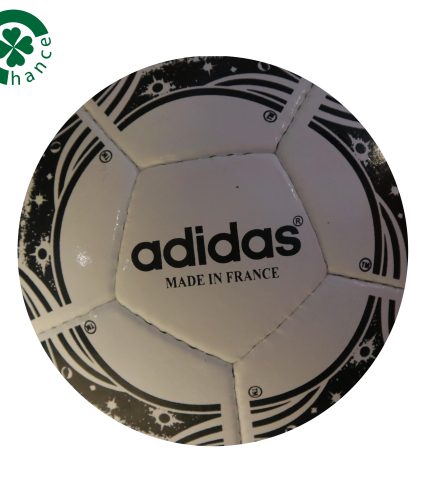
Product Name : 1998 World Cup Painted Ball
Date of Registration : 02/01/2023
Category Art : Painting
Art Field : Visual Arts
Total Production : One Collection with Twenty Three Balls
Production Year : 2022
Art Style : Acrylic
Ball Name : Tricolore
Artist Name : Fatemeh Zarei
Size : 5
Weight (gr) : 416 – 426
Has a signature : Yes
Materials :
Many people believe that the Tricolore was the first colored Adidas ball produced for major tournaments, but this is not true: in 1996, colored balls were already used at the European Championships (adidas Questra Europa) and the Olympics (Adidas Questra Olympia). So the statement is only correct like this: the Tricolore was the first colored Adidas World Cup ball. But this is not the only reason why the Tricolore has become an eternally defining ball. After all, this was the last World Cup ball since 1978 with the Tango design. (The Tango design was used for two more years, on the official ball of the 1999 Women’s World Cup as Adidas Icon, on the ball of the 2000 European Championship as Terrestra Silverstream and at the 2000 Olympic Games as Gamarada). The name and colors of the Tricolore ball refer to the French flag. Michel Platini specifically instructed Adidas to include French industry among the motifs on the ball, which is how the turbine came to be. But the Tango model also features the Gallic rooster, whose red crest evokes the manufacturers logo, which is a brilliant design element, and many consider the Tricolore to be the most beautiful Adidas ball to date.
About Tricolore :
Tricolore ball was the first colored ball of world championship. The Adidas Tricolore was used synthetic foam layer with a regular array of durable micro-cells filled with gas. This structure provides durability and good tactile contact with the ball. It’s first time, since 1970, when the World Cup ball was made not in Europe: Adidas Tricolore has been created in Morocco.
1994 World Cup Painted Ball
Rated 0 out of 5
(0)
Highlights:
Product Name : 1994 World Cup Painted Ball
Date of Registration : 02/01/2023
Category Art : Painting
Art Field : Visual Arts
Total Production : One Collection with Twenty Three Balls
Production Year : 2022
Art Style : Acrylic
Ball Name : Questra
Artist Name : Fatemeh Zarei
Size : 5
Weight (gr) : 388 – 398
Has a signature : Yes
Materials :
At the 1990 World Cup in Italy, a negative World Cup record was set in terms of goals (2.21 goals/match), so many blamed the ball Before the next World Cup, FIFA asked adidas to develop a ball that could score more goals. The 1994 World Cup was brought to the USA in part to promote soccer, but if viewers don’t see enough goals, they tune out of the games on TV and think soccer is a boring
sport. The changes to the ball were successful, as the American World Cup had a higher goal average (2.7 goals/match), which they have not been able to surpass in any World Cup since then.
And what were the changes on the ball? Well, the Questra was lighter and more controllable than its predecessor, which favored more skilled players. Five different materials were used during development, and its most significant innovation was the flexible but resistant outer polyurethane layer, which softened the force of impacts thanks to foaming, and it was also beneficial for the headers.
This is due to the fact that the ball was developed at adidas’ ball production center in France and tested by French, German and American professional, amateur and youth teams.
About Questra :
Name of the Questra ball comes from ancient world for the pursuit to the stars (the quest for the stars). Authors aimed to create a more responsive and light ball, what they got fully. By manufacturing the new ball from five different materials and enveloping it in polystyrene foam, Adidas made the Questra more waterproof and allowed for greater acceleration when kicked. Triads which used in the design of Adidas Questra, display the outlines of stars.
1990 World Cup Painted Ball
Rated 0 out of 5
(0)
Highlights:
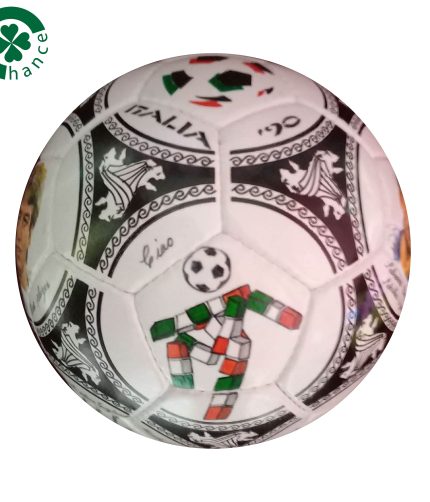
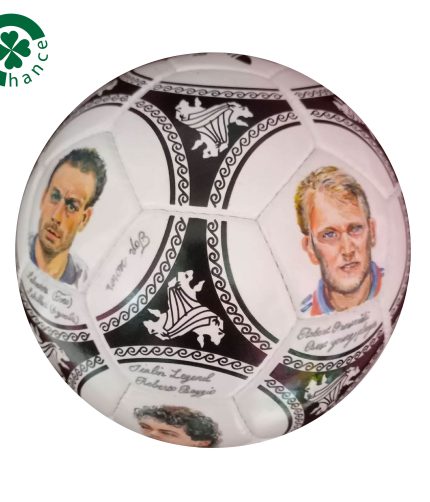
Product Name : 1990 World Cup Painted Ball
Date of Registration : 02/01/2023
Category Art : Painting
Art Field : Visual Arts
Total Production : One Collection with Twenty Three Balls
Production Year : 2022
Art Style : Acrylic
Ball Name : Etrusco Unico
Artist Name : Fatemeh Zarei
Size : 5
Weight (gr) : 410 – 420
Has a signature : Yes
Materials :
In 1990, adidas continued the tradition of naming the World Cup ball in honor of the host country. Etrusco Unico commemorates the ancient Etruscan civilization and art, dating back to the 9th century BC. and flourished in the Apennine Peninsula, in today’s Italy. The inscription “Etrusco” is written on the ball in ancient Greek style, while “Unico” is written in the usual Latin letters. Of course, the Tango motif was left on this ball as well, and here three Etruscan-style lion heads were placed on it. The number three referred to the three layers that protected the inside of the ball. The bottom layer was made of a mixture of textile and latex for stability and tear resistance, the next neoprene was responsible for water repellency, while the outer polyurethane foam layer ensured abrasion resistance and good puncture characteristics.
About Etrusco Unico:
The name and design of the ball were invented in honor of the history of ancient Italy and fine art of the Etruscans. Three Etruscan lion heads decorate each of the 20 triads, used in design of ball. Compared with its predecessors Etrusco had improved the quality of water resistance, durability and rebound. It’s the first ball with an internal layer of black polyurethane foam.
1934 World Cup Painted Ball
Rated 0 out of 5
(0)
Highlights:
Product Name : 1934 World Cup Painted Ball
Date of Registration : 02/01/2023
Category Art : Painting
Art Field : Visual Arts
Total Production : One Collection with Twenty Three Balls
Production Year : 2022
Art Style : Acrylic
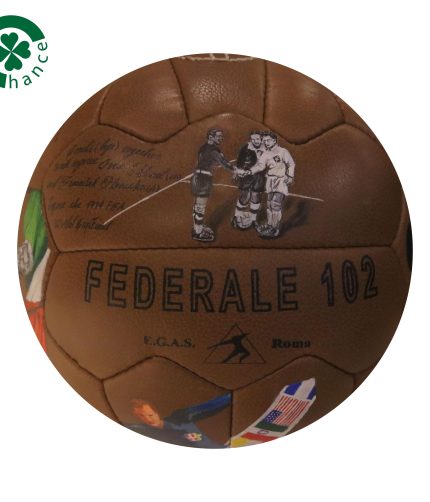
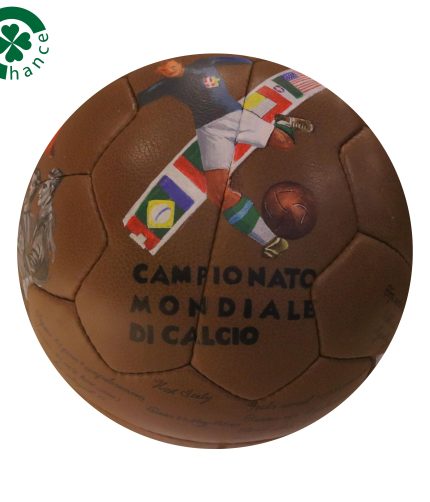
Ball Name : The Federale 102
Artist Name : Fatemeh Zarei
Size : 5
Weight (gr) : 380 – 420
Has a signature : Yes
Materials :
The Federale 102 ball was composed by 13 polygonal panels which were cut and perfectly fitted together by hand sewing. Most of the classic balls at that time were 12 panel models (like the ones used 4 years ago in the first World Cup) but the Federale 102 brought an invention of having the laces on a separate panel to inflate the balls. The bladder was enclosed by lace with 6 rows. For the very first time the leather laces of a World Cup ball were replaced by brown cotton,very similar to the ones used on shoes. This represents a small detail but an important improvement, as well. As cotton is much softer than any leather,this encouraged players to head the ball more.
About The Federale 102 :
As the second World Cup was approaching,the fascist regime of Mussolini became so powerful that Italy was chosen to be the host of the 1934 FIFA World Cup.The strong nationalism requested that the balls used in the tournament had to be produced in Italy. In the beginning of the 20th century the majority of footballs were made in Britain and were exported to different countr ies where footba ll became more and more popular and equipment was badly needed. But as previously mentioned, the Italian political power insisted on using Italian made balls for the first World Cup to be hosted in Europe.
Reviews
There are no reviews yet.