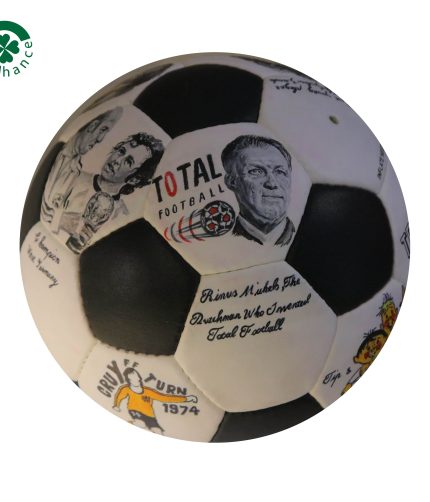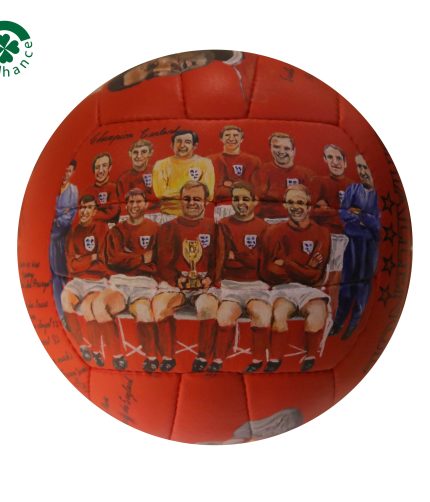
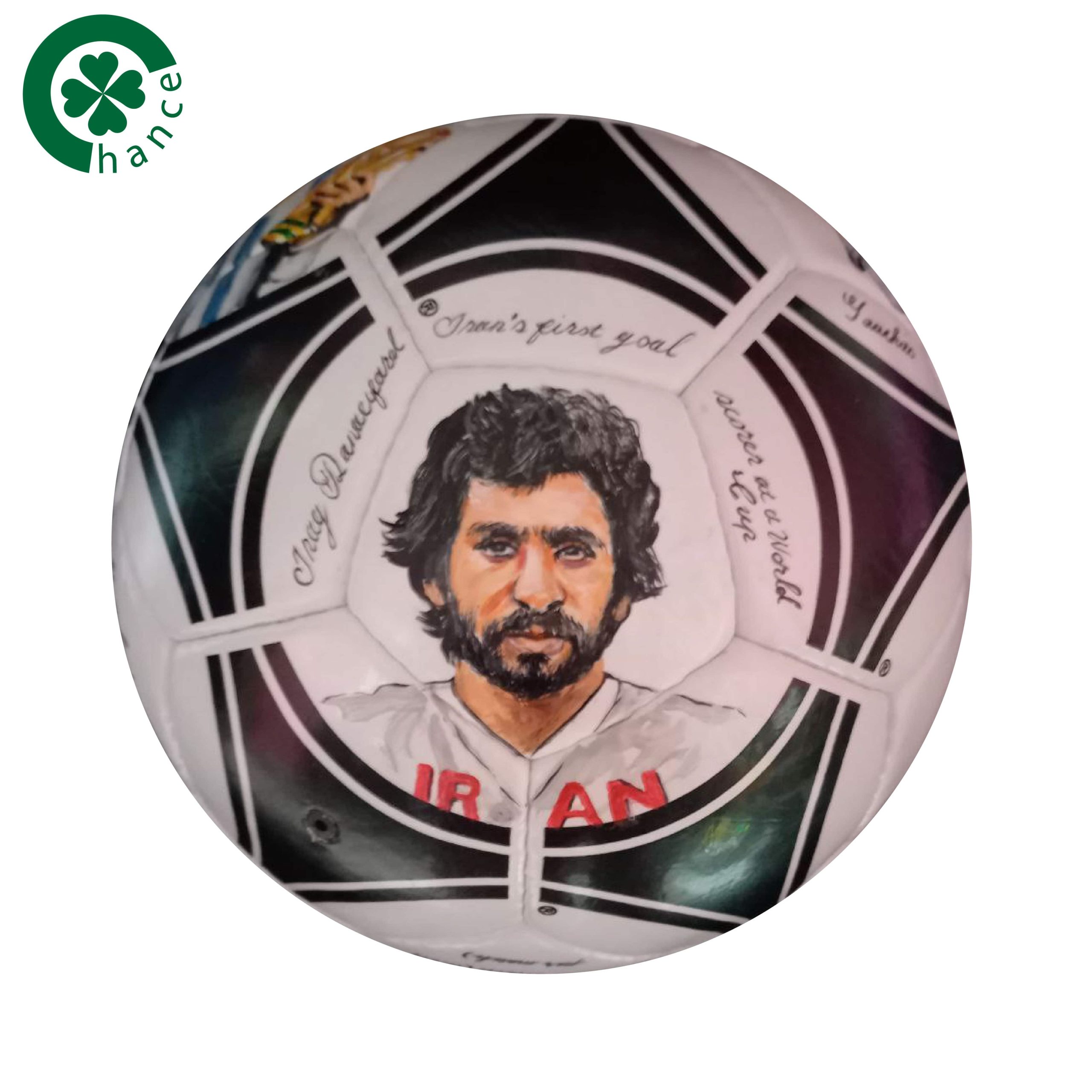
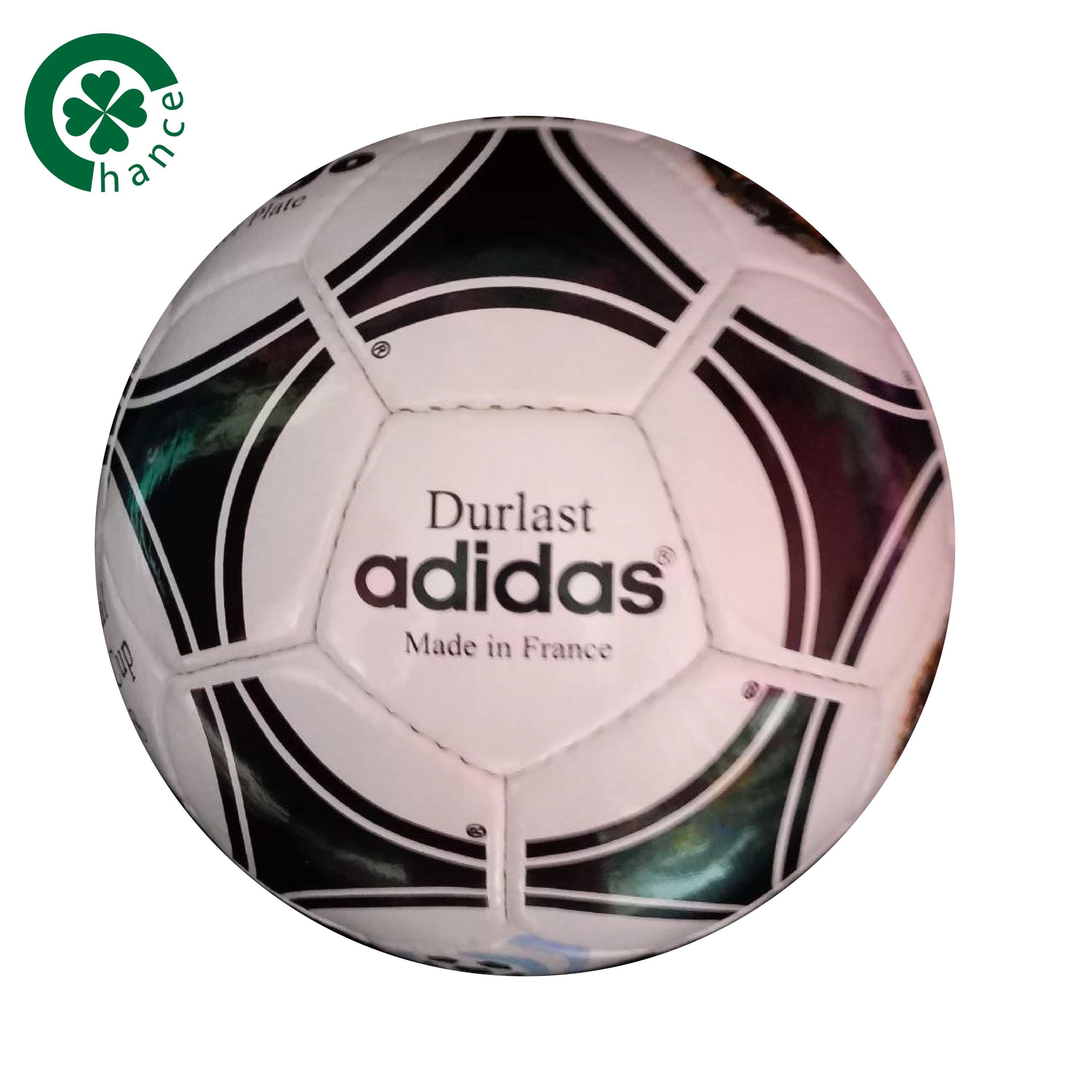
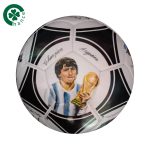
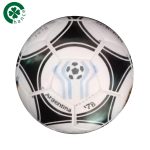
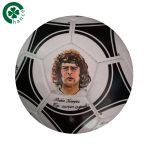
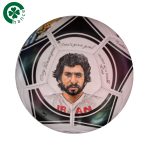

1978 World Cup Painted Ball
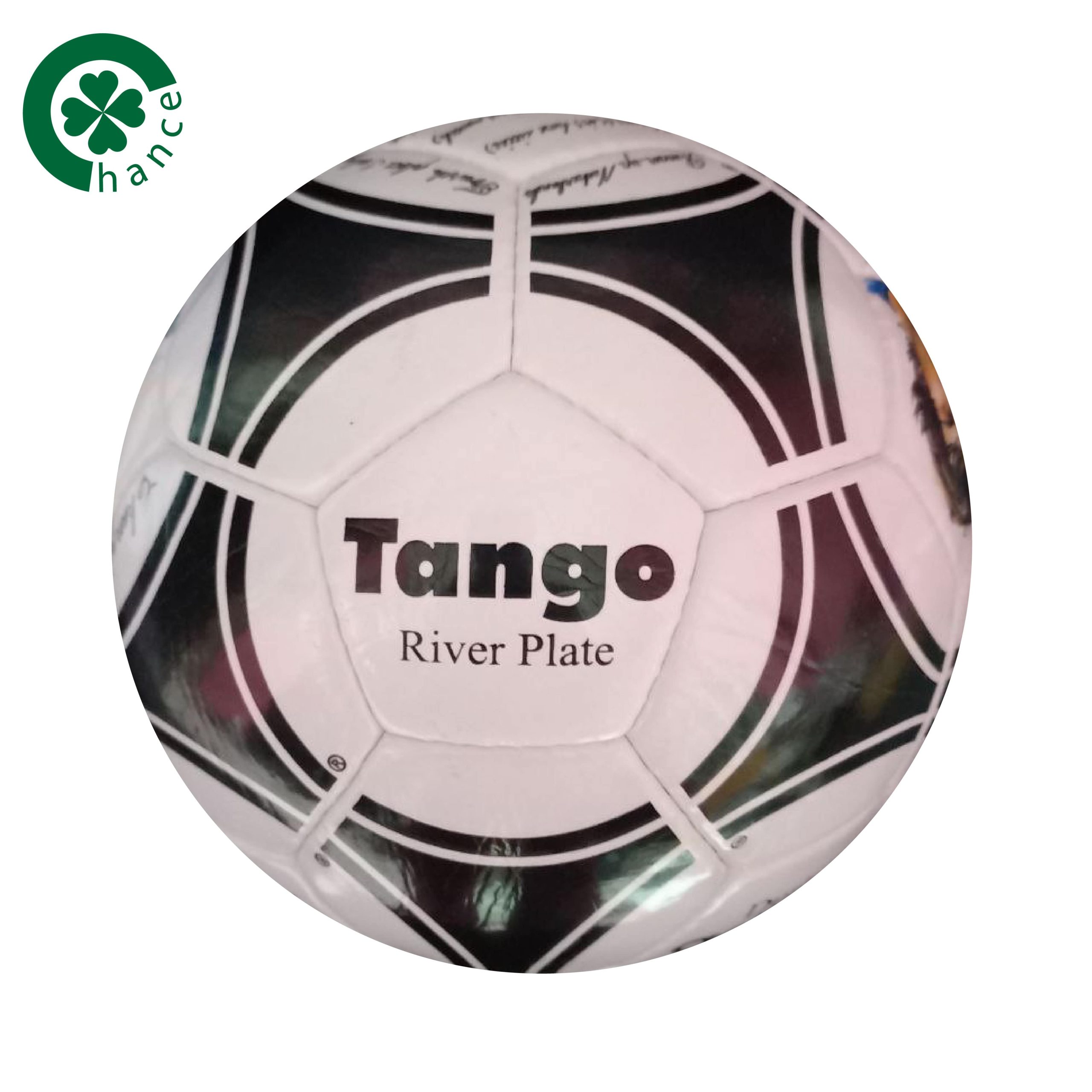
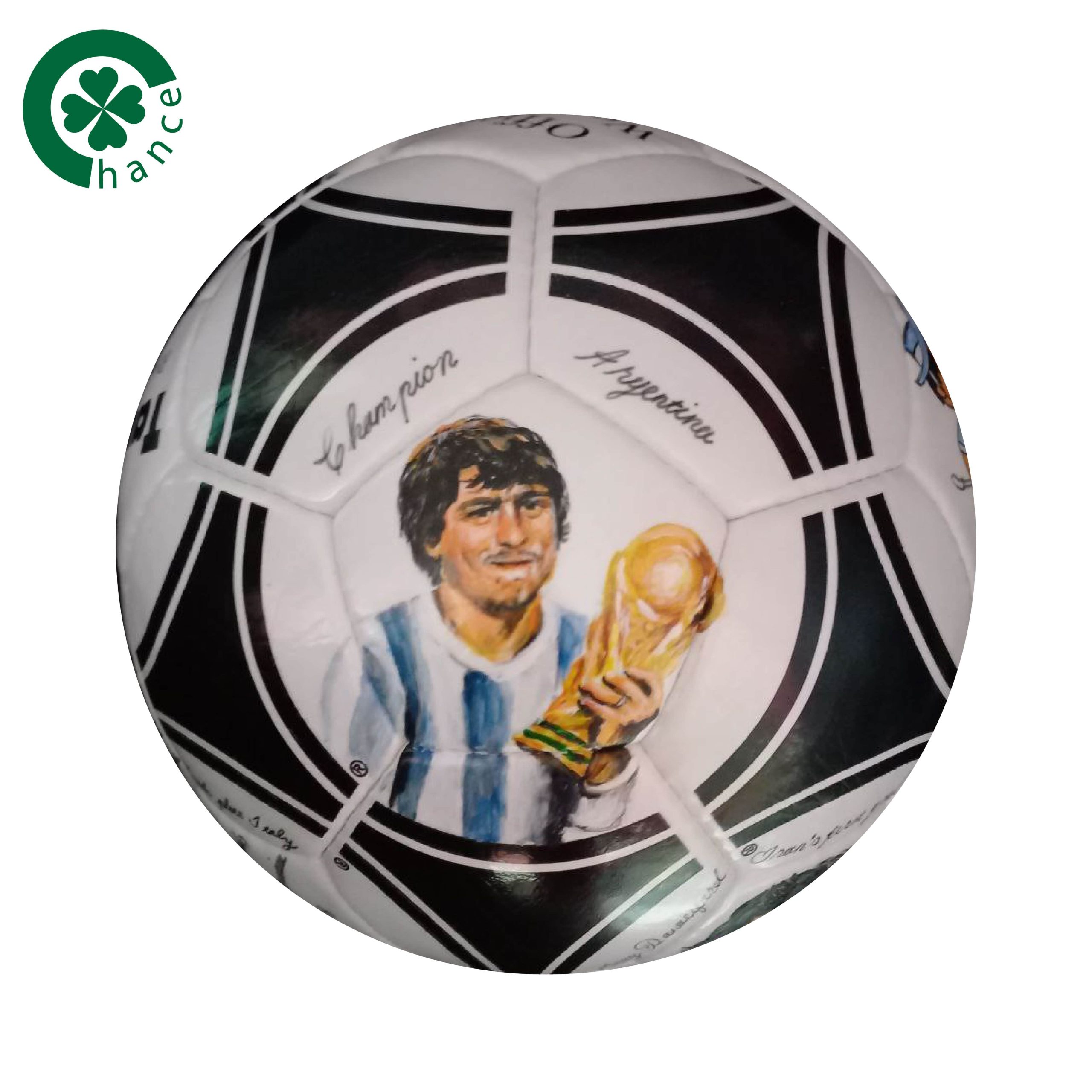
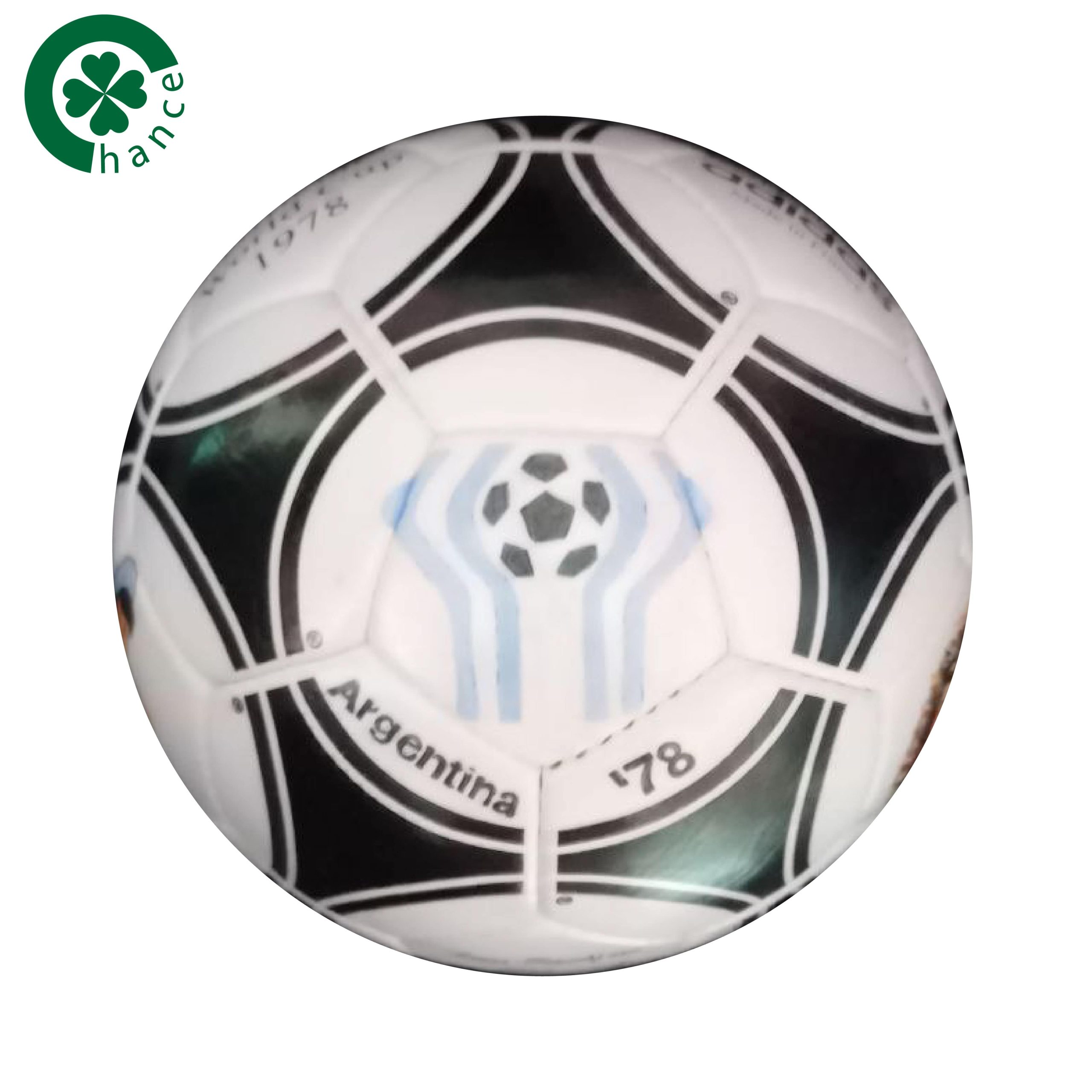
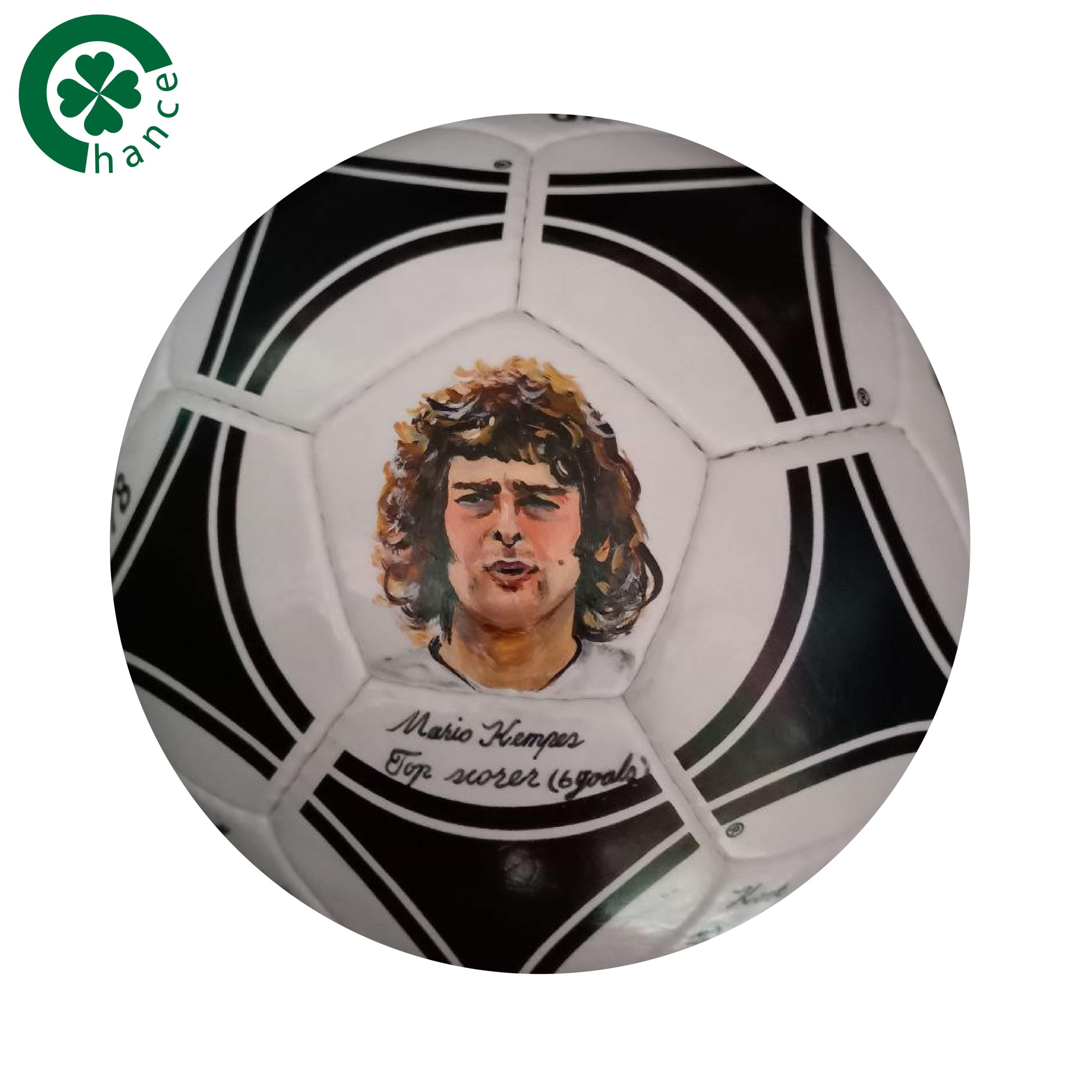
Product Name : 1978 World Cup Painted Ball
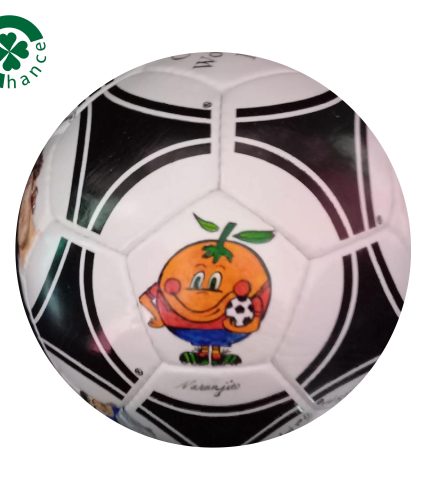
Date of Registration : 02/01/2023
Category Art : Painting
Art Field : Visual Arts
Total Production : One Collection with Twenty Three Balls
Production Year : 2022
Art Style : Acrylic
Ball Name : Tango Durlast
Artist Name : Fatemeh Zarei
Size : 5
Weight (gr) : 394 – 404
Has a signature : Yes
Materials :
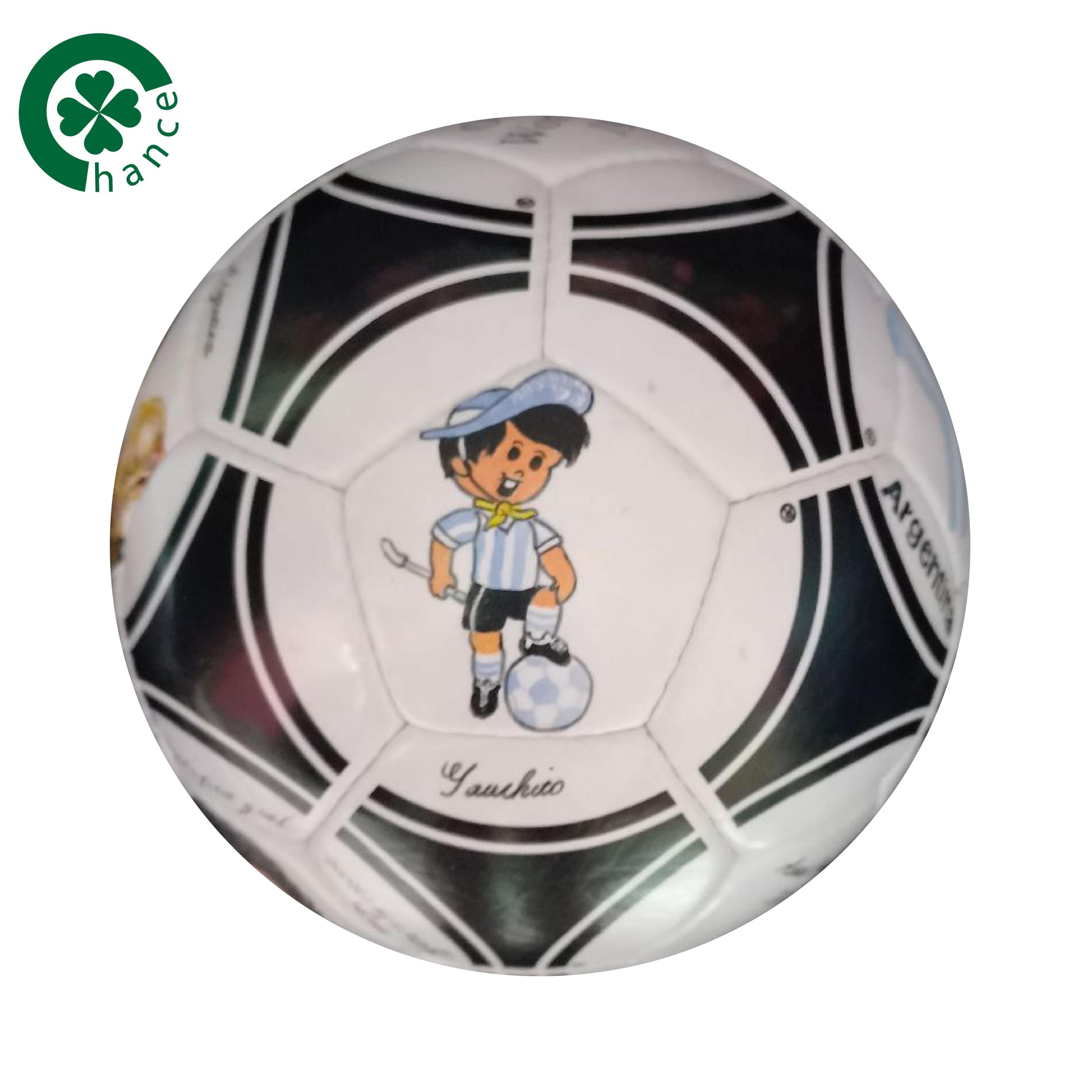
The 1978 World Cup came back to America, being hosted by Argentina. In respect of the official ball, this edition represented a great milestone, because Adidas launched a model with a revolutionary design: the Tango – inspired by the classic dance of Argentina. This ball was identically constructed to the previous World Cup ball, the Telstar from 1974. It was composed of 32 hand sewn leather panels (20 hexagonal and 12 pentagonal) and covered by the Durlast coating (applied with the same thickness of the 1974 Telstar) to
make the ball more resistant and waterproof. The design consisted of 20 black and promptly curved triangles, each one printed onto the white coloured surface of each hexagonal panel. Since the pentagonal panels were white coloured too, the triangles created a series of black and elegant circles on a white surface. When the ball was rotating, a nice effect was created by the black circles, which was visually very attractive.
About Tango Durlast:
For World Cup 1978 has been created ball Tango, which according to the authors should reflect the elegance, dynamism and passion. The design used 20 triads, create an optical impression of 12 identical circles. One advantage of Tango compared to other balls was considered as improved resistance to weathering.
Related products
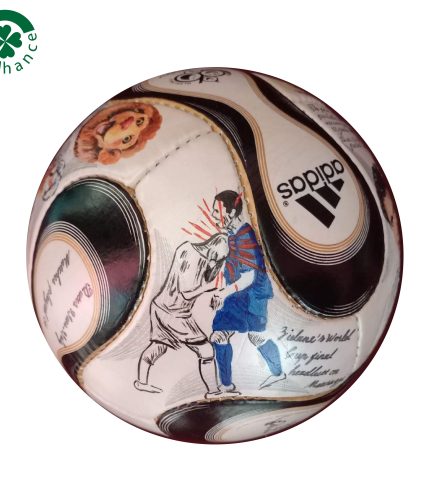
2006 World Cup Painted Ball
Product Name : 2006 World Cup Painted Ball
Date of Registration : 02/01/2023
Category Art : Painting
Art Field : Visual Arts
Total Production : One Collection with Twenty Three Balls
Production Year : 2022
Art Style : Acrylic
Ball Name : Teamgeist
Artist Name : Fatemeh Zarei
Size : 5
Weight (gr) : 420 – 430
Has a signature : Yes
Materials :
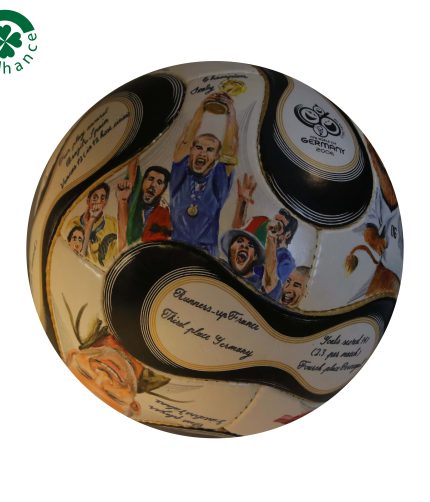
The ball was designed by the Adidas Innovation Team and the Molten Corporation and is made by Adidas, which has provided the balls used in all World Cup matches since the 1970 World Cup when the Telstar was introduced. The +Teamgeist ball differs from previous balls in having just 14 curved panels (making the ball topologically equivalent to a truncated octahedron), rather than the 32 that have been standard since 1970. Like the 32 panel Roteiro which preceded it, the +TeamGeist panels are bonded together, rather than stitched. It is claimed to be rounder and to perform more uniformly regardless of where it is hit, and being almost waterproof, it does not get heavier in wet weather.
About Teamgeist :
With the name of “Teamgeist” the creators of the ball wanted to remind that one of the most important components of success in World Cup it’s “team spirit”. Translated from the German word team means “command” and geist – “spirit”.
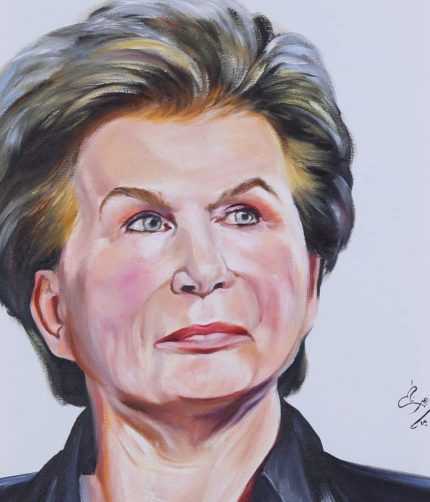
Valentina Tereshkova
he first woman cosmonaut in the world
The history of humans in space dates back to 1961, and the first women stepped into space in 1963
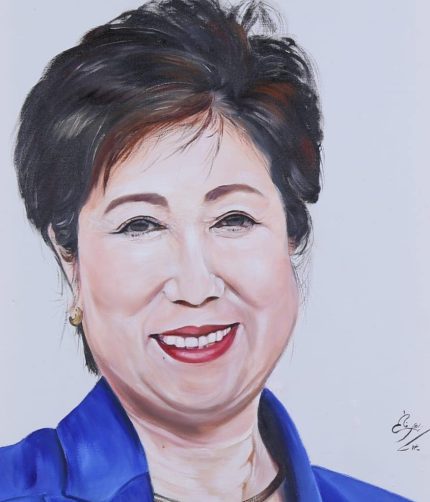
Yoriko Kuike
She’s The first female governor of Tokyo, the capital of Japan and the most populous city in the world. When we know that Tokyo has a population of more than 38 million people, that is, as much as the population of several European countries, the importance of Ms. Koike’s role in governing Tokyo becomes even more apparent.
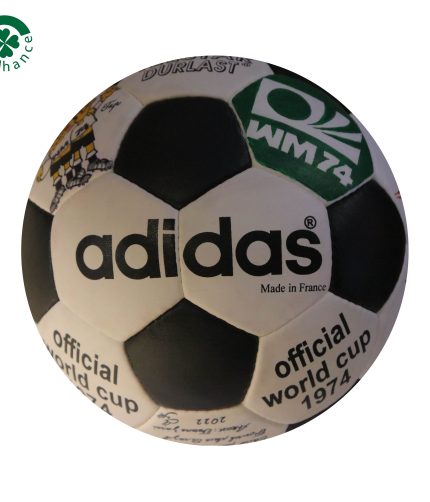
1974 World Cup Painted Ball
Product Name : 1974 World Cup Painted Ball
Date of Registration : 02/01/2023
Category Art : Painting
Art Field : Visual Arts
Total Production : One Collection with Twenty Three Balls
Production Year : 2022
Art Style : Acrylic
Ball Name : Telstar Durlast
Artist Name : Fatemeh Zarei
Size : 5
Weight (gr) : 428 – 436
Has a signature : Yes
Materials :
It’s first Adidas ball which was using in a World Cup. It was made of leather and was shaped like a truncated icosahedron, composed of 12 black pentagons and 20 white hexagons. Name of the ball Telstar was formed from the respective titles of the American artificial satellite of Earth, put into orbit in 1962. Moreover, the ball has been nicknamed “Star of Television”, because design of the ball is compatible for black-and-white TV.
About Telstar Durlast :
The ball used for the 1970 and 1974 World Cup was the Telstar, design by Adidas. It was the first white football ever to be painted with black pentagons which became synonymous with football throughout the world. The distinct 32 white and black leather panels that comprised the Telstar made it the roundest ball of its time.
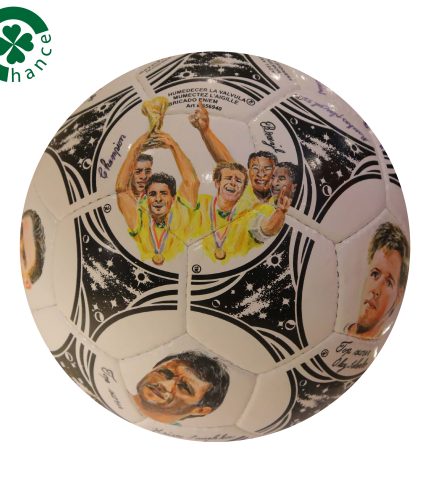
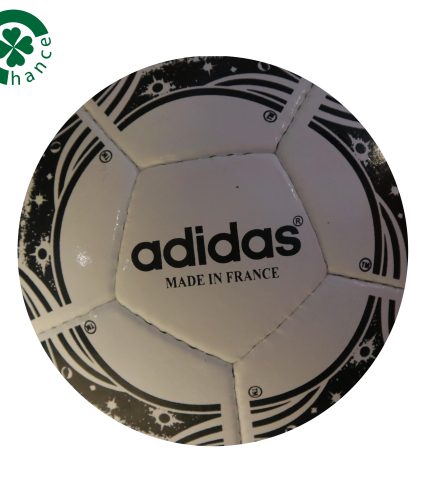
1994 World Cup Painted Ball
Product Name : 1994 World Cup Painted Ball
Date of Registration : 02/01/2023
Category Art : Painting
Art Field : Visual Arts
Total Production : One Collection with Twenty Three Balls
Production Year : 2022
Art Style : Acrylic
Ball Name : Questra
Artist Name : Fatemeh Zarei
Size : 5
Weight (gr) : 388 – 398
Has a signature : Yes
Materials :
At the 1990 World Cup in Italy, a negative World Cup record was set in terms of goals (2.21 goals/match), so many blamed the ball Before the next World Cup, FIFA asked adidas to develop a ball that could score more goals. The 1994 World Cup was brought to the USA in part to promote soccer, but if viewers don’t see enough goals, they tune out of the games on TV and think soccer is a boring
sport. The changes to the ball were successful, as the American World Cup had a higher goal average (2.7 goals/match), which they have not been able to surpass in any World Cup since then.
And what were the changes on the ball? Well, the Questra was lighter and more controllable than its predecessor, which favored more skilled players. Five different materials were used during development, and its most significant innovation was the flexible but resistant outer polyurethane layer, which softened the force of impacts thanks to foaming, and it was also beneficial for the headers.
This is due to the fact that the ball was developed at adidas’ ball production center in France and tested by French, German and American professional, amateur and youth teams.
About Questra :
Name of the Questra ball comes from ancient world for the pursuit to the stars (the quest for the stars). Authors aimed to create a more responsive and light ball, what they got fully. By manufacturing the new ball from five different materials and enveloping it in polystyrene foam, Adidas made the Questra more waterproof and allowed for greater acceleration when kicked. Triads which used in the design of Adidas Questra, display the outlines of stars.
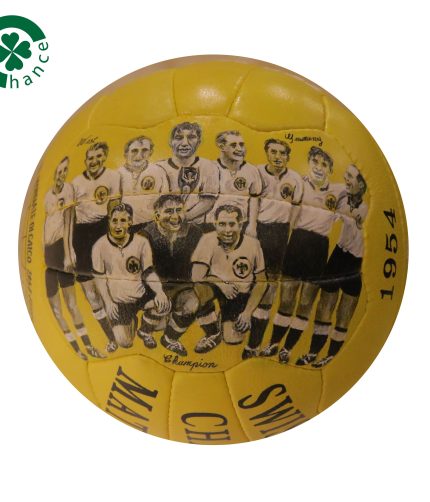
1954 World Cup Painted Ball
Product Name : 1954 World Cup Painted Ball
Date of Registration : 02/01/2023
Category Art : Painting
Art Field : Visual Arts
Total Production : One Collection with Twenty Three Balls
Production Year : 2022
Art Style : Acrylic
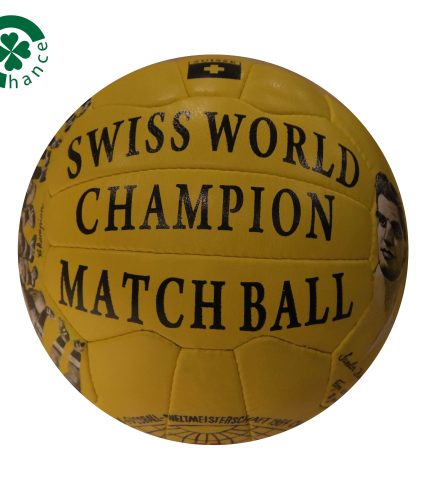
Ball Name : Swiss World Champion Match Ball
Artist Name : Fatemeh Zarei
Size : 5
Weight (gr) : 380 – 392
Has a signature : Yes
Materials :
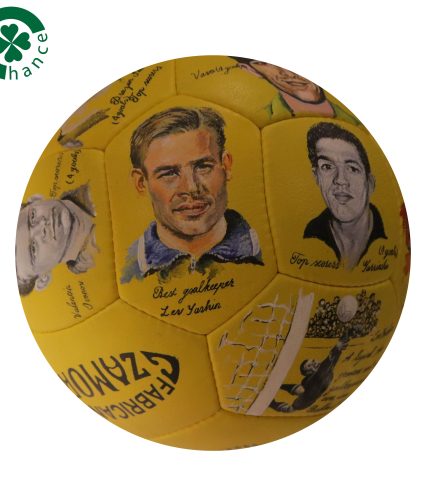
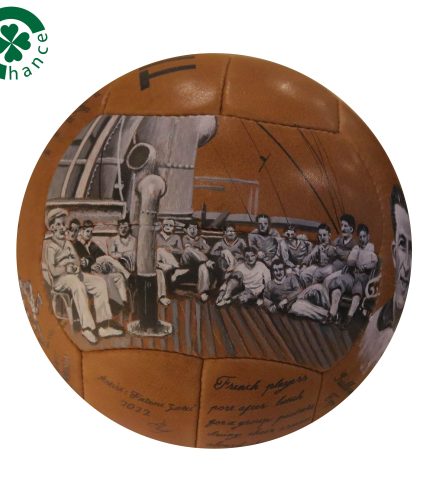
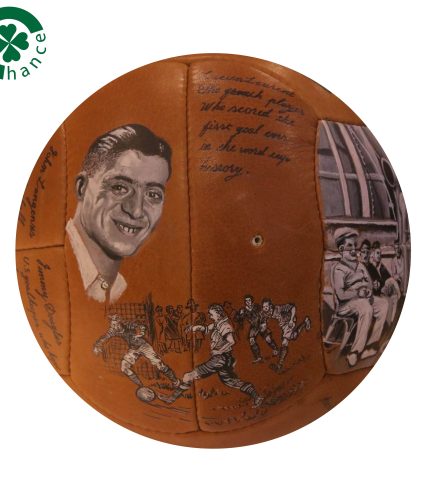
The official match ball of the 1954 FIFA World Cup was composed of 18 panels with zigzag edges, perfectly interlocked to each other. (The same panel structure can be seen on many Mitre balls even today.) The ball was completely hand sewn and no longer had laces -just like its predecessor, the Superball from the 1950 World Cup. The colour of the ball was not dark brown any more, rather an attractive yellowish or hell orange. This made the ball more visible during rainy matches where the pitch contained mud. We can see lots of photographs in different newspapers and magazines from 1954 where the players are portrayed with the Swiss World Champion balls as this ball became by far the best selling World Cup ball compared to its predecessors.
About Swiss World Champion Match Ball :
this ball comes from the pre-adidas historical match ball set, it is the exact reproduction of the original Swiss World Champion balls as used at the 1954 World Cup in Switzerland.
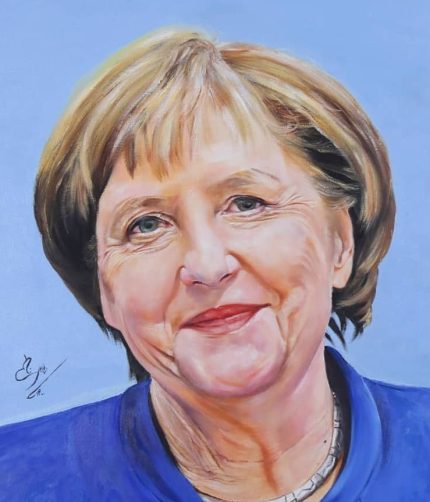
Angela Merkel
Angela Merkel Chancellor of Germany
The Most Influential Political woman in art
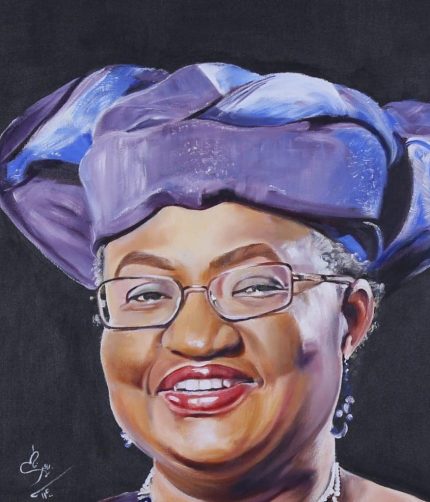
Ngozi Okonjo Lweala
Dr Ngozi Okonjo-Iweala is the seventh Director-General of the WTO and the first woman and the first African to serve as Director-General.
Ngozi Okonjo-Iweala (born 13 June 1954) is a Nigerian-American economist, fair trade leader, environmental sustainability advocate, human welfare champion, sustainable finance maven and global development expert. Since March 2021, Okonjo-Iweala has been serving as Director-General of the World Trade Organization. Notably, she is the first woman and first African to lead the World Trade Organization as Director-General. She sits on boards of: Danone, Standard Chartered Bank, Twitter, MINDS: Mandela Institute for Development Studies, Carnegie Endowment for International Peace, Georgetown Institute for Women, Peace and Security, One Campaign, GAVI: Global Alliance for Vaccines and Immunization, Rockefeller Foundation, R4D: Results for Development, ARC: African Risk Capacity and Earthshot Prize plus others
Okonjo-Iweala was the first Nigerian woman to serve two terms as Finance Minister of Nigeria. Subsequently, from June to August 2006, she served as Minister for Foreign Affairs of Nigeria. In 2005, Euromoney named her Global Finance Minister of the Year.
Maryam Mirzakhani
Maryam Mirzakhani
(12 May 1977-14 July 2017) was an Iranian mathematician and a professor of mathematics at Stanford University. Her research topics included Teichmüller theory, hyperbolic geometry, ergodic theory, and symplectic geometry. In 2005, as a result of her research, she was honored in Popular Science’s fourth annual “Brilliant 10” in which she was acknowledged as one of the top 10 young minds who have pushed their fields in innovative directions.
1966 World Cup Painted Ball
Product Name : 1966 World Cup Painted Ball
Date of Registration : 02/01/2023
Category Art : Painting
Art Field : Visual Arts
Total Production : One Collection with Twenty Three Balls
Production Year : 2022
Art Style : Acrylic
Ball Name : Slazenger 25 Challenge
Artist Name : Fatemeh Zarei
Size : 5
Weight (gr) : 370 – 382
Has a signature : Yes
Materials :
The Slazenger Challenge was made of high quality leather and entirely hand sewn. It was composed of 25 rectangular panels, joined together in a way that was very similar to the 1958 ball and which differed only in the panel which contained the valve. In the Slazenger
ball the valve was in the centre of a small panel between two other, even shorter panels.
The remaining panels were the same as the 1958 ball and the inflating system was the latest type valve – latex rubber. This ball provided excellent sphericity, and its composition was adopted over the years by other brands. The balls of the 1966 World Cup were
provided in three different colours: white, yellow, and orange. Although the most widely used model was the white one, in the memory of football fans the orange ball of the historic final of Wembley remains the strongest.
About Slazenger 25 Challenge :
The match ball used during the 1966 World Cup final, as England beat West Germany 4-2. Geoff Hurst famously scored a hat trick for England, but the ball was claimed by Helmut Haller and only returned to England in 1996. This object is displayed courtesy of Eurostar, Mirror Group and Virgin
Sarah Al Amiri
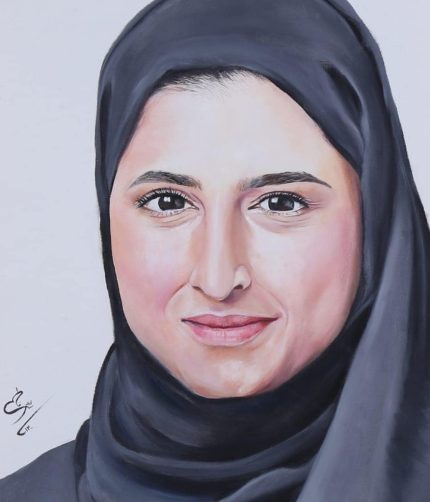
Sarah bint Yousef Al Amiri (born 1987) is the Minister of State for Advanced Technology within the Ministry of Industry and Advanced Technology in the government of the United Arab Emirates, chair of the UAE Space Agency and the UAE Council of Scientists, and Deputy Project Manager of the Emirates Mars Mission.
Recently Viewed
1930 World Cup Painted Ball – Argentina Ball
Product Name : 1930 World Cup Painted Ball – Argentina Ball
Date of Registration : 02/01/2023
Category Art : Painting
Art Field : Visual Arts
Total Production : One Collection with Twenty Three Balls
Production Year : 2022
Art Style : Acrylic
Ball Name : Tiento
Artist Name : Fatemeh Zarei
Size : 5
Weight (gr) : 380 – 410
Has a signature : Yes
Materials :
This vintage leather football ball with lace in made by John Woodbridge with 12 panels. A leather rigorously selected for its quality. Hand sewn, it is manufactured in the respect of the traditional techniques. Its hand-made patina gives it a unique style, a retro and elegant look that will delight collectors and old school sports objects lovers.
About Tiento :
two different balls were used in the final: Argentina supplied the first-half ball (the ‘Tiento’) and led 2–1 at the break; hosts Uruguay supplied the second-half ball (the ‘T-Model’ which was larger and heavier)[4] and won 4–2.
1954 World Cup Painted Ball
Product Name : 1954 World Cup Painted Ball
Date of Registration : 02/01/2023
Category Art : Painting
Art Field : Visual Arts
Total Production : One Collection with Twenty Three Balls
Production Year : 2022
Art Style : Acrylic
Ball Name : Swiss World Champion Match Ball
Artist Name : Fatemeh Zarei
Size : 5
Weight (gr) : 380 – 392
Has a signature : Yes
Materials :
The official match ball of the 1954 FIFA World Cup was composed of 18 panels with zigzag edges, perfectly interlocked to each other. (The same panel structure can be seen on many Mitre balls even today.) The ball was completely hand sewn and no longer had laces -just like its predecessor, the Superball from the 1950 World Cup. The colour of the ball was not dark brown any more, rather an attractive yellowish or hell orange. This made the ball more visible during rainy matches where the pitch contained mud. We can see lots of photographs in different newspapers and magazines from 1954 where the players are portrayed with the Swiss World Champion balls as this ball became by far the best selling World Cup ball compared to its predecessors.
About Swiss World Champion Match Ball :
this ball comes from the pre-adidas historical match ball set, it is the exact reproduction of the original Swiss World Champion balls as used at the 1954 World Cup in Switzerland.
Maryam Mirzakhani
Maryam Mirzakhani
(12 May 1977-14 July 2017) was an Iranian mathematician and a professor of mathematics at Stanford University. Her research topics included Teichmüller theory, hyperbolic geometry, ergodic theory, and symplectic geometry. In 2005, as a result of her research, she was honored in Popular Science’s fourth annual “Brilliant 10” in which she was acknowledged as one of the top 10 young minds who have pushed their fields in innovative directions.
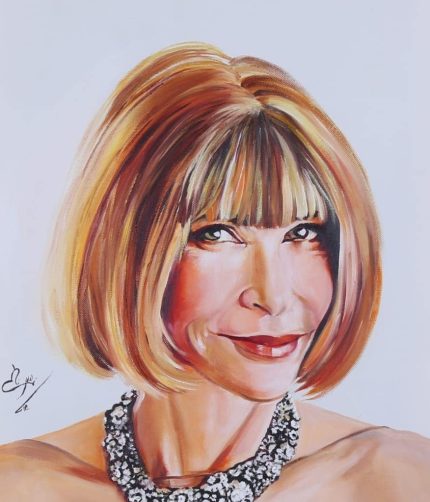
Anna Wintour
Queen of the fashion world
Dame Anna Wintour DBE (born 3 November 1949) is a British-American journalist, who has served as Editor-in-Chief of Vogue since 1988 and Global Chief Content Officer for Condé Nast since 2020;


Reviews
There are no reviews yet.