
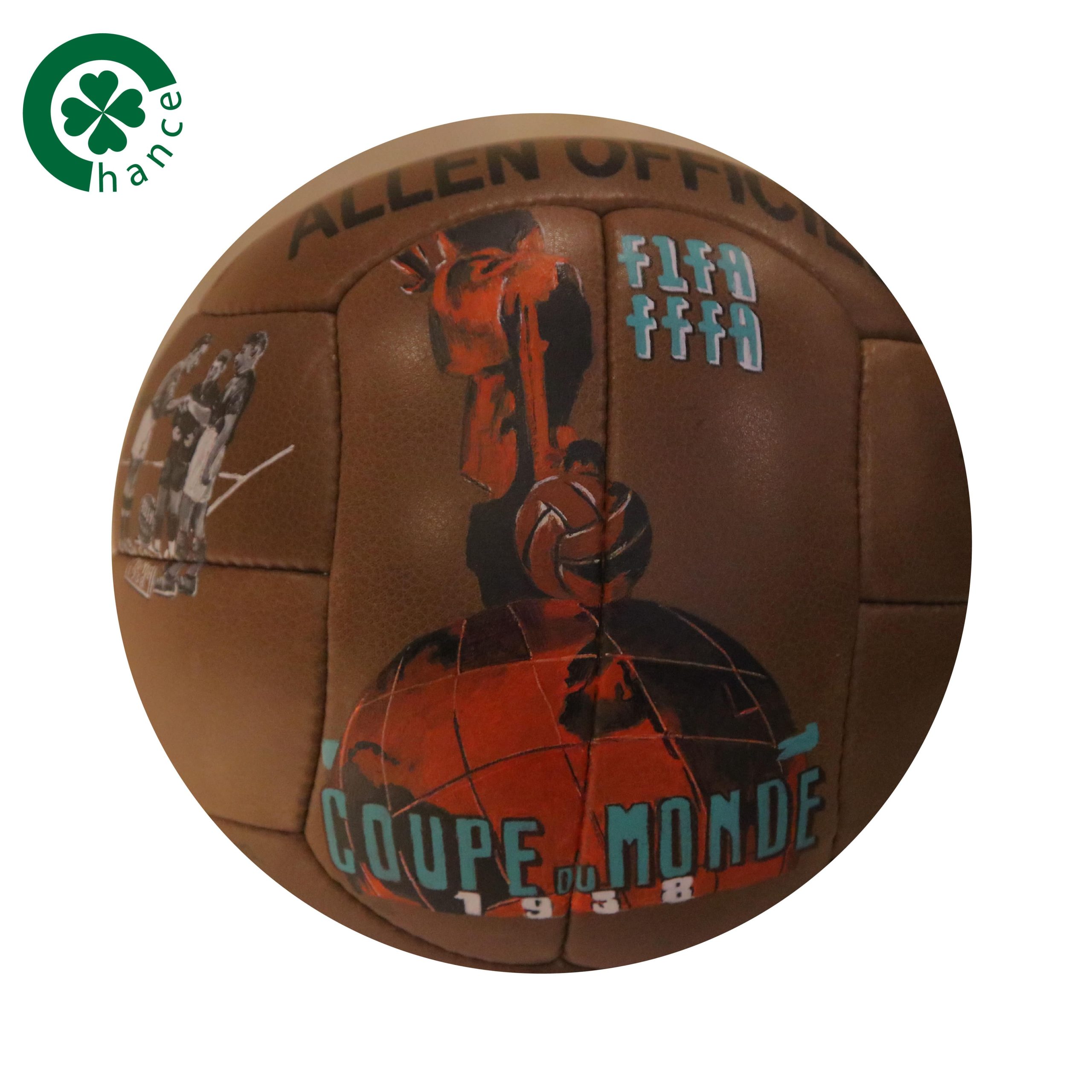
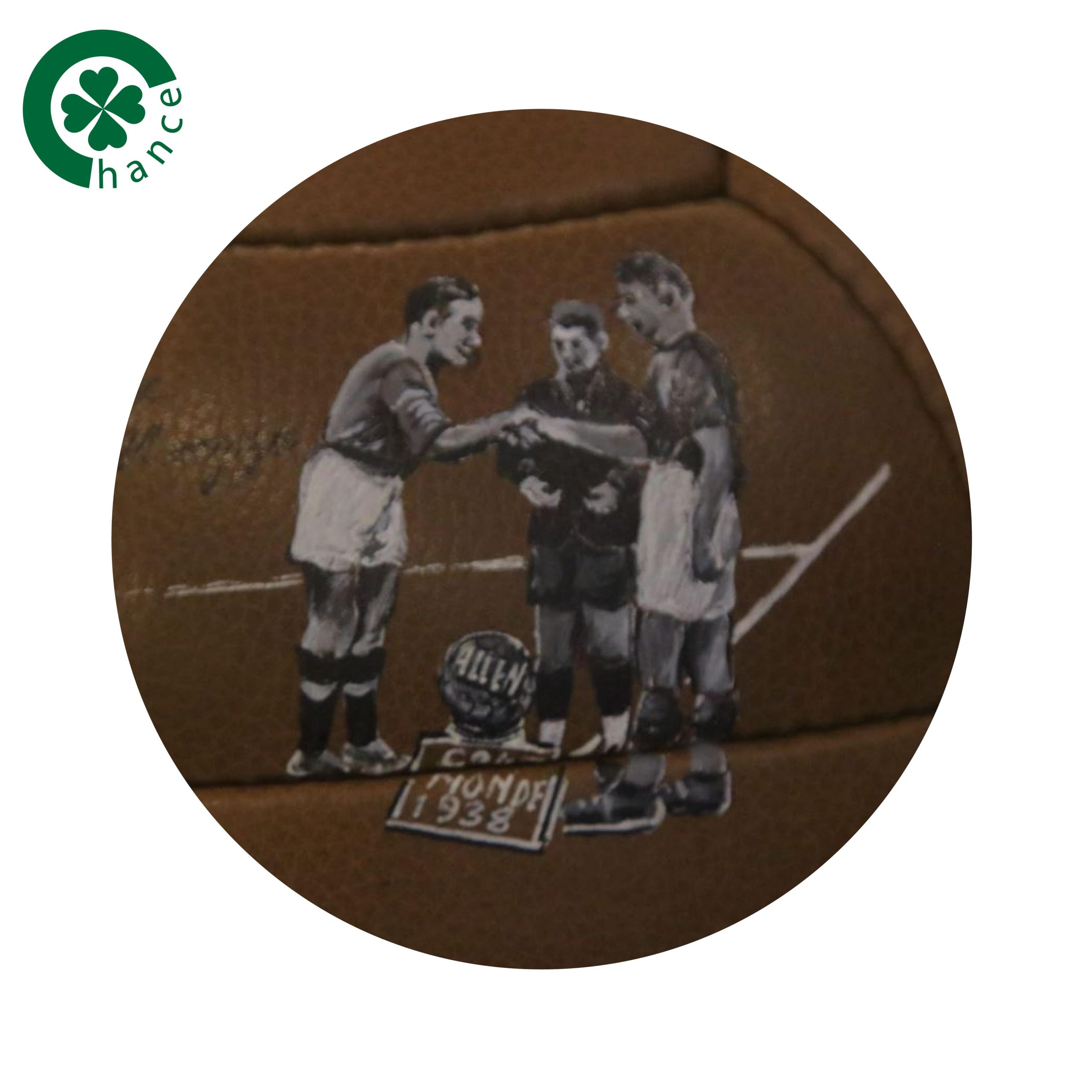
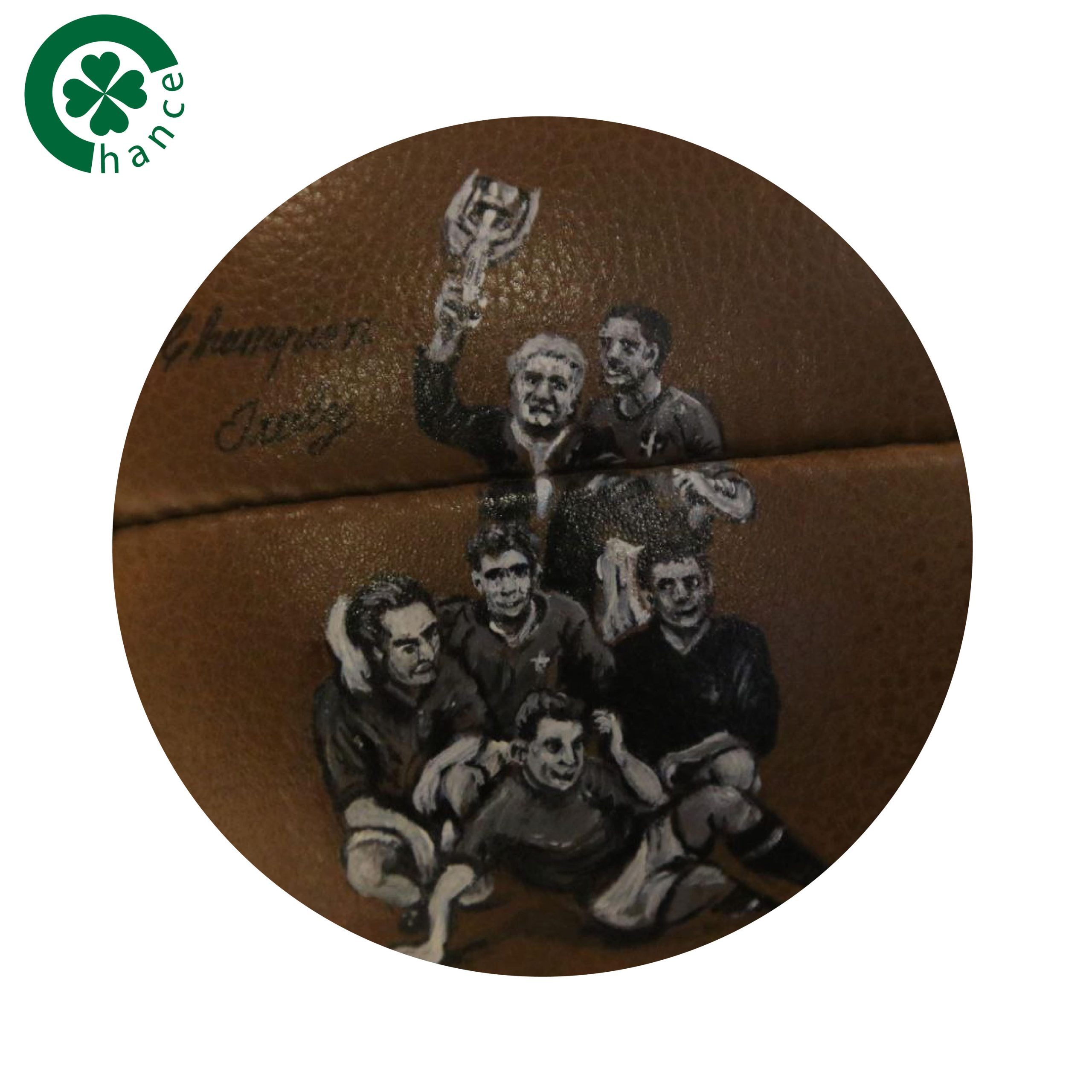
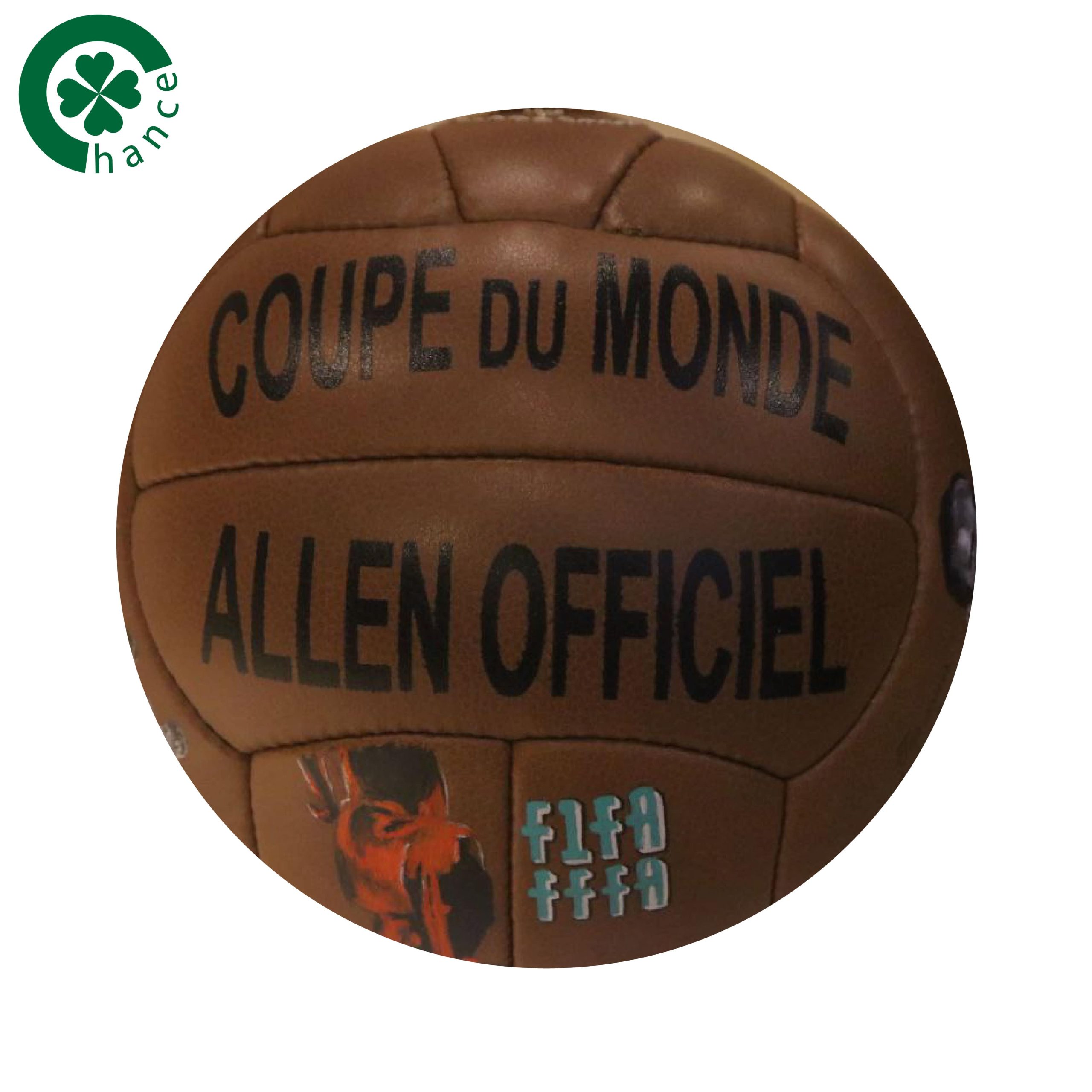

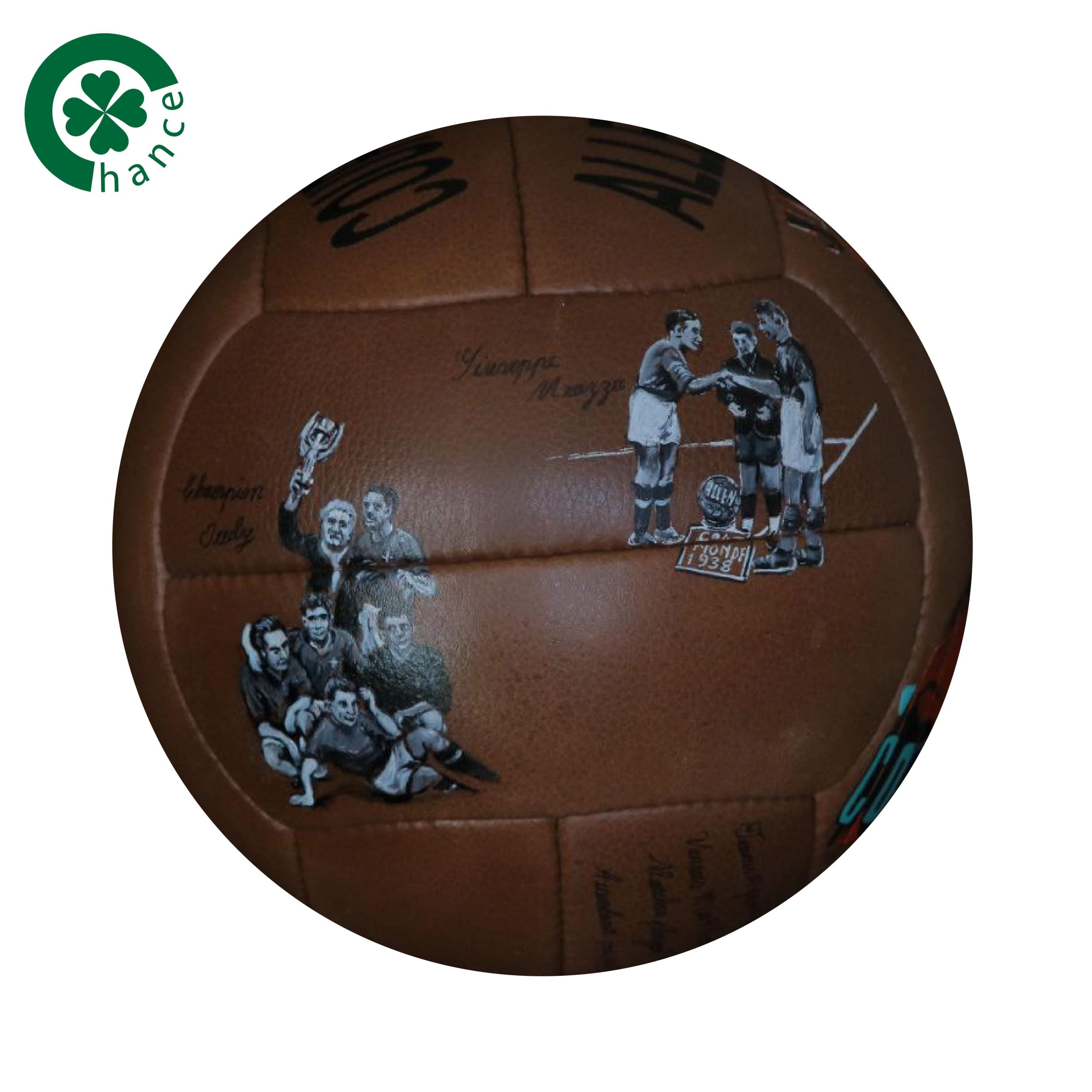
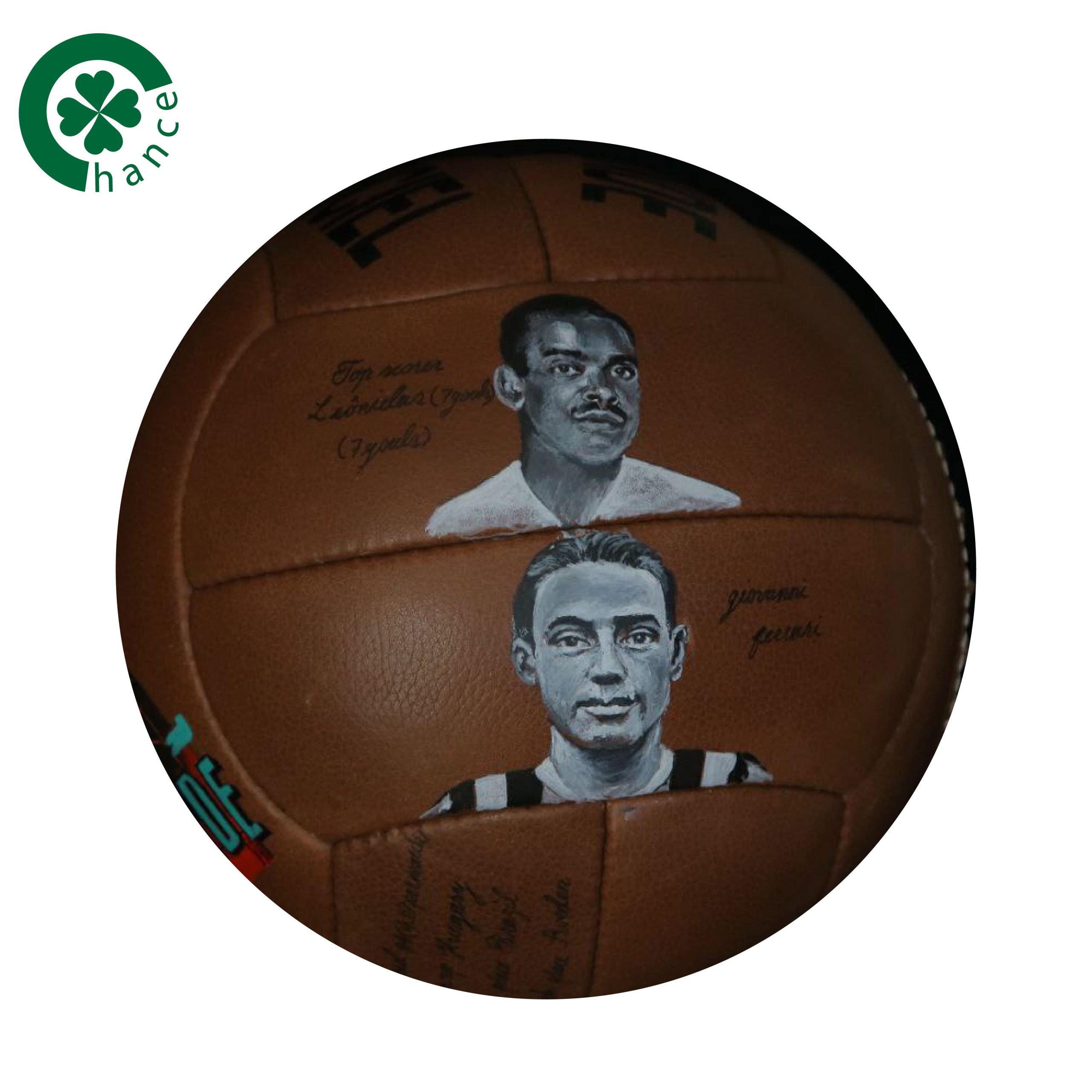
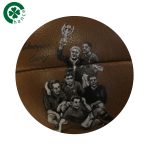
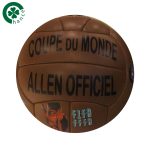
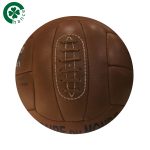
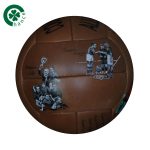
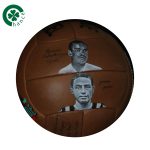
1938 World Cup Painted Ball
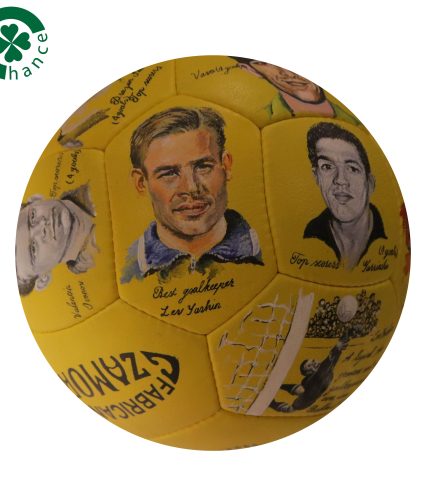
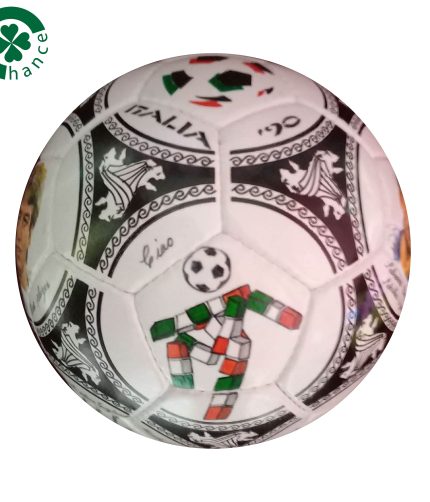
In Stock
Highlights:
CompareProduct Name : 1938 World Cup Painted Ball
Date of Registration : 02/01/2023
Category Art : Painting
Art Field : Visual Arts
Total Production : One Collection with Twenty Three Balls
Production Year : 2022
Art Style : Acrylic
Ball Name : Allen
Artist Name : Fatemeh Zarei
Size : 5
Weight (gr) : 380 – 386
Has a signature : Yes
Materials :
The Allen ball was very similar to the Federale 102 (the official ball of the previous World Cup) because it also consisted of 13 panels. However, the edges of the panels of the Allen ball were much more rounded so the overall design was not completely the same as the Italian ball four years earlier. The Allen ball was much more like the Globe and the Players balls from the 1930 World Cup. However, the manufacturer maintained the developments of the Federale 102 and the laces were put on a separate, thin panel. Black and white pictures prove that the cotton laces of the Allen balls were white, however, this was not a long lasting colour, since the rain and mud immediately changed the colour of the laces to brown. This ball was hand sewn just like its predecessors and had to be inflated by a skilled person. If the man who inflated the ball and closed the laces was not precise, the ball did not become spherical which would influence the trajectory of the ball.
About Allen :
The 1938 FIFA World Cup was the third edition of the World Cup, the quadrennial international football championship for senior men’s national teams and was held in France from 4 June until 19 June 1938. Italy defended its title in the final, beating Hungary 4–2. Italy’s 1934 and 1938 teams hold the distinction of being the only men’s national team to win the World Cup multiple times under the same coach, Vittorio Pozzo. It would be the last World Cup until 1950 due to the disruption from World War II.
Categories: Balls Collections, Painting Collections
Related products
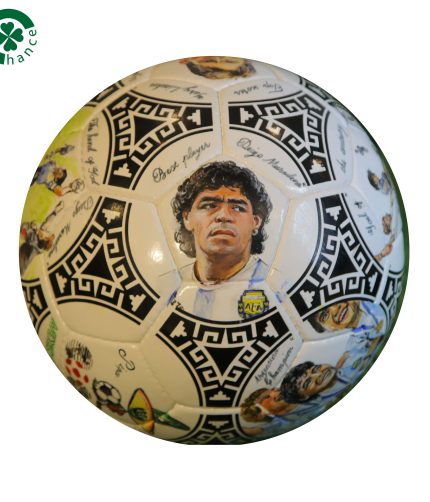
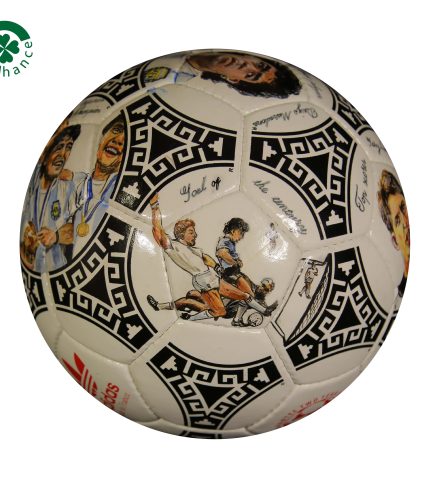
1986 World Cup Painted Ball
Rated 0 out of 5
(0)
Highlights:
Product Name : 1986 World Cup Painted Ball
Date of Registration : 02/01/2023
Category Art : Painting
Art Field : Visual Arts
Total Production : One Collection with Twenty Three Balls
Production Year : 2022
Art Style : Acrylic
Ball Name : Azteca
Artist Name : Fatemeh Zarei
Size : 5
Weight (gr) : 380 – 410
Has a signature : Yes
Materials :
A completely new model was developed for the World Cup in Mexico. The Azteca Mexico was a hand-sewn ball, and for the first time, synthetic material, rather than leather was used to produce it. The ball consisted of an outer polyurethane wearing coat and three lower layers, which mutually complemented one another with their different “Adicron” structures. These were intended to ensure the ball’s resistance, ability to retain its shape and its waterproof properties. With its never-before-achieved performance on hard ground, at high altitude, and in wet conditions, Azteca represented a massive leap forward for the game. Its elaborately decorated design was inspired by the hosting nation’s native Aztec architecture and murals.
About Questra :
Azteca ball – first ball which has been made of fully synthetic material. Triad used in the design of the ball, where were painted like Aztecs frescoes. The Adidas Azteca ball was quite an elegant ball with revolutionary design but even though it was still composed by 32 hand sewn panels.
2002 World Cup Painted Ball
Rated 0 out of 5
(0)
Highlights:
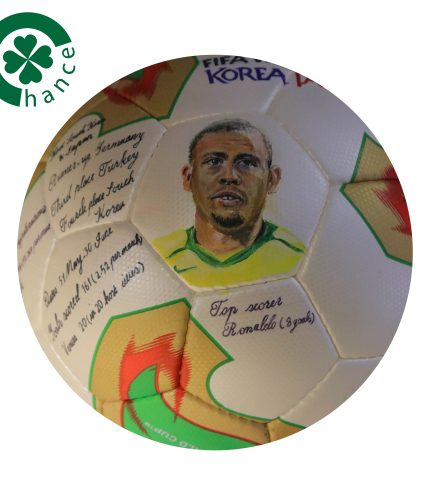
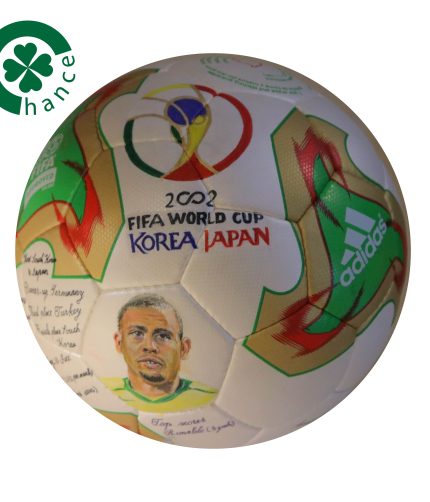
Product Name : 2002 World Cup Painted Ball
Date of Registration : 02/01/2023
Category Art : Painting
Art Field : Visual Arts
Total Production : One Collection with Twenty Three Balls
Production Year : 2022
Art Style : Acrylic
Ball Name : Fevernova
Artist Name : Fatemeh Zarei
Size : 5
Weight (gr) : 389 – 398
Has a signature : Yes
Materials :
Adidas’s Fevernova soccer ball was the official ball of the Korea Japan, 2002 FIFA world cup. The adidas Fevernova was the first World Cup Match Ball since 1978 to break with the traditional Tango design introduced in 1978. It is three millimeters thick (11 layers). This includes a special foam layer with tiny gas filled balloons imbedded in a syntactic foam. The foam is based on an abrasion resistant polyurethane made by Bayer called Impranil® polyurethane. The outer cover of the ball consists of a combination of special synthetic polystyrenes (polyurethane) and natural rubber. Embedded within the layers are equal sized, highly elastic, exceptionally resistant gas-filled microcells. The inner lining consists of a tightly woven network of knitted, synthetic Raschel fabric. The spongy layer has high modulus of compression, with a good elastic memory. These layers give the Fevernova TM improved rebound characteristics, which convert foot strike into ball acceleration. The outer layer of the ball is made of a particularly so that the ball can withstand exceptionally tough treatment. All of this combines to give the ball greater durability. According to Adidas, the surface of the new ball converts applied energy evenly at every point. Theoretically, this gives a more calculable, flight path with advanced players. The Adidas Fevernova TM is made to meet the lower end of FIFA regulations governing circumference and the upper limit of weight , in which smaller and heavier sphere has a more accurate trajectory.
About Fevernova :
The ball Fevernova has been obtained as a result of three years of work to improve the previous Tricolore ball at the research center in south of Germany.
The new design is based on Asian culture and are not similar to its predecessors. This ball featured a refined syntactic foam layer, to give the ball superior performance characteristics, and a three-layer knitted chassis, allowing for a more precise and predictable flight path. For the World Cup matches has been presented more than 2,500 balls Fevernova, and later around the world has been sold about six million replicas.
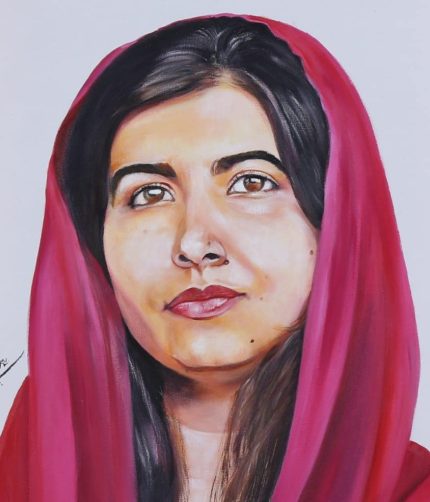
Malala Yousafzai
Rated 0 out of 5
(0)
Highlights:
(born 12 July 1997), she’s a Pakistani activist for female education and a Nobel Peace Prize laureate. At age 17, She is also the world’s youngest Nobel Prize laureate, and second Pakistani. She is known for human rights advocacy, especially the education of women and children.
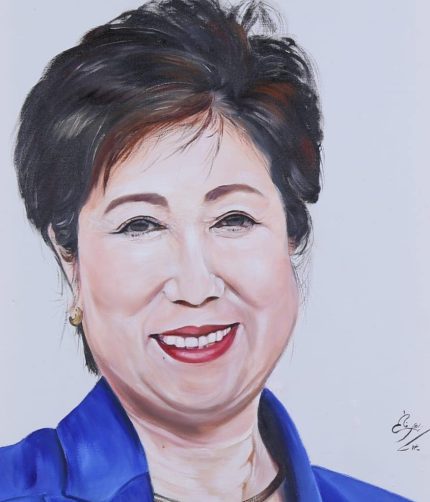
Yoriko Kuike
Rated 0 out of 5
(0)
Highlights:
She’s The first female governor of Tokyo, the capital of Japan and the most populous city in the world. When we know that Tokyo has a population of more than 38 million people, that is, as much as the population of several European countries, the importance of Ms. Koike’s role in governing Tokyo becomes even more apparent.
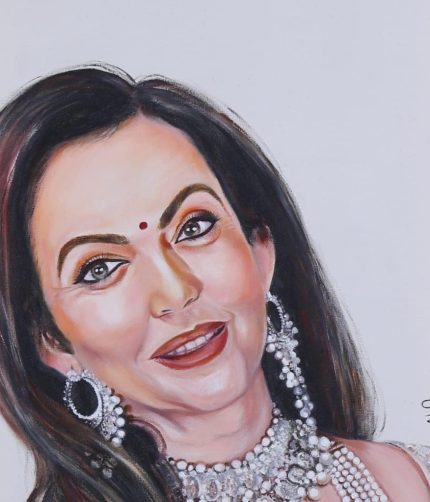
Nita Ambani
Rated 0 out of 5
(0)
Highlights:
Nita Ambani(born 1 November1963) is an Indian
philanthropist. She is the chairperson and founder of
the Reliance Foundation, Dhirubhai Ambani International
School and a director of Reliance Industries. She is
married to Reliance Industries chairman and managing
director Mukesh Ambani, the Ambanis are among the
richest in the world. She is also an art collector and owner
of the Indian Premier League cricket team Mumbai
Indians.
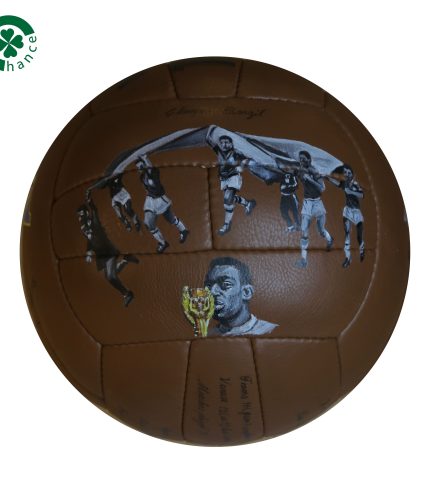
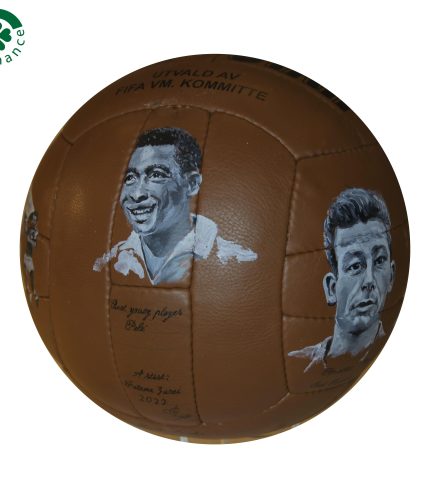
1958 World Cup Painted Ball
Rated 0 out of 5
(0)
Highlights:
Product Name : 1958 World Cup Painted Ball
Date of Registration : 02/01/2023
Category Art : Painting
Art Field : Visual Arts
Total Production : One Collection with Twenty Three Balls
Production Year : 2022
Art Style : Acrylic
Ball Name : Top-Star
Artist Name : Fatemeh Zarei
Size : 5
Weight (gr) : 374- 334 gr
Has a signature : Yes
Materials :
The Top Star ball had a popular design, it was similar to the balls of the time, however, on this ball there were long and short panels, elegantly alternated between them : two short panels in the midst of two long panels and the inflation valve was in the center of one short panel. This ball brought technological developements as well, these leather balls were treated with a waterproofing wax, making the balls more water resistant. The balls used in the 1958 World Cup were yellow, light brown or white. In matcheswhen it was rainy or a little wet (just like in the final between Brazil and Sweden) the white ones were used.
About Top-Star:
Official ball of the 1958 World Cup in Sweden was chosen as representatives of FIFA. Ball Top Star, made by Swedish firm “Sydsvenska Läder- och Remfabriken”, consisted of 24 panels and was presented in three colors – brown, orange and white, no branding. Each of the national teams participating in the World Cup, had at its disposal 30 balls.
1954 World Cup Painted Ball
Rated 0 out of 5
(0)
Highlights:
Product Name : 1954 World Cup Painted Ball
Date of Registration : 02/01/2023
Category Art : Painting
Art Field : Visual Arts
Total Production : One Collection with Twenty Three Balls
Production Year : 2022
Art Style : Acrylic
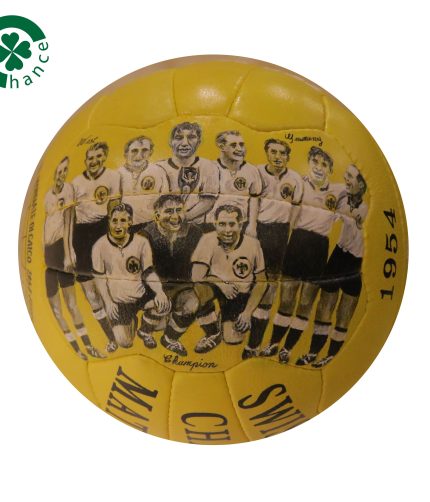
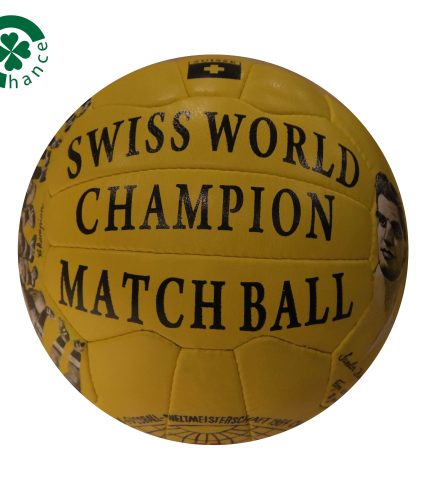
Ball Name : Swiss World Champion Match Ball
Artist Name : Fatemeh Zarei
Size : 5
Weight (gr) : 380 – 392
Has a signature : Yes
Materials :
The official match ball of the 1954 FIFA World Cup was composed of 18 panels with zigzag edges, perfectly interlocked to each other. (The same panel structure can be seen on many Mitre balls even today.) The ball was completely hand sewn and no longer had laces -just like its predecessor, the Superball from the 1950 World Cup. The colour of the ball was not dark brown any more, rather an attractive yellowish or hell orange. This made the ball more visible during rainy matches where the pitch contained mud. We can see lots of photographs in different newspapers and magazines from 1954 where the players are portrayed with the Swiss World Champion balls as this ball became by far the best selling World Cup ball compared to its predecessors.
About Swiss World Champion Match Ball :
this ball comes from the pre-adidas historical match ball set, it is the exact reproduction of the original Swiss World Champion balls as used at the 1954 World Cup in Switzerland.
1974 World Cup Painted Ball
Rated 0 out of 5
(0)
Highlights:
Product Name : 1974 World Cup Painted Ball
Date of Registration : 02/01/2023
Category Art : Painting
Art Field : Visual Arts
Total Production : One Collection with Twenty Three Balls
Production Year : 2022
Art Style : Acrylic
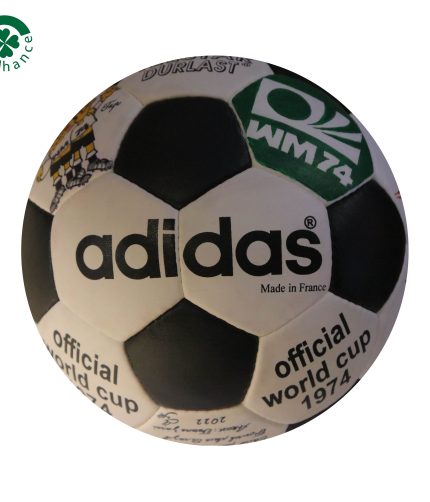
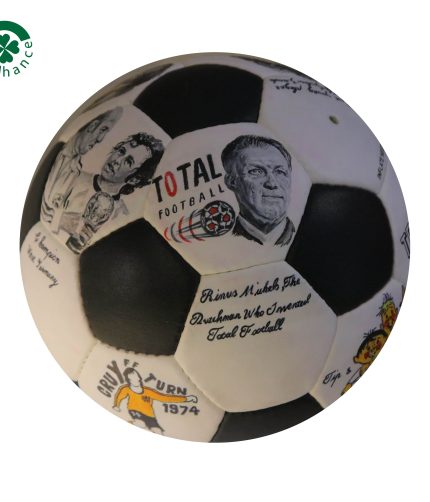
Ball Name : Telstar Durlast
Artist Name : Fatemeh Zarei
Size : 5
Weight (gr) : 428 – 436
Has a signature : Yes
Materials :
It’s first Adidas ball which was using in a World Cup. It was made of leather and was shaped like a truncated icosahedron, composed of 12 black pentagons and 20 white hexagons. Name of the ball Telstar was formed from the respective titles of the American artificial satellite of Earth, put into orbit in 1962. Moreover, the ball has been nicknamed “Star of Television”, because design of the ball is compatible for black-and-white TV.
About Telstar Durlast :
The ball used for the 1970 and 1974 World Cup was the Telstar, design by Adidas. It was the first white football ever to be painted with black pentagons which became synonymous with football throughout the world. The distinct 32 white and black leather panels that comprised the Telstar made it the roundest ball of its time.
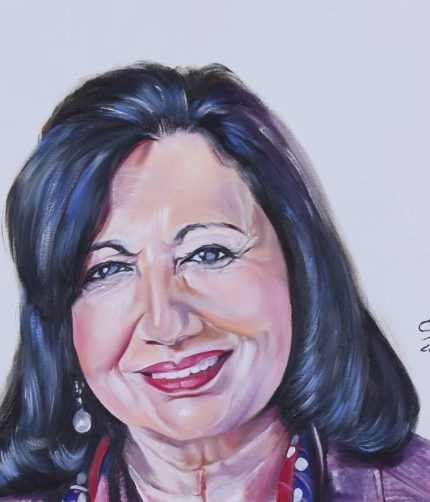
Mazumdar Shaw
Rated 0 out of 5
(0)
Highlights:
Mazumdar-Shaw dislikes the term ‘philanthropy”, believing that it often provides temporary fixes rather than addressing the root cause or the underlying situation. She prefers the term “compassionate capitalist”
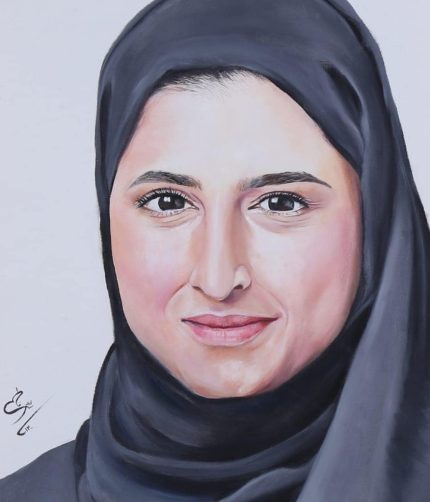
Sarah Al Amiri
Rated 0 out of 5
(0)
Highlights:
Sarah bint Yousef Al Amiri (born 1987) is the Minister of State for Advanced Technology within the Ministry of Industry and Advanced Technology in the government of the United Arab Emirates, chair of the UAE Space Agency and the UAE Council of Scientists, and Deputy Project Manager of the Emirates Mars Mission.
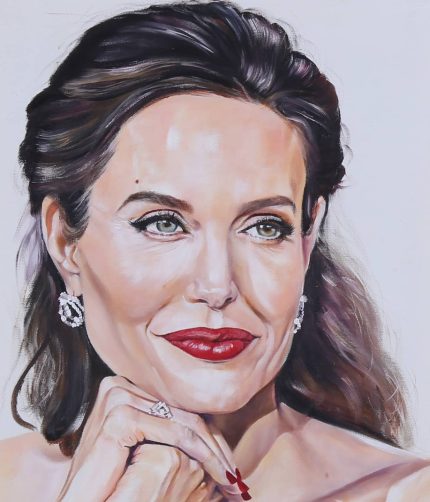
Angelina Jolie
Rated 0 out of 5
(0)
Highlights:
American actress, Oscar winner, filmmaker, Humanitarian, Special Envoy for Un refugees
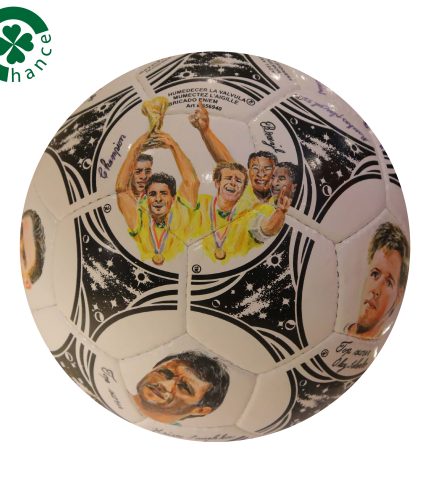
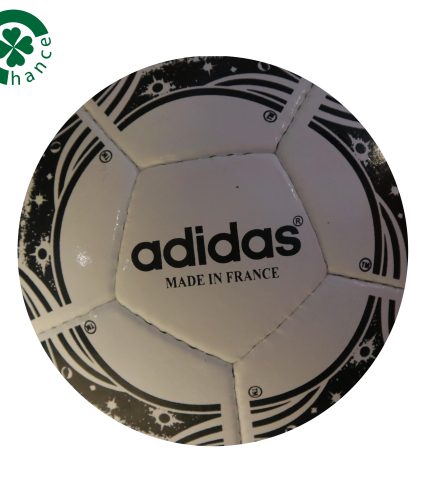
1994 World Cup Painted Ball
Rated 0 out of 5
(0)
Highlights:
Product Name : 1994 World Cup Painted Ball
Date of Registration : 02/01/2023
Category Art : Painting
Art Field : Visual Arts
Total Production : One Collection with Twenty Three Balls
Production Year : 2022
Art Style : Acrylic
Ball Name : Questra
Artist Name : Fatemeh Zarei
Size : 5
Weight (gr) : 388 – 398
Has a signature : Yes
Materials :
At the 1990 World Cup in Italy, a negative World Cup record was set in terms of goals (2.21 goals/match), so many blamed the ball Before the next World Cup, FIFA asked adidas to develop a ball that could score more goals. The 1994 World Cup was brought to the USA in part to promote soccer, but if viewers don’t see enough goals, they tune out of the games on TV and think soccer is a boring
sport. The changes to the ball were successful, as the American World Cup had a higher goal average (2.7 goals/match), which they have not been able to surpass in any World Cup since then.
And what were the changes on the ball? Well, the Questra was lighter and more controllable than its predecessor, which favored more skilled players. Five different materials were used during development, and its most significant innovation was the flexible but resistant outer polyurethane layer, which softened the force of impacts thanks to foaming, and it was also beneficial for the headers.
This is due to the fact that the ball was developed at adidas’ ball production center in France and tested by French, German and American professional, amateur and youth teams.
About Questra :
Name of the Questra ball comes from ancient world for the pursuit to the stars (the quest for the stars). Authors aimed to create a more responsive and light ball, what they got fully. By manufacturing the new ball from five different materials and enveloping it in polystyrene foam, Adidas made the Questra more waterproof and allowed for greater acceleration when kicked. Triads which used in the design of Adidas Questra, display the outlines of stars.
Recently Viewed

Maryam Mirzakhani
Rated 0 out of 5
(0)
Highlights:
Maryam Mirzakhani
(12 May 1977-14 July 2017) was an Iranian mathematician and a professor of mathematics at Stanford University. Her research topics included Teichmüller theory, hyperbolic geometry, ergodic theory, and symplectic geometry. In 2005, as a result of her research, she was honored in Popular Science’s fourth annual “Brilliant 10” in which she was acknowledged as one of the top 10 young minds who have pushed their fields in innovative directions.
2006 World Cup Painted Ball
Rated 0 out of 5
(0)
Highlights:
Product Name : 2006 World Cup Painted Ball
Date of Registration : 02/01/2023
Category Art : Painting
Art Field : Visual Arts
Total Production : One Collection with Twenty Three Balls
Production Year : 2022
Art Style : Acrylic
Ball Name : Teamgeist
Artist Name : Fatemeh Zarei
Size : 5
Weight (gr) : 420 – 430
Has a signature : Yes
Materials :
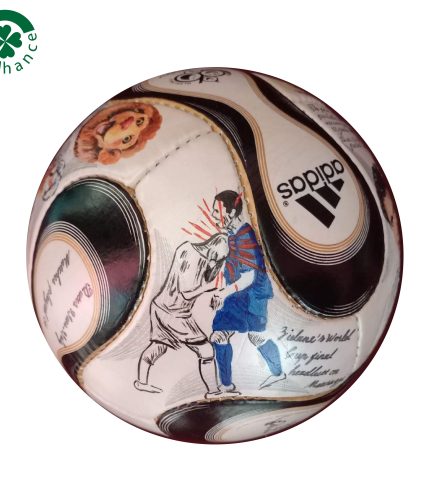
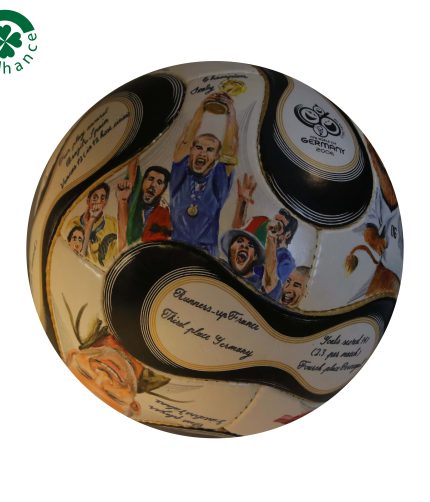
The ball was designed by the Adidas Innovation Team and the Molten Corporation and is made by Adidas, which has provided the balls used in all World Cup matches since the 1970 World Cup when the Telstar was introduced. The +Teamgeist ball differs from previous balls in having just 14 curved panels (making the ball topologically equivalent to a truncated octahedron), rather than the 32 that have been standard since 1970. Like the 32 panel Roteiro which preceded it, the +TeamGeist panels are bonded together, rather than stitched. It is claimed to be rounder and to perform more uniformly regardless of where it is hit, and being almost waterproof, it does not get heavier in wet weather.
About Teamgeist :
With the name of “Teamgeist” the creators of the ball wanted to remind that one of the most important components of success in World Cup it’s “team spirit”. Translated from the German word team means “command” and geist – “spirit”.
1954 World Cup Painted Ball
Rated 0 out of 5
(0)
Highlights:
Product Name : 1954 World Cup Painted Ball
Date of Registration : 02/01/2023
Category Art : Painting
Art Field : Visual Arts
Total Production : One Collection with Twenty Three Balls
Production Year : 2022
Art Style : Acrylic
Ball Name : Swiss World Champion Match Ball
Artist Name : Fatemeh Zarei
Size : 5
Weight (gr) : 380 – 392
Has a signature : Yes
Materials :
The official match ball of the 1954 FIFA World Cup was composed of 18 panels with zigzag edges, perfectly interlocked to each other. (The same panel structure can be seen on many Mitre balls even today.) The ball was completely hand sewn and no longer had laces -just like its predecessor, the Superball from the 1950 World Cup. The colour of the ball was not dark brown any more, rather an attractive yellowish or hell orange. This made the ball more visible during rainy matches where the pitch contained mud. We can see lots of photographs in different newspapers and magazines from 1954 where the players are portrayed with the Swiss World Champion balls as this ball became by far the best selling World Cup ball compared to its predecessors.
About Swiss World Champion Match Ball :
this ball comes from the pre-adidas historical match ball set, it is the exact reproduction of the original Swiss World Champion balls as used at the 1954 World Cup in Switzerland.
1930 World Cup Painted Ball – Argentina Ball
Rated 0 out of 5
(0)
Highlights:
Product Name : 1930 World Cup Painted Ball – Argentina Ball
Date of Registration : 02/01/2023
Category Art : Painting
Art Field : Visual Arts
Total Production : One Collection with Twenty Three Balls
Production Year : 2022
Art Style : Acrylic
Ball Name : Tiento
Artist Name : Fatemeh Zarei
Size : 5
Weight (gr) : 380 – 410
Has a signature : Yes
Materials :
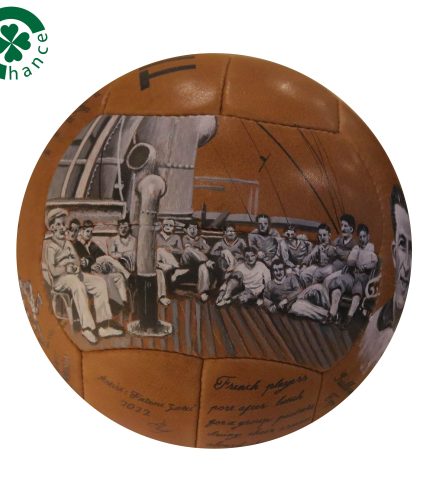
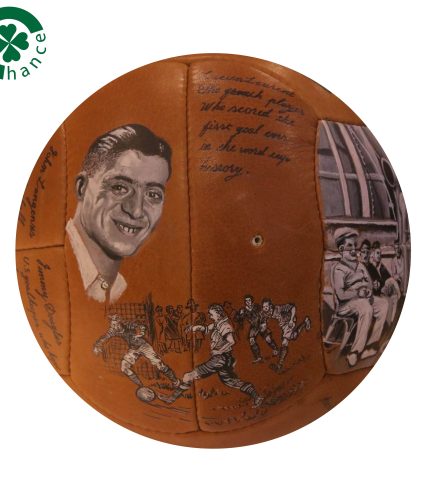
This vintage leather football ball with lace in made by John Woodbridge with 12 panels. A leather rigorously selected for its quality. Hand sewn, it is manufactured in the respect of the traditional techniques. Its hand-made patina gives it a unique style, a retro and elegant look that will delight collectors and old school sports objects lovers.
About Tiento :
two different balls were used in the final: Argentina supplied the first-half ball (the ‘Tiento’) and led 2–1 at the break; hosts Uruguay supplied the second-half ball (the ‘T-Model’ which was larger and heavier)[4] and won 4–2.

Anna Wintour
Rated 0 out of 5
(0)
Highlights:
Queen of the fashion world
Dame Anna Wintour DBE (born 3 November 1949) is a British-American journalist, who has served as Editor-in-Chief of Vogue since 1988 and Global Chief Content Officer for Condé Nast since 2020;
1930 World Cup Painted Ball – Uruguay Ball
Rated 0 out of 5
(0)
Highlights:
Product Name : 1930 World Cup Painted Ball – Uruguay Ball
Date of Registration : 02/01/2023
Category Art : Painting
Art Field : Visual Arts
Total Production : One Collection with Twenty Three Balls
Production Year : 2022
Art Style : Acrylic
Ball Name : T-Model
Artist Name : Fatemeh Zarei
Size : 5
Weight (gr) : 380 – 410
Has a signature : Yes
Materials :
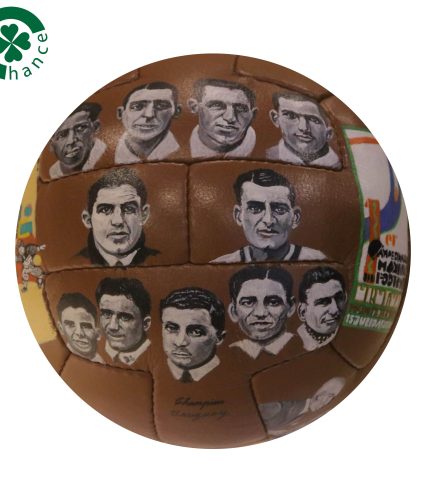
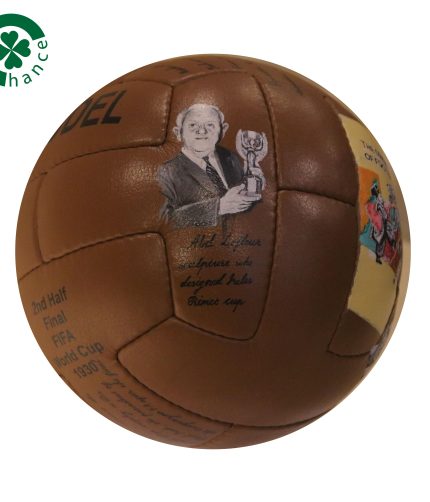
Vintage leather football with 10 panels, this “T-shaped” ball is a replica of one of the most famous models of history. Handmade with Woodbridge “savoir-faire”, its patina give it an authentic old school and unique style.
An iconic model in football history, the “T-shape” is the ball that helped Uruguay win the inaugural edition of the World Cup. While the first half of the tournament final was played with the Argentinian favorite ball, Tiento, Celeste approached the second act with a goal behind, led 2 to 1. More comfortable with his An English-made T-shaped panel model, the host country team found the net three times to lift the Jules Rimet Trophy in front of the 70,000 spectators at the Centenario Stadium in Montevideo. On July 30, 1930 at 3.30 p.m., John Langenus, the Belgian referee of the match, entered the field with a ball under each arm in order not to favor either of the two nations. A unique event in the history of the round ball.
About T-Model :
Inspired by the famous “T-Shape” design used in the second half of the 1930 World Cup Final, with which the Uruguayan team won the very first edition of the most popular sports competition with a final score of 4-2 against Argentine, the John Woodbridge 1930 T-shape vintage football.
Reviews
There are no reviews yet.