
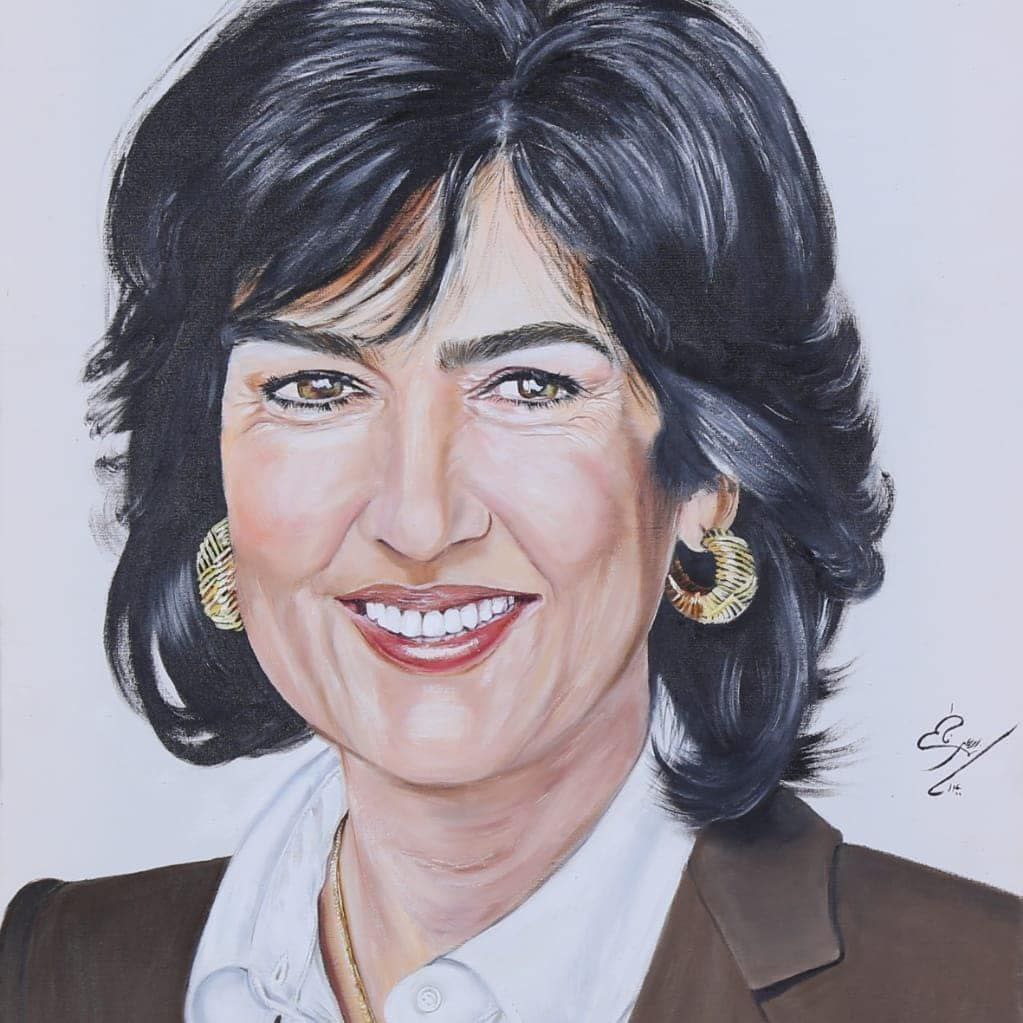
Christian Amanpour
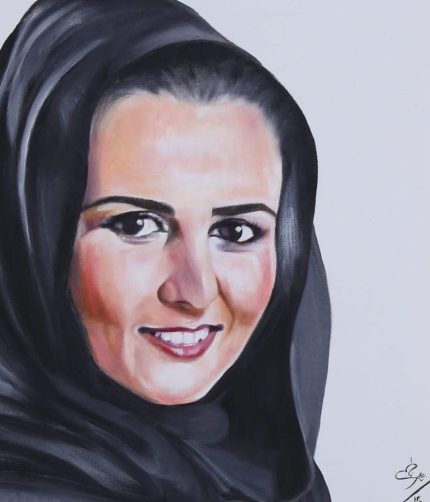
In Stock
Highlights:
CompareChristiane Amanpour
Amanpour is a British-Iranian reporter and TV host. She is the Chief International Anchor for CNN and host of CNN International’s nightly interview show Amanpour. She also runs the Amanpour & Company programs on PBS. She was previously the host of the global affair for ABC News in the United States. She is one of the journalists who is most followed by world leaders on Twitter. Amanpour has an Iranian father and a British mother.
Categories: A World Without Borders, Painting Collections
Related products
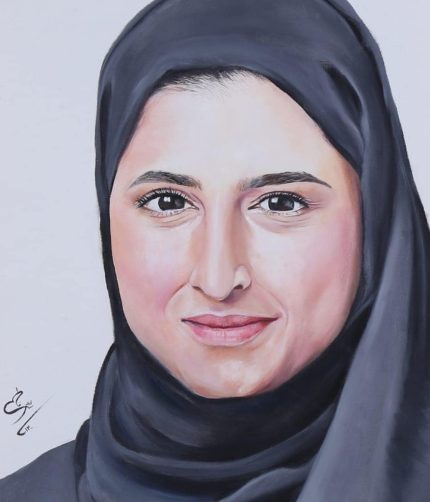
Sarah Al Amiri
Rated 0 out of 5
(0)
Highlights:
Sarah bint Yousef Al Amiri (born 1987) is the Minister of State for Advanced Technology within the Ministry of Industry and Advanced Technology in the government of the United Arab Emirates, chair of the UAE Space Agency and the UAE Council of Scientists, and Deputy Project Manager of the Emirates Mars Mission.
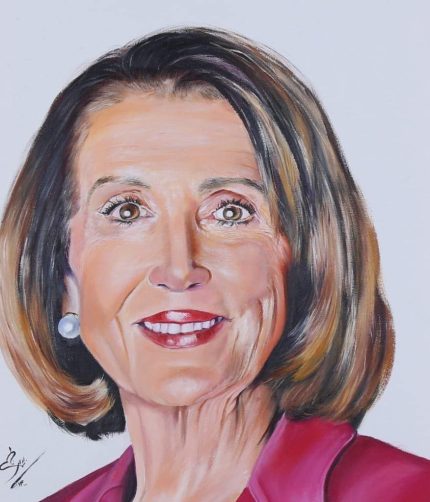
Nansy Pelosi
Rated 0 out of 5
(0)
Highlights:
the first Californian, the first Italian-American and the first woman to become Speaker of the US House of Representatives
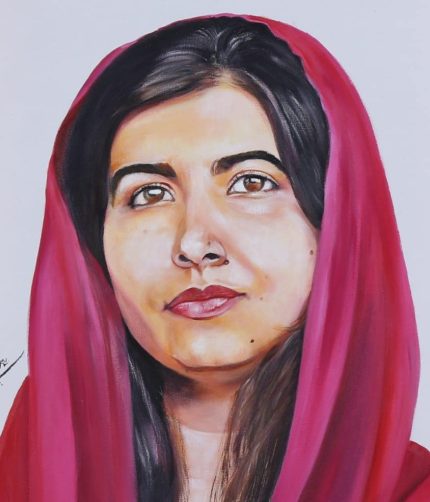
Malala Yousafzai
Rated 0 out of 5
(0)
Highlights:
(born 12 July 1997), she’s a Pakistani activist for female education and a Nobel Peace Prize laureate. At age 17, She is also the world’s youngest Nobel Prize laureate, and second Pakistani. She is known for human rights advocacy, especially the education of women and children.
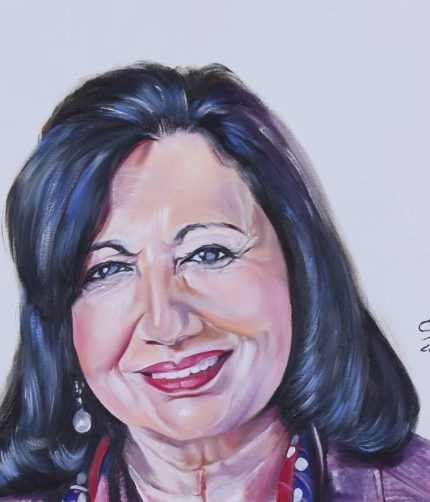
Mazumdar Shaw
Rated 0 out of 5
(0)
Highlights:
Mazumdar-Shaw dislikes the term ‘philanthropy”, believing that it often provides temporary fixes rather than addressing the root cause or the underlying situation. She prefers the term “compassionate capitalist”
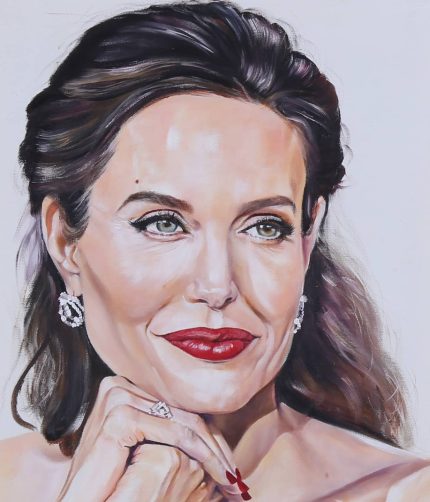
Angelina Jolie
Rated 0 out of 5
(0)
Highlights:
American actress, Oscar winner, filmmaker, Humanitarian, Special Envoy for Un refugees
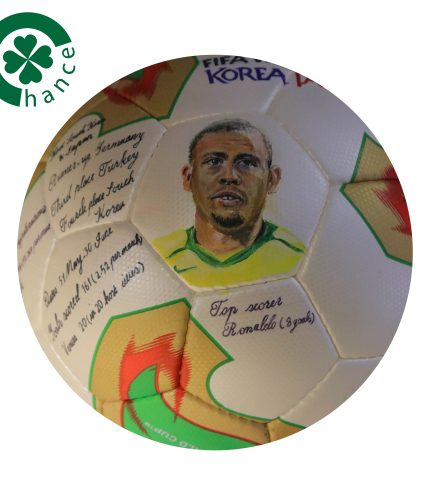
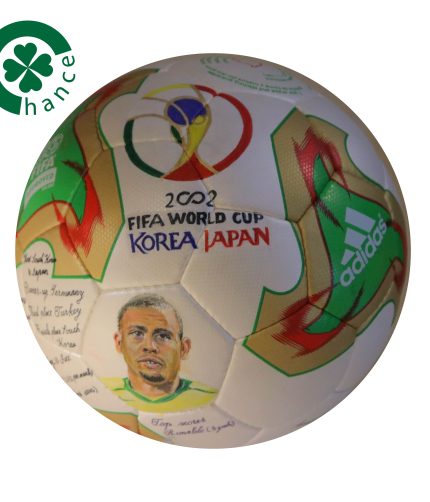
2002 World Cup Painted Ball
Rated 0 out of 5
(0)
Highlights:
Product Name : 2002 World Cup Painted Ball
Date of Registration : 02/01/2023
Category Art : Painting
Art Field : Visual Arts
Total Production : One Collection with Twenty Three Balls
Production Year : 2022
Art Style : Acrylic
Ball Name : Fevernova
Artist Name : Fatemeh Zarei
Size : 5
Weight (gr) : 389 – 398
Has a signature : Yes
Materials :
Adidas’s Fevernova soccer ball was the official ball of the Korea Japan, 2002 FIFA world cup. The adidas Fevernova was the first World Cup Match Ball since 1978 to break with the traditional Tango design introduced in 1978. It is three millimeters thick (11 layers). This includes a special foam layer with tiny gas filled balloons imbedded in a syntactic foam. The foam is based on an abrasion resistant polyurethane made by Bayer called Impranil® polyurethane. The outer cover of the ball consists of a combination of special synthetic polystyrenes (polyurethane) and natural rubber. Embedded within the layers are equal sized, highly elastic, exceptionally resistant gas-filled microcells. The inner lining consists of a tightly woven network of knitted, synthetic Raschel fabric. The spongy layer has high modulus of compression, with a good elastic memory. These layers give the Fevernova TM improved rebound characteristics, which convert foot strike into ball acceleration. The outer layer of the ball is made of a particularly so that the ball can withstand exceptionally tough treatment. All of this combines to give the ball greater durability. According to Adidas, the surface of the new ball converts applied energy evenly at every point. Theoretically, this gives a more calculable, flight path with advanced players. The Adidas Fevernova TM is made to meet the lower end of FIFA regulations governing circumference and the upper limit of weight , in which smaller and heavier sphere has a more accurate trajectory.
About Fevernova :
The ball Fevernova has been obtained as a result of three years of work to improve the previous Tricolore ball at the research center in south of Germany.
The new design is based on Asian culture and are not similar to its predecessors. This ball featured a refined syntactic foam layer, to give the ball superior performance characteristics, and a three-layer knitted chassis, allowing for a more precise and predictable flight path. For the World Cup matches has been presented more than 2,500 balls Fevernova, and later around the world has been sold about six million replicas.
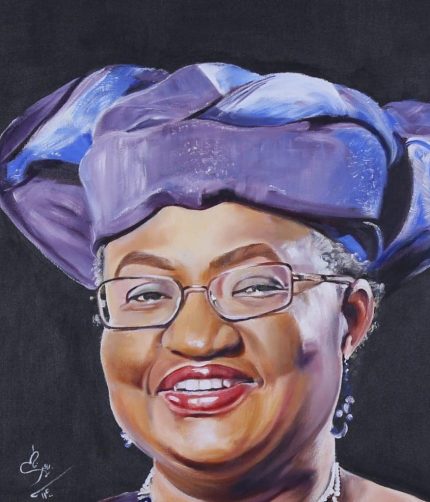
Ngozi Okonjo Lweala
Rated 0 out of 5
(0)
Highlights:
Dr Ngozi Okonjo-Iweala is the seventh Director-General of the WTO and the first woman and the first African to serve as Director-General.
Ngozi Okonjo-Iweala (born 13 June 1954) is a Nigerian-American economist, fair trade leader, environmental sustainability advocate, human welfare champion, sustainable finance maven and global development expert. Since March 2021, Okonjo-Iweala has been serving as Director-General of the World Trade Organization. Notably, she is the first woman and first African to lead the World Trade Organization as Director-General. She sits on boards of: Danone, Standard Chartered Bank, Twitter, MINDS: Mandela Institute for Development Studies, Carnegie Endowment for International Peace, Georgetown Institute for Women, Peace and Security, One Campaign, GAVI: Global Alliance for Vaccines and Immunization, Rockefeller Foundation, R4D: Results for Development, ARC: African Risk Capacity and Earthshot Prize plus others
Okonjo-Iweala was the first Nigerian woman to serve two terms as Finance Minister of Nigeria. Subsequently, from June to August 2006, she served as Minister for Foreign Affairs of Nigeria. In 2005, Euromoney named her Global Finance Minister of the Year.
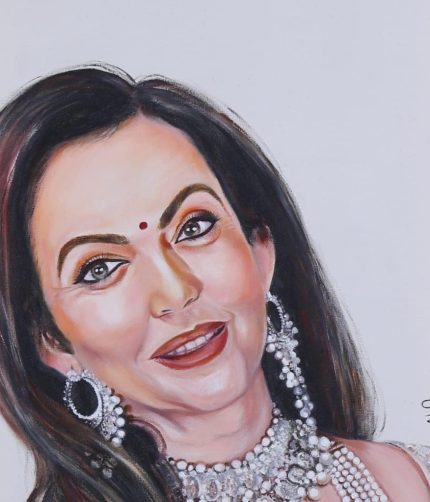
Nita Ambani
Rated 0 out of 5
(0)
Highlights:
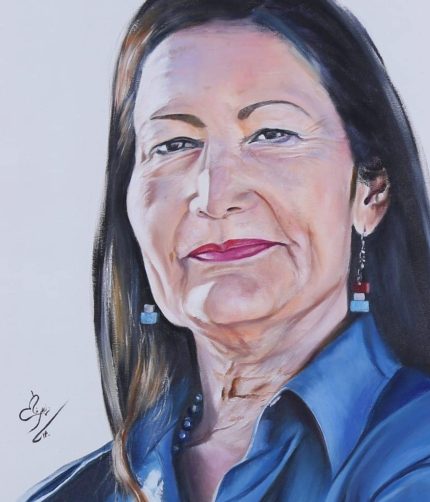
Nita Ambani(born 1 November1963) is an Indian
philanthropist. She is the chairperson and founder of
the Reliance Foundation, Dhirubhai Ambani International
School and a director of Reliance Industries. She is
married to Reliance Industries chairman and managing
director Mukesh Ambani, the Ambanis are among the
richest in the world. She is also an art collector and owner
of the Indian Premier League cricket team Mumbai
Indians.
Valentina Tereshkova
Rated 0 out of 5
(0)
Highlights:
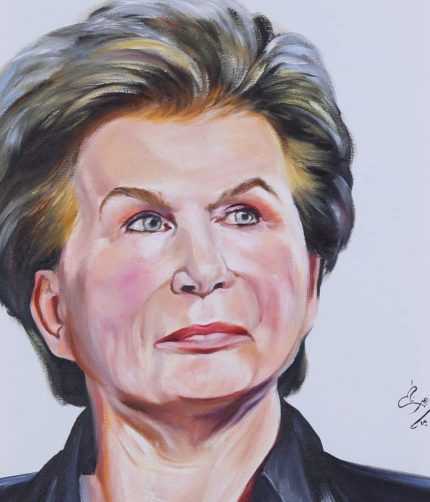
he first woman cosmonaut in the world
The history of humans in space dates back to 1961, and the first women stepped into space in 1963
1966 World Cup Painted Ball
Rated 0 out of 5
(0)
Highlights:
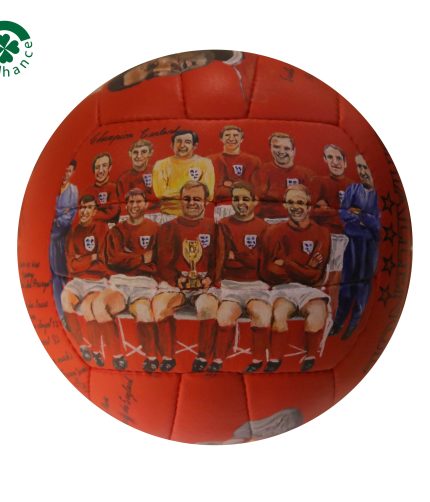
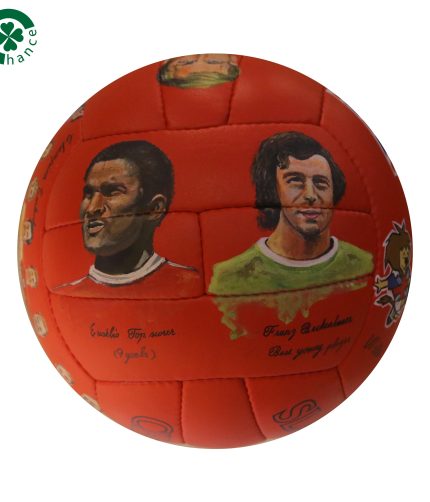
Product Name : 1966 World Cup Painted Ball
Date of Registration : 02/01/2023
Category Art : Painting
Art Field : Visual Arts
Total Production : One Collection with Twenty Three Balls
Production Year : 2022
Art Style : Acrylic
Ball Name : Slazenger 25 Challenge
Artist Name : Fatemeh Zarei
Size : 5
Weight (gr) : 370 – 382
Has a signature : Yes
Materials :
The Slazenger Challenge was made of high quality leather and entirely hand sewn. It was composed of 25 rectangular panels, joined together in a way that was very similar to the 1958 ball and which differed only in the panel which contained the valve. In the Slazenger
ball the valve was in the centre of a small panel between two other, even shorter panels.
The remaining panels were the same as the 1958 ball and the inflating system was the latest type valve – latex rubber. This ball provided excellent sphericity, and its composition was adopted over the years by other brands. The balls of the 1966 World Cup were
provided in three different colours: white, yellow, and orange. Although the most widely used model was the white one, in the memory of football fans the orange ball of the historic final of Wembley remains the strongest.
About Slazenger 25 Challenge :
The match ball used during the 1966 World Cup final, as England beat West Germany 4-2. Geoff Hurst famously scored a hat trick for England, but the ball was claimed by Helmut Haller and only returned to England in 1996. This object is displayed courtesy of Eurostar, Mirror Group and Virgin
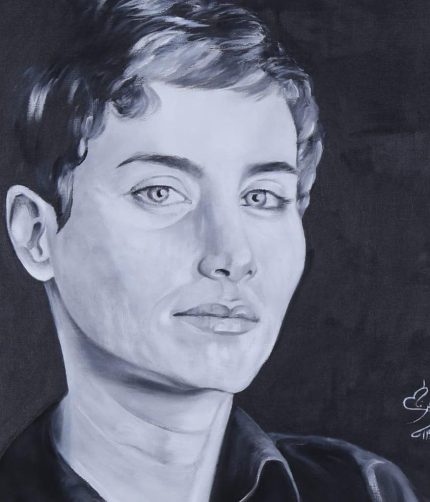
Maryam Mirzakhani
Rated 0 out of 5
(0)
Highlights:
Maryam Mirzakhani
(12 May 1977-14 July 2017) was an Iranian mathematician and a professor of mathematics at Stanford University. Her research topics included Teichmüller theory, hyperbolic geometry, ergodic theory, and symplectic geometry. In 2005, as a result of her research, she was honored in Popular Science’s fourth annual “Brilliant 10” in which she was acknowledged as one of the top 10 young minds who have pushed their fields in innovative directions.
Recently Viewed
1998 World Cup Painted Ball
Rated 0 out of 5
(0)
Highlights:
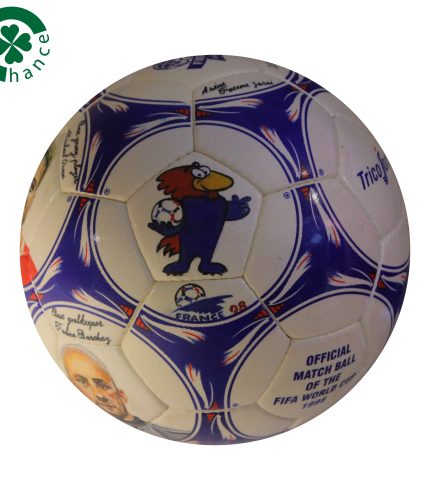
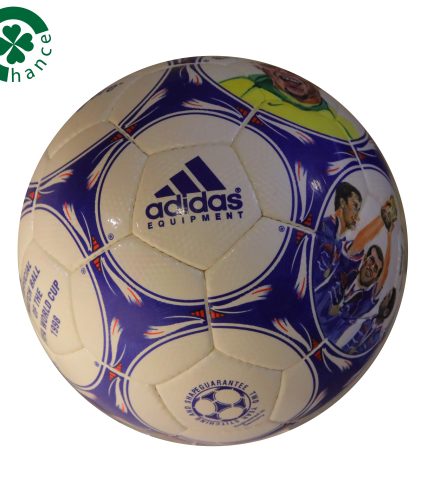
Product Name : 1998 World Cup Painted Ball
Date of Registration : 02/01/2023
Category Art : Painting
Art Field : Visual Arts
Total Production : One Collection with Twenty Three Balls
Production Year : 2022
Art Style : Acrylic
Ball Name : Tricolore
Artist Name : Fatemeh Zarei
Size : 5
Weight (gr) : 416 – 426
Has a signature : Yes
Materials :
Many people believe that the Tricolore was the first colored Adidas ball produced for major tournaments, but this is not true: in 1996, colored balls were already used at the European Championships (adidas Questra Europa) and the Olympics (Adidas Questra Olympia). So the statement is only correct like this: the Tricolore was the first colored Adidas World Cup ball. But this is not the only reason why the Tricolore has become an eternally defining ball. After all, this was the last World Cup ball since 1978 with the Tango design. (The Tango design was used for two more years, on the official ball of the 1999 Women’s World Cup as Adidas Icon, on the ball of the 2000 European Championship as Terrestra Silverstream and at the 2000 Olympic Games as Gamarada). The name and colors of the Tricolore ball refer to the French flag. Michel Platini specifically instructed Adidas to include French industry among the motifs on the ball, which is how the turbine came to be. But the Tango model also features the Gallic rooster, whose red crest evokes the manufacturers logo, which is a brilliant design element, and many consider the Tricolore to be the most beautiful Adidas ball to date.
About Tricolore :
Tricolore ball was the first colored ball of world championship. The Adidas Tricolore was used synthetic foam layer with a regular array of durable micro-cells filled with gas. This structure provides durability and good tactile contact with the ball. It’s first time, since 1970, when the World Cup ball was made not in Europe: Adidas Tricolore has been created in Morocco.
Christian Amanpour
Rated 0 out of 5
(0)
Highlights:
Christiane Amanpour
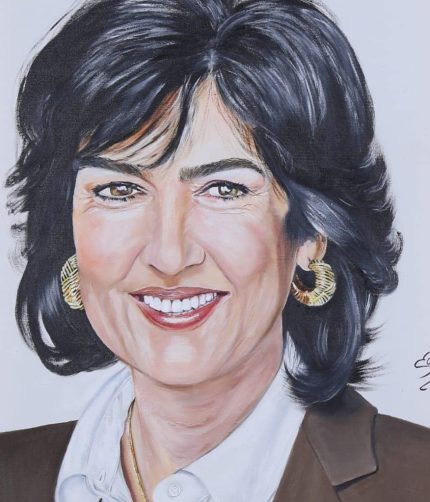
Amanpour is a British-Iranian reporter and TV host. She is the Chief International Anchor for CNN and host of CNN International’s nightly interview show Amanpour. She also runs the Amanpour & Company programs on PBS. She was previously the host of the global affair for ABC News in the United States. She is one of the journalists who is most followed by world leaders on Twitter. Amanpour has an Iranian father and a British mother.
2002 World Cup Painted Ball
Rated 0 out of 5
(0)
Highlights:
Product Name : 2002 World Cup Painted Ball
Date of Registration : 02/01/2023
Category Art : Painting
Art Field : Visual Arts
Total Production : One Collection with Twenty Three Balls
Production Year : 2022
Art Style : Acrylic
Ball Name : Fevernova
Artist Name : Fatemeh Zarei
Size : 5
Weight (gr) : 389 – 398
Has a signature : Yes
Materials :
Adidas’s Fevernova soccer ball was the official ball of the Korea Japan, 2002 FIFA world cup. The adidas Fevernova was the first World Cup Match Ball since 1978 to break with the traditional Tango design introduced in 1978. It is three millimeters thick (11 layers). This includes a special foam layer with tiny gas filled balloons imbedded in a syntactic foam. The foam is based on an abrasion resistant polyurethane made by Bayer called Impranil® polyurethane. The outer cover of the ball consists of a combination of special synthetic polystyrenes (polyurethane) and natural rubber. Embedded within the layers are equal sized, highly elastic, exceptionally resistant gas-filled microcells. The inner lining consists of a tightly woven network of knitted, synthetic Raschel fabric. The spongy layer has high modulus of compression, with a good elastic memory. These layers give the Fevernova TM improved rebound characteristics, which convert foot strike into ball acceleration. The outer layer of the ball is made of a particularly so that the ball can withstand exceptionally tough treatment. All of this combines to give the ball greater durability. According to Adidas, the surface of the new ball converts applied energy evenly at every point. Theoretically, this gives a more calculable, flight path with advanced players. The Adidas Fevernova TM is made to meet the lower end of FIFA regulations governing circumference and the upper limit of weight , in which smaller and heavier sphere has a more accurate trajectory.
About Fevernova :
The ball Fevernova has been obtained as a result of three years of work to improve the previous Tricolore ball at the research center in south of Germany.
The new design is based on Asian culture and are not similar to its predecessors. This ball featured a refined syntactic foam layer, to give the ball superior performance characteristics, and a three-layer knitted chassis, allowing for a more precise and predictable flight path. For the World Cup matches has been presented more than 2,500 balls Fevernova, and later around the world has been sold about six million replicas.

Reviews
There are no reviews yet.