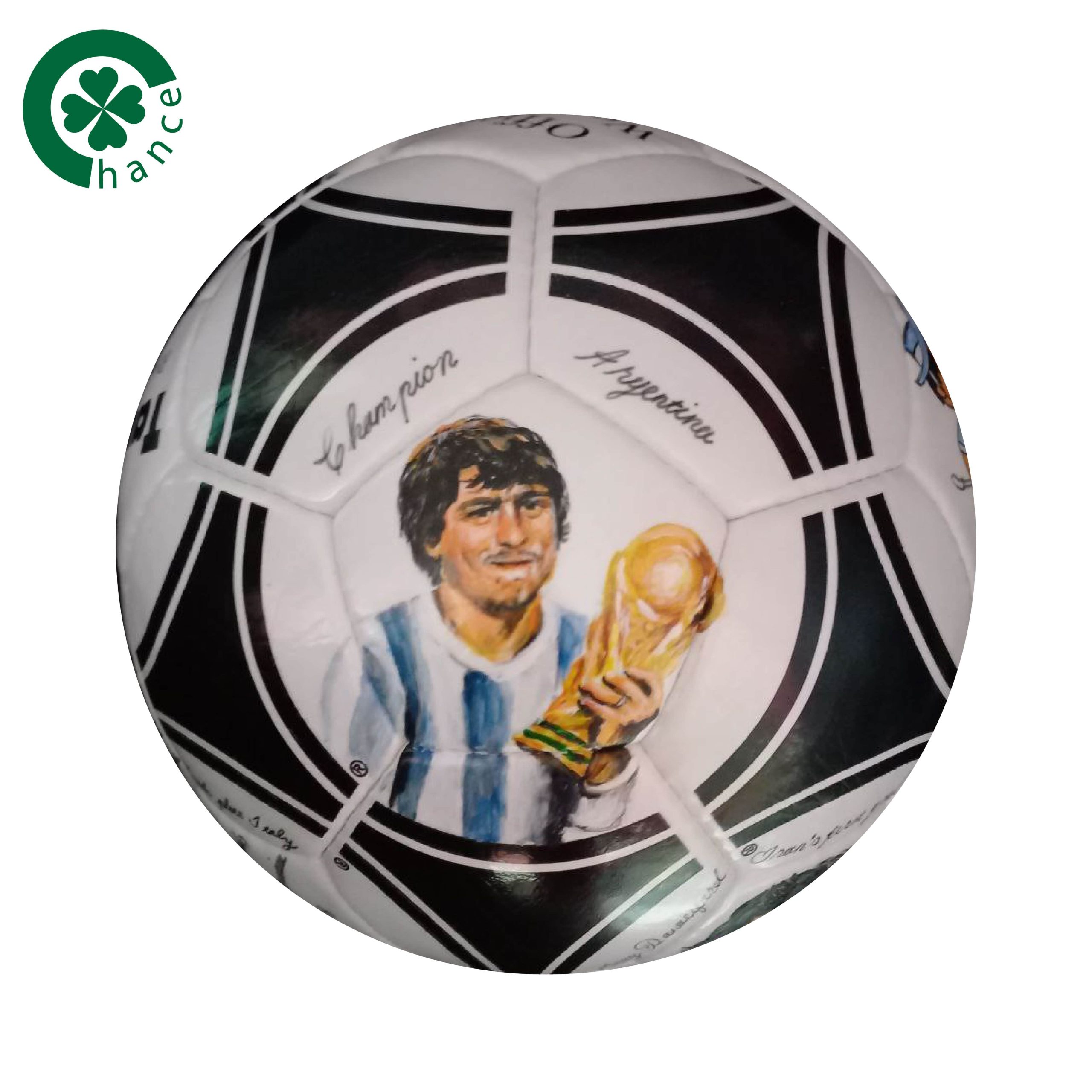
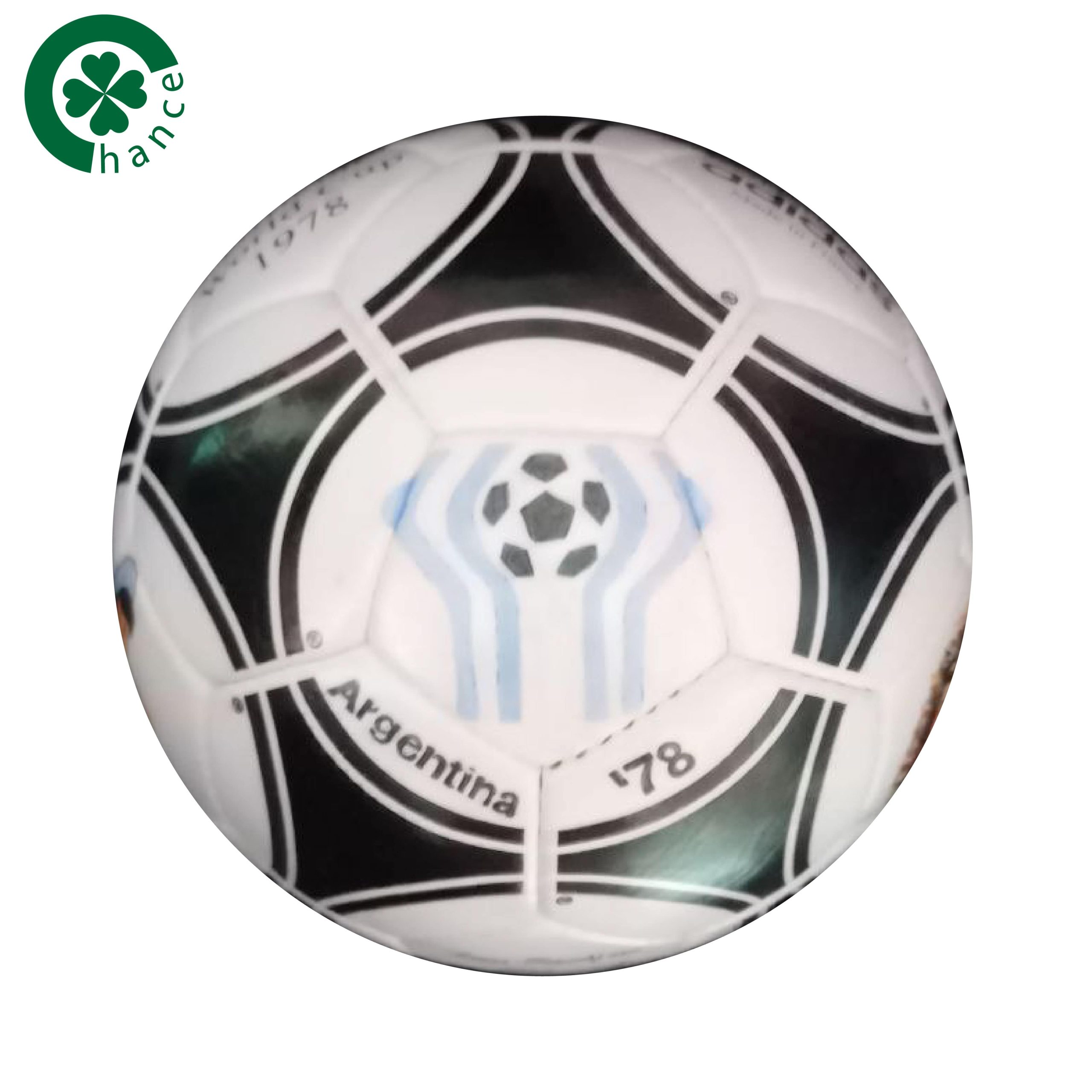
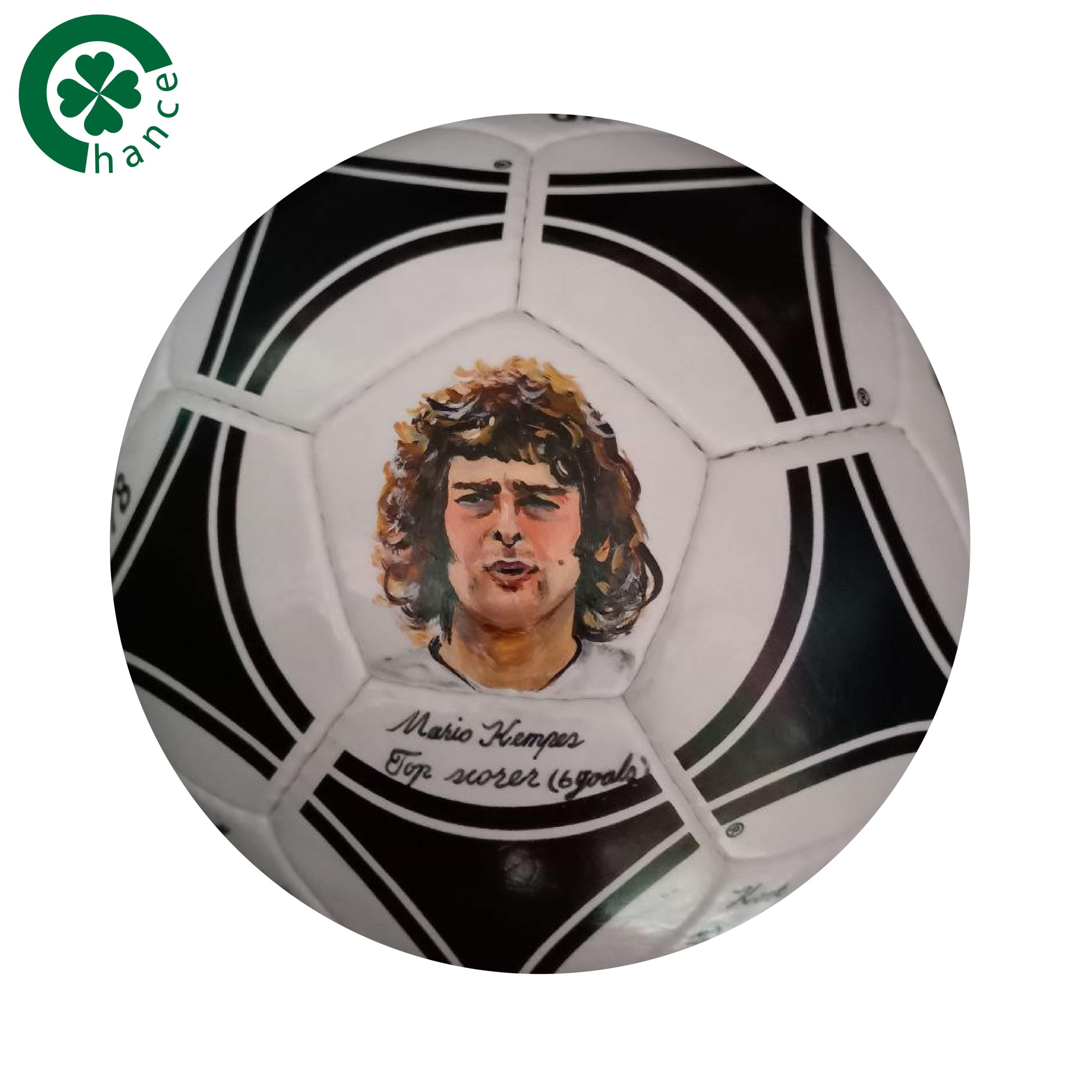
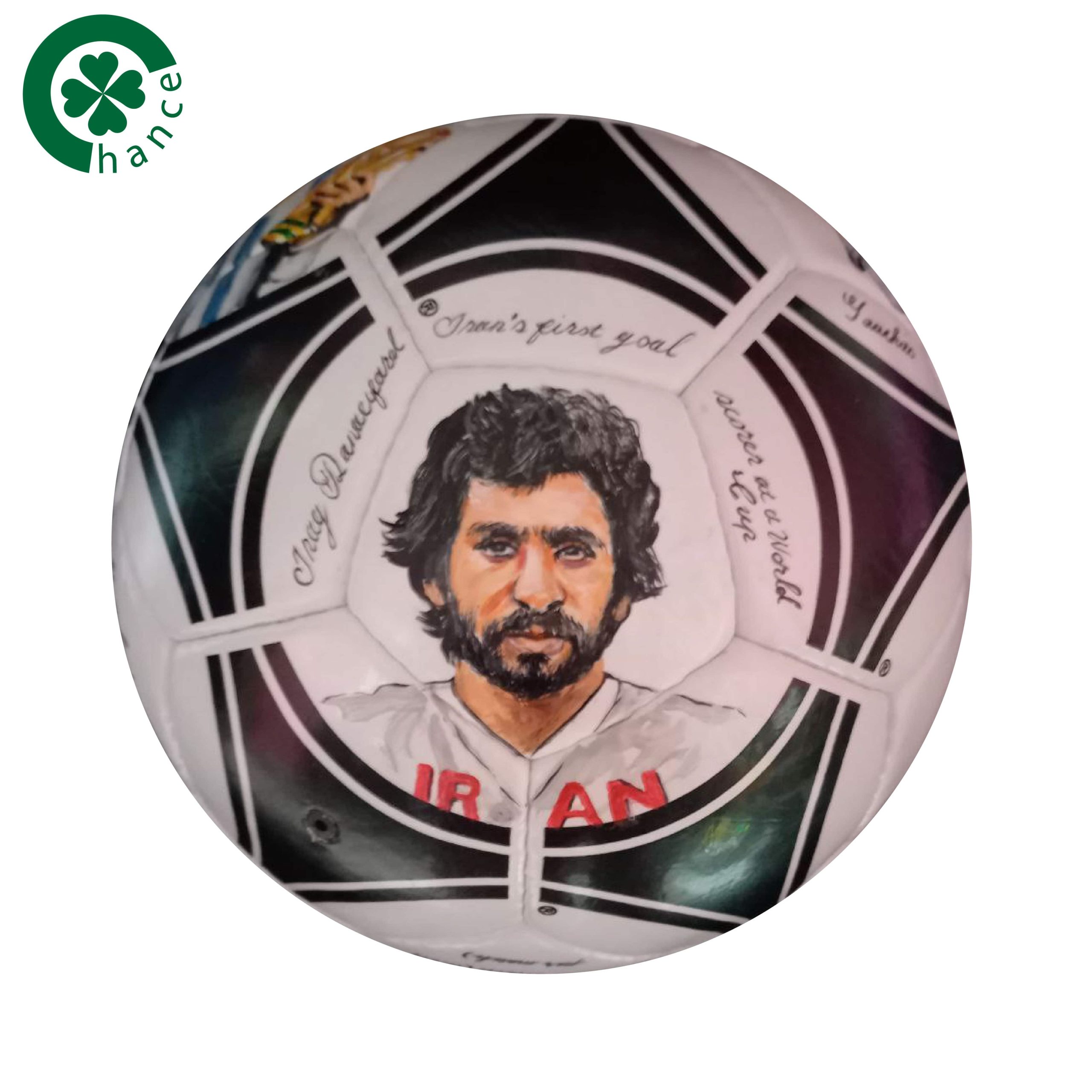
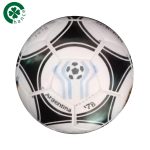
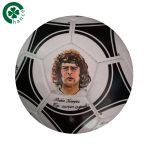
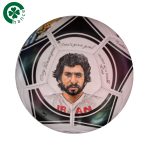
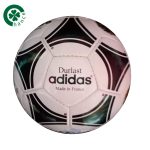
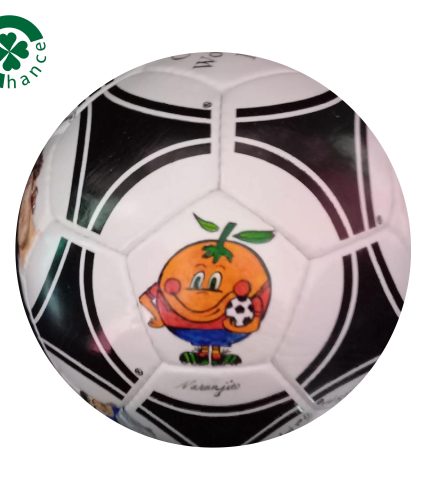
1978 World Cup Painted Ball
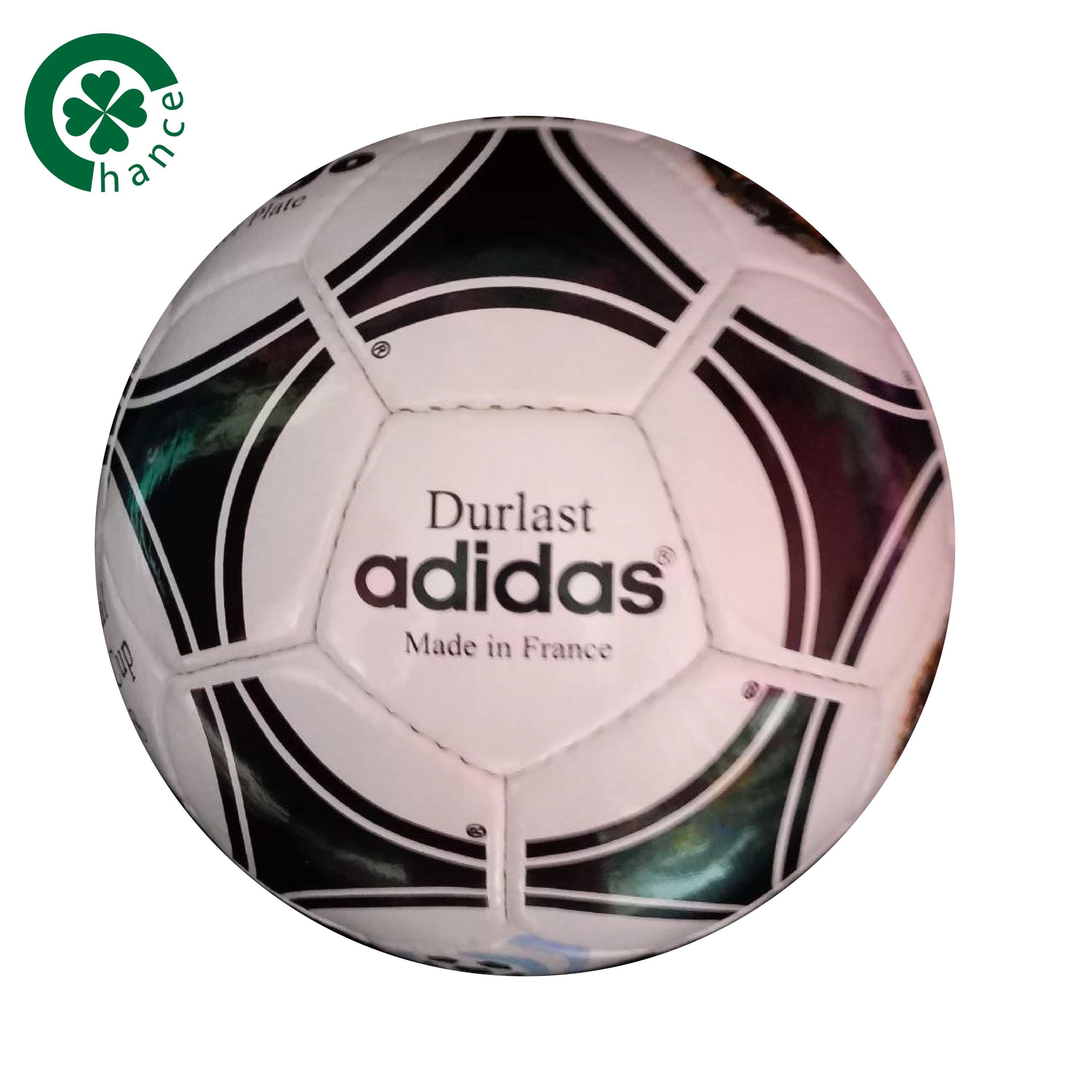
Product Name : 1978 World Cup Painted Ball
Date of Registration : 02/01/2023
Category Art : Painting
Art Field : Visual Arts
Total Production : One Collection with Twenty Three Balls
Production Year : 2022
Art Style : Acrylic
Ball Name : Tango Durlast
Artist Name : Fatemeh Zarei
Size : 5
Weight (gr) : 394 – 404
Has a signature : Yes
Materials :
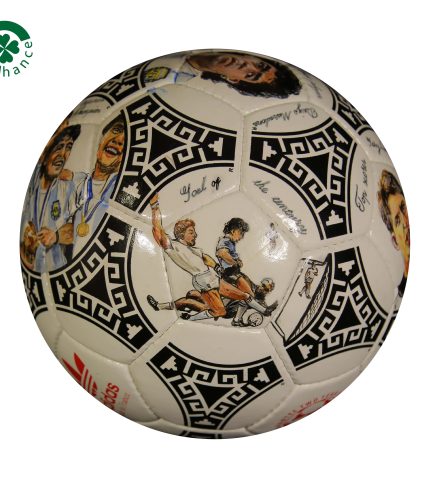
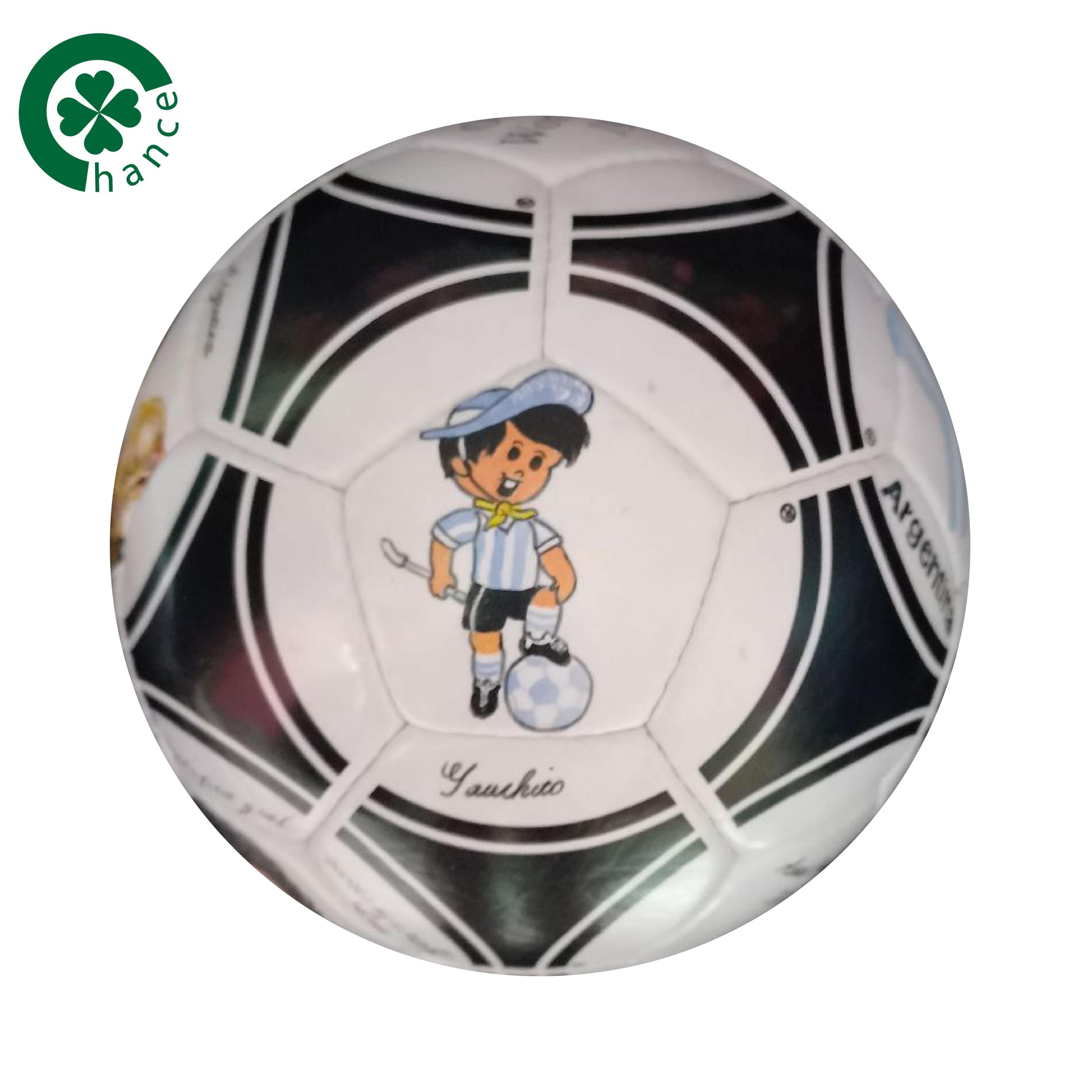
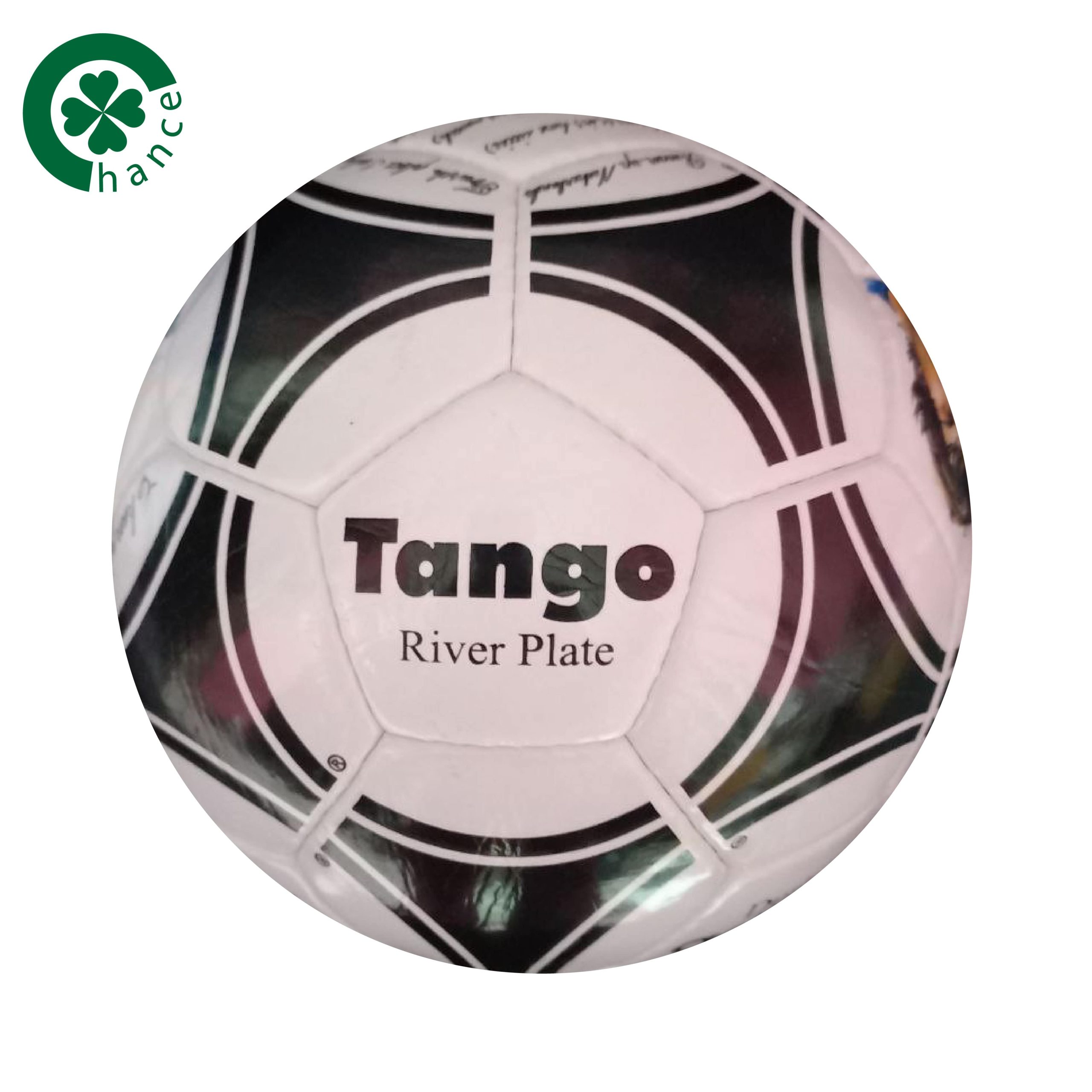
The 1978 World Cup came back to America, being hosted by Argentina. In respect of the official ball, this edition represented a great milestone, because Adidas launched a model with a revolutionary design: the Tango – inspired by the classic dance of Argentina. This ball was identically constructed to the previous World Cup ball, the Telstar from 1974. It was composed of 32 hand sewn leather panels (20 hexagonal and 12 pentagonal) and covered by the Durlast coating (applied with the same thickness of the 1974 Telstar) to
make the ball more resistant and waterproof. The design consisted of 20 black and promptly curved triangles, each one printed onto the white coloured surface of each hexagonal panel. Since the pentagonal panels were white coloured too, the triangles created a series of black and elegant circles on a white surface. When the ball was rotating, a nice effect was created by the black circles, which was visually very attractive.
About Tango Durlast:
For World Cup 1978 has been created ball Tango, which according to the authors should reflect the elegance, dynamism and passion. The design used 20 triads, create an optical impression of 12 identical circles. One advantage of Tango compared to other balls was considered as improved resistance to weathering.
Related products
1986 World Cup Painted Ball
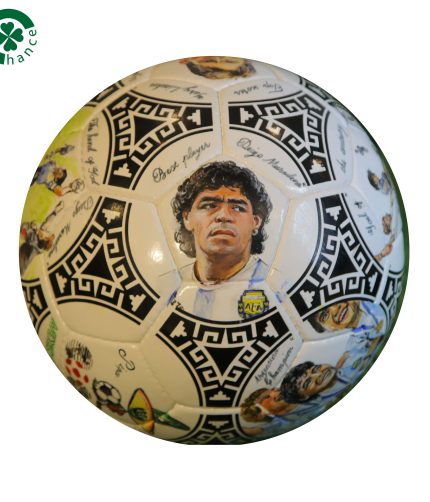
Product Name : 1986 World Cup Painted Ball
Date of Registration : 02/01/2023
Category Art : Painting
Art Field : Visual Arts
Total Production : One Collection with Twenty Three Balls
Production Year : 2022
Art Style : Acrylic
Ball Name : Azteca
Artist Name : Fatemeh Zarei
Size : 5
Weight (gr) : 380 – 410
Has a signature : Yes
Materials :
A completely new model was developed for the World Cup in Mexico. The Azteca Mexico was a hand-sewn ball, and for the first time, synthetic material, rather than leather was used to produce it. The ball consisted of an outer polyurethane wearing coat and three lower layers, which mutually complemented one another with their different “Adicron” structures. These were intended to ensure the ball’s resistance, ability to retain its shape and its waterproof properties. With its never-before-achieved performance on hard ground, at high altitude, and in wet conditions, Azteca represented a massive leap forward for the game. Its elaborately decorated design was inspired by the hosting nation’s native Aztec architecture and murals.
About Questra :
Azteca ball – first ball which has been made of fully synthetic material. Triad used in the design of the ball, where were painted like Aztecs frescoes. The Adidas Azteca ball was quite an elegant ball with revolutionary design but even though it was still composed by 32 hand sewn panels.
1994 World Cup Painted Ball
Product Name : 1994 World Cup Painted Ball
Date of Registration : 02/01/2023
Category Art : Painting
Art Field : Visual Arts
Total Production : One Collection with Twenty Three Balls
Production Year : 2022
Art Style : Acrylic
Ball Name : Questra
Artist Name : Fatemeh Zarei
Size : 5
Weight (gr) : 388 – 398
Has a signature : Yes
Materials :
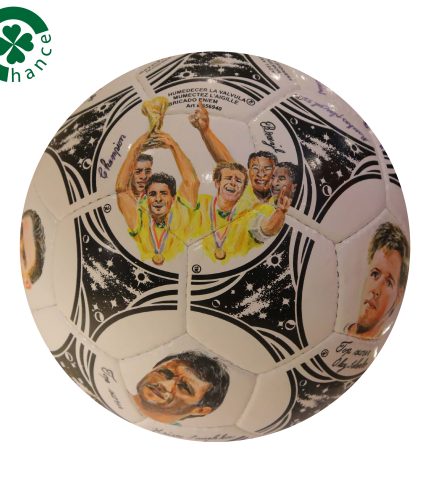
At the 1990 World Cup in Italy, a negative World Cup record was set in terms of goals (2.21 goals/match), so many blamed the ball Before the next World Cup, FIFA asked adidas to develop a ball that could score more goals. The 1994 World Cup was brought to the USA in part to promote soccer, but if viewers don’t see enough goals, they tune out of the games on TV and think soccer is a boring
sport. The changes to the ball were successful, as the American World Cup had a higher goal average (2.7 goals/match), which they have not been able to surpass in any World Cup since then.
And what were the changes on the ball? Well, the Questra was lighter and more controllable than its predecessor, which favored more skilled players. Five different materials were used during development, and its most significant innovation was the flexible but resistant outer polyurethane layer, which softened the force of impacts thanks to foaming, and it was also beneficial for the headers.
This is due to the fact that the ball was developed at adidas’ ball production center in France and tested by French, German and American professional, amateur and youth teams.
About Questra :
Name of the Questra ball comes from ancient world for the pursuit to the stars (the quest for the stars). Authors aimed to create a more responsive and light ball, what they got fully. By manufacturing the new ball from five different materials and enveloping it in polystyrene foam, Adidas made the Questra more waterproof and allowed for greater acceleration when kicked. Triads which used in the design of Adidas Questra, display the outlines of stars.
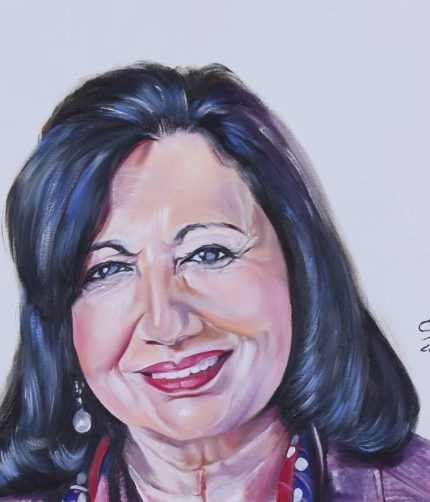
Mazumdar Shaw
Mazumdar-Shaw dislikes the term ‘philanthropy”, believing that it often provides temporary fixes rather than addressing the root cause or the underlying situation. She prefers the term “compassionate capitalist”
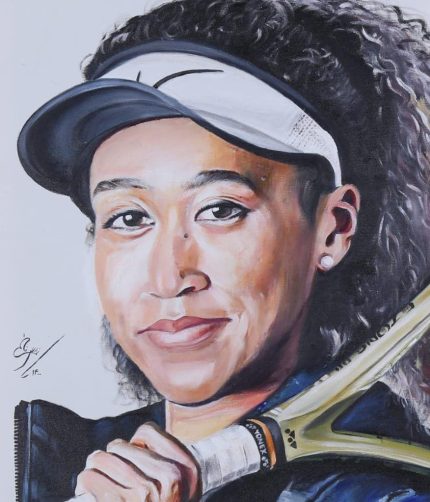
Naomi Osaka
The highest paid female athlete in the world
Naomi Osaka (born October 16, 1997) is a Japanese professional tennis player. She has been ranked No. 1 by the Women’s Tennis Association (WTA) and is the first Asian player to hold the top ranking in singles as well the first player from Japan – man or woman – to reach No.1. She is a four-time Grand Slam singles champion.
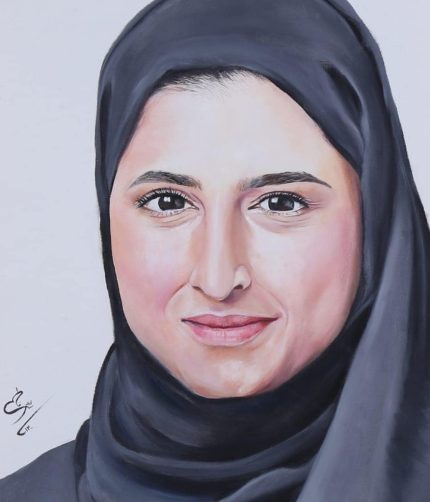
Sarah Al Amiri
Sarah bint Yousef Al Amiri (born 1987) is the Minister of State for Advanced Technology within the Ministry of Industry and Advanced Technology in the government of the United Arab Emirates, chair of the UAE Space Agency and the UAE Council of Scientists, and Deputy Project Manager of the Emirates Mars Mission.
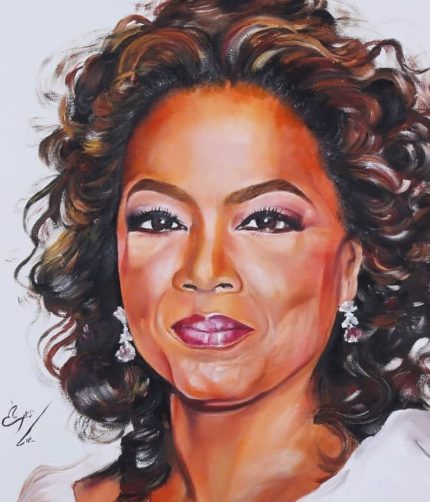
Oprah Winfrey
Producer, actor, presenter, philanthropist, Oscar winner, Golden Globe and BAFTA nominee, and one of the most famous television presenters in the United States and the world.
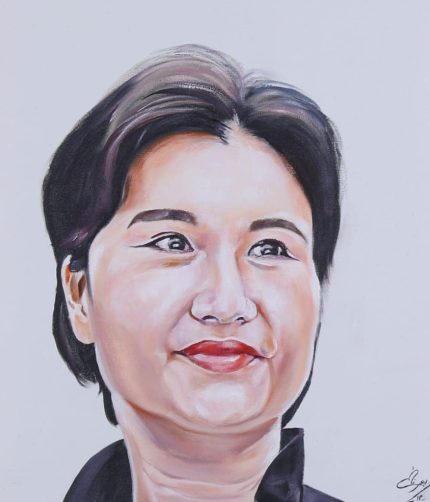
Zhou Qunfei
She’s a Chinese entrepreneur (born 1970) who founded the major touchscreen maker Lens Technology. In 2018, she was named the world’s richest self-made woman, with a net worth of $9.8 billion. She has a net worth of $ 12.5 billion and is the China’s fifth richest woman.
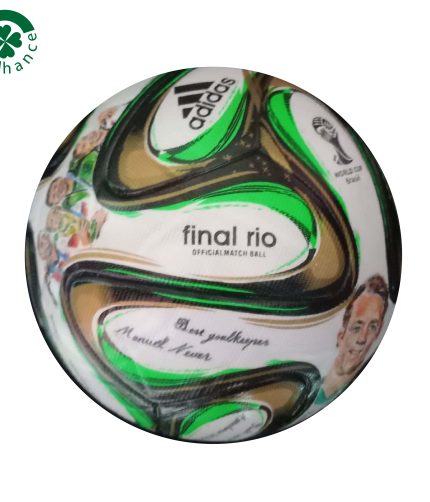
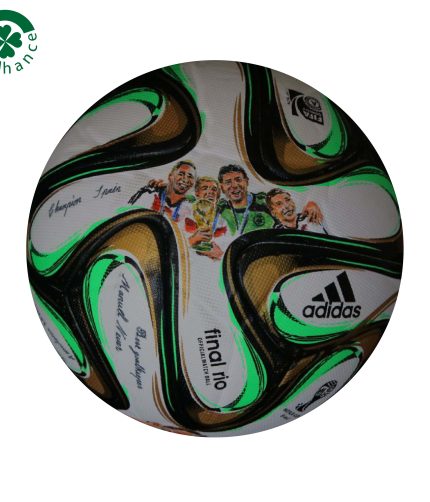
2014 World Cup Painted Ball
Product Name : 2014 World Cup Painted Ball
Date of Registration : 02/01/2023
Category Art : Painting
Art Field : Visual Arts
Total Production : One Collection with Twenty Three Balls
Production Year : 2022
Art Style : Acrylic
Ball Name : Brazuca
Artist Name : Fatemeh Zarei
Size : 5
Weight (gr) : 425 – 432
Has a signature : Yes
Materials :
The Brazuca official match ball has only 6 flat parts, 12 seams and 8 joint points – but the seams do not go along the edges of the cube they go over a complex curve. This provide suitable aerodynamics and an unrivaled circular shape to the ball.
The Brazuca 2014 ball decorated with ribbons of three colors, which symbolizing the so-called bracelets desires in Brazil. According to legend, the bangle should be wrapped around the wrist and tie the knot three with making a wish on each of them. When the bracelet will tear himself fall from his hands, they believed that it’s made wishes should start to come true.
About Brazuca :
The name of the 2014 World Cup ball has been selected in an open vote, which was attended by more than 1 million of Brazilians. Has been proposed 3 names: Brazuca (77.5%), Carnavalesca (14.6%) and Bossa Nova (7.6%).
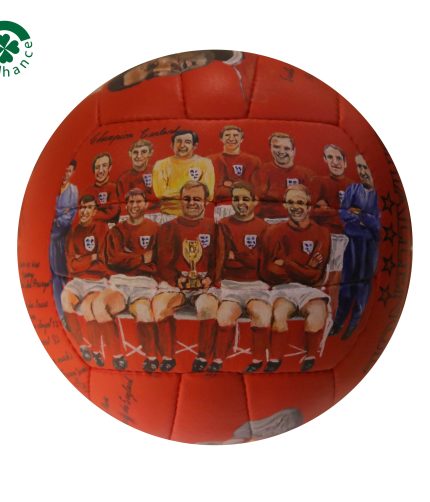
1966 World Cup Painted Ball
Product Name : 1966 World Cup Painted Ball
Date of Registration : 02/01/2023
Category Art : Painting
Art Field : Visual Arts
Total Production : One Collection with Twenty Three Balls
Production Year : 2022
Art Style : Acrylic
Ball Name : Slazenger 25 Challenge
Artist Name : Fatemeh Zarei
Size : 5
Weight (gr) : 370 – 382
Has a signature : Yes
Materials :
The Slazenger Challenge was made of high quality leather and entirely hand sewn. It was composed of 25 rectangular panels, joined together in a way that was very similar to the 1958 ball and which differed only in the panel which contained the valve. In the Slazenger
ball the valve was in the centre of a small panel between two other, even shorter panels.
The remaining panels were the same as the 1958 ball and the inflating system was the latest type valve – latex rubber. This ball provided excellent sphericity, and its composition was adopted over the years by other brands. The balls of the 1966 World Cup were
provided in three different colours: white, yellow, and orange. Although the most widely used model was the white one, in the memory of football fans the orange ball of the historic final of Wembley remains the strongest.
About Slazenger 25 Challenge :
The match ball used during the 1966 World Cup final, as England beat West Germany 4-2. Geoff Hurst famously scored a hat trick for England, but the ball was claimed by Helmut Haller and only returned to England in 1996. This object is displayed courtesy of Eurostar, Mirror Group and Virgin
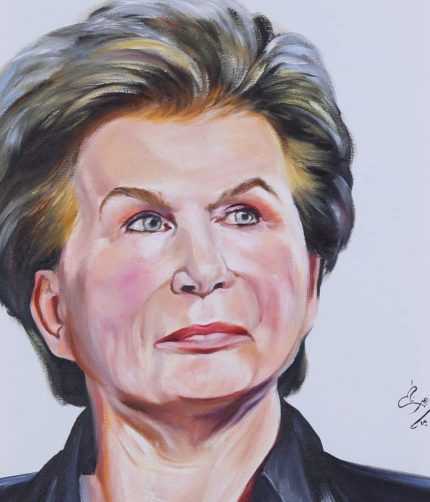
Valentina Tereshkova
he first woman cosmonaut in the world
The history of humans in space dates back to 1961, and the first women stepped into space in 1963
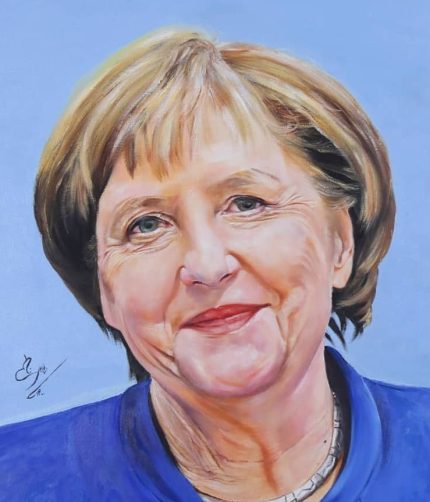
Angela Merkel
Angela Merkel Chancellor of Germany
The Most Influential Political woman in art
Recently Viewed
1958 World Cup Painted Ball
Product Name : 1958 World Cup Painted Ball
Date of Registration : 02/01/2023
Category Art : Painting
Art Field : Visual Arts
Total Production : One Collection with Twenty Three Balls
Production Year : 2022
Art Style : Acrylic
Ball Name : Top-Star
Artist Name : Fatemeh Zarei
Size : 5
Weight (gr) : 374- 334 gr
Has a signature : Yes
Materials :
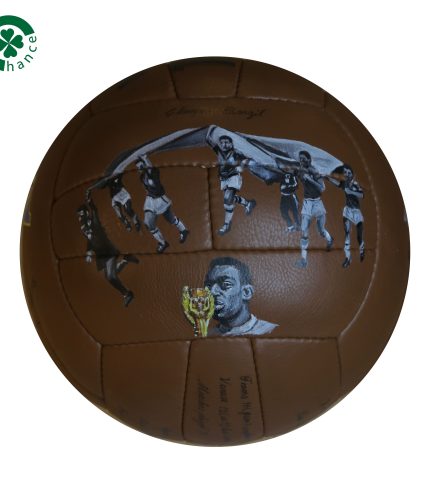
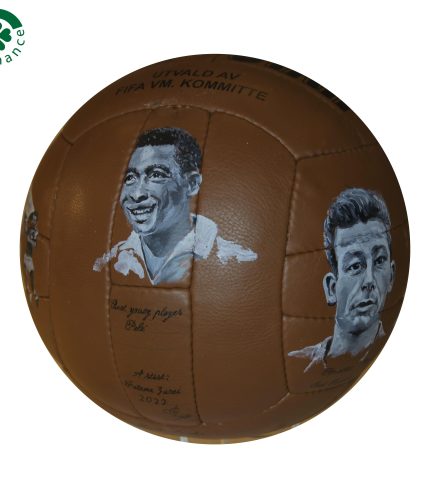
The Top Star ball had a popular design, it was similar to the balls of the time, however, on this ball there were long and short panels, elegantly alternated between them : two short panels in the midst of two long panels and the inflation valve was in the center of one short panel. This ball brought technological developements as well, these leather balls were treated with a waterproofing wax, making the balls more water resistant. The balls used in the 1958 World Cup were yellow, light brown or white. In matcheswhen it was rainy or a little wet (just like in the final between Brazil and Sweden) the white ones were used.
About Top-Star:
Official ball of the 1958 World Cup in Sweden was chosen as representatives of FIFA. Ball Top Star, made by Swedish firm “Sydsvenska Läder- och Remfabriken”, consisted of 24 panels and was presented in three colors – brown, orange and white, no branding. Each of the national teams participating in the World Cup, had at its disposal 30 balls.


Reviews
There are no reviews yet.